
All Laguiole folding knives
Laguiole knives with corkscrew
619€
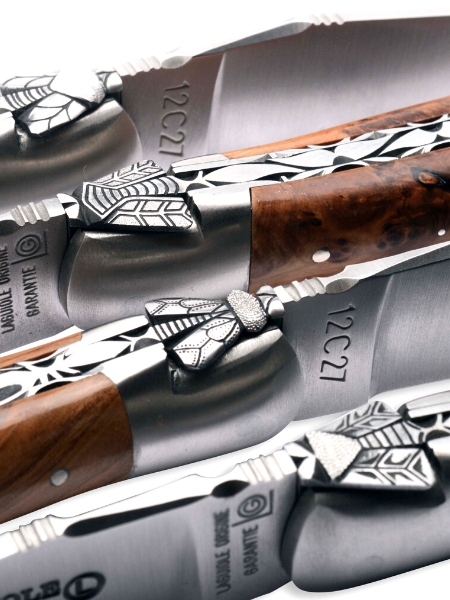
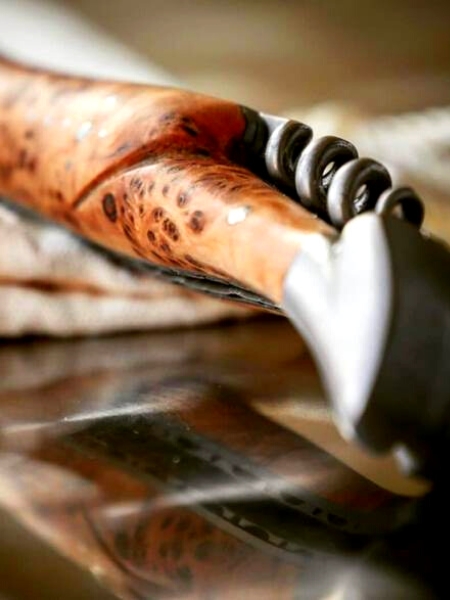
The Elven Bee Laguiole is a unique piece, entirely hand-crafted by the most accomplished cutlers at the Laguiole en Aubrac workshop. Its handle in golden Amboina burl shows warm tones ranging from light blond to deep honey. The natural movement of the burl, full of swirls and depth, enhances the classic profile of the knife while giving it a refined visual presence.
White liners introduce a delicate, almost luminous contrast between wood and liners, underlining the Laguiole’s shape without making it harsh.
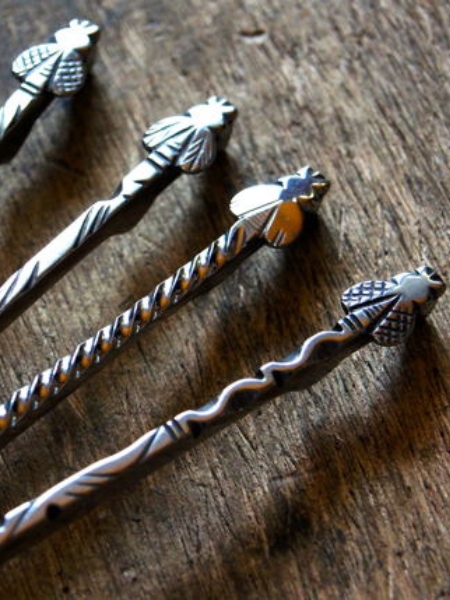
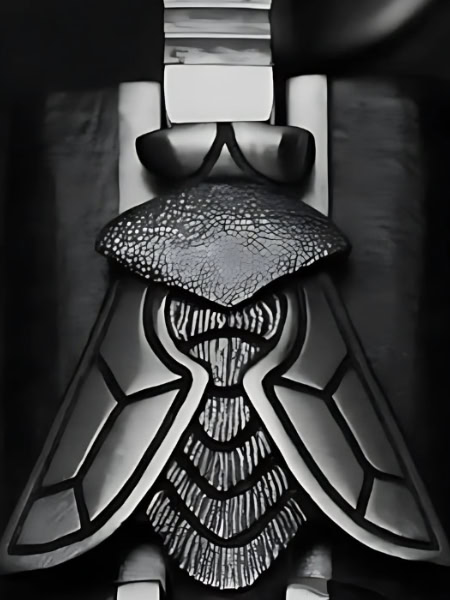
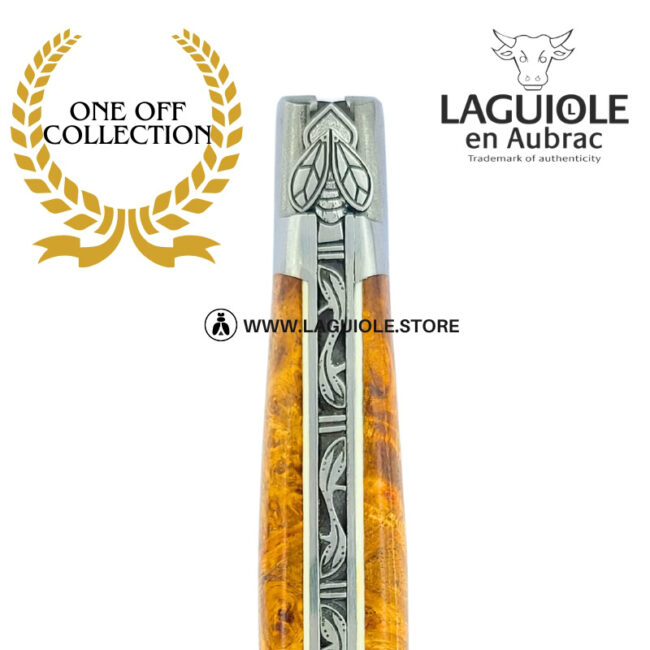
The bee stands out through exceptionally fine chiselling. Her slightly pointed, elongated lines give her a slender, almost elven posture. The engraved details on her surface call to mind delicate, stylised motifs, close in spirit to certain fantasy worlds yet never tipping into pastiche. Head and body are also finely worked, reinforcing the impression of a perfect balance between tradition and a more dreamlike inspiration.
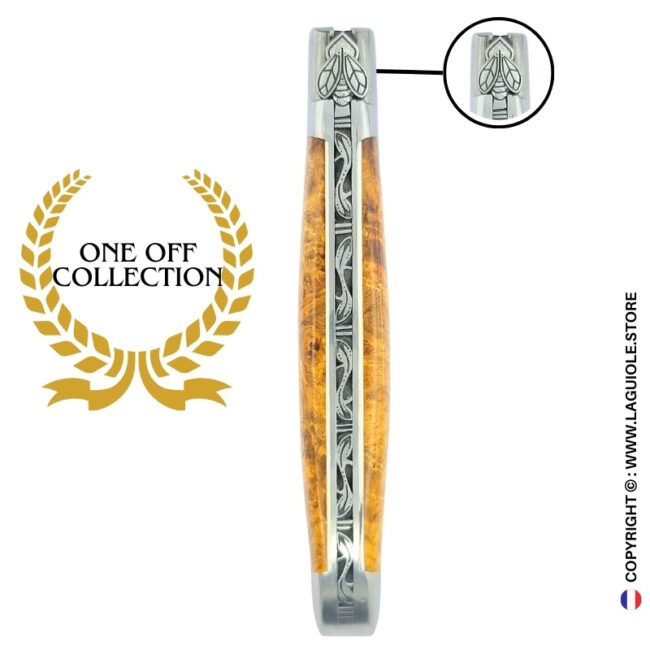
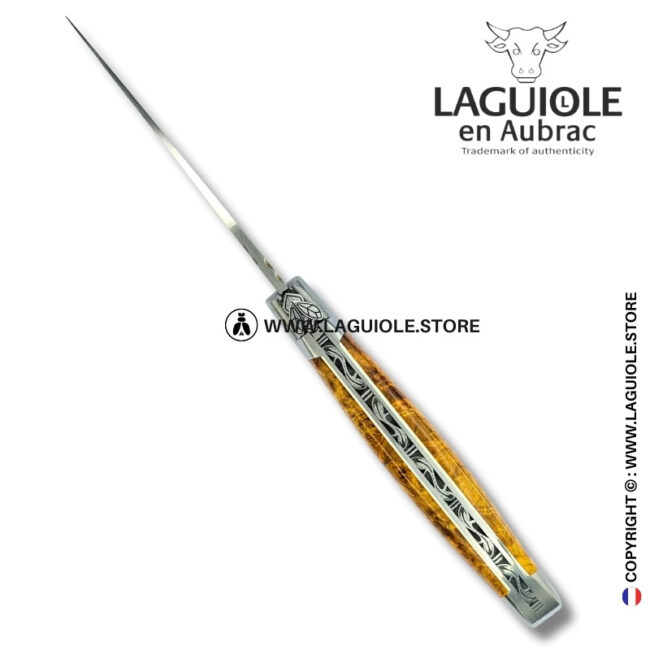
The backspring is decorated with five similar vegetal forms, reproduced exactly and aligned along its entire length. This repeated pattern brings a steady rhythm and strong coherence to the decoration. The work is intentionally sober, favouring the purity of the line over any sense of overload.
Taken as a whole, Elven Bee offers a feeling of controlled clarity, where every detail has its rightful place. It is meant for Laguiole enthusiasts who appreciate discreet yet meaningful pieces – where a luminous handle, white liners, a bee with a distinctive design and a repeated leaf motif on the spring come together in a knife that remains classic in form, yet quietly touched by imagined worlds.
1 in stock


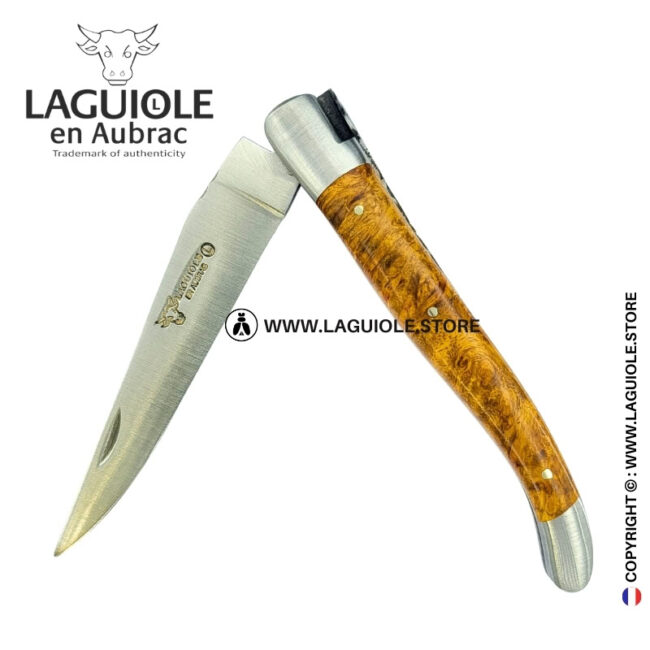
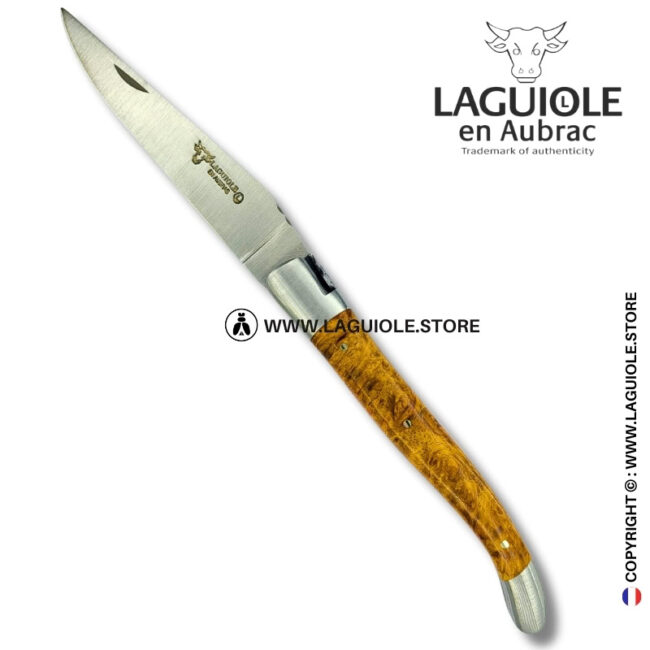
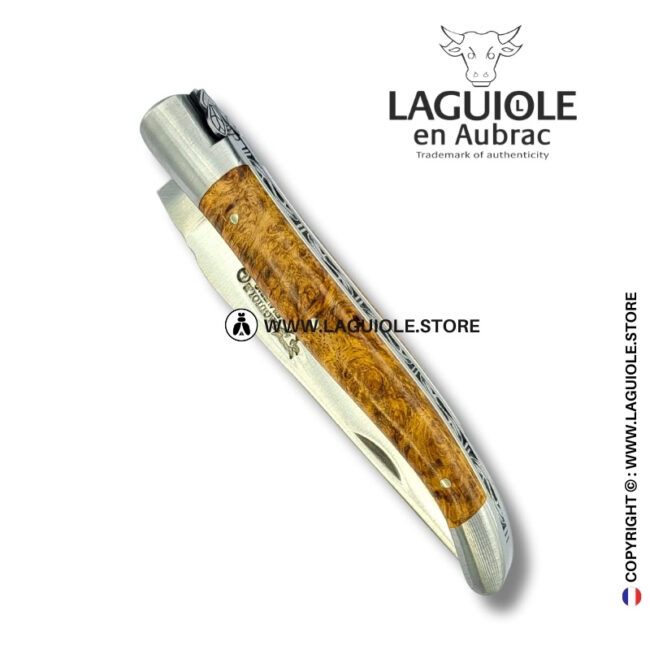
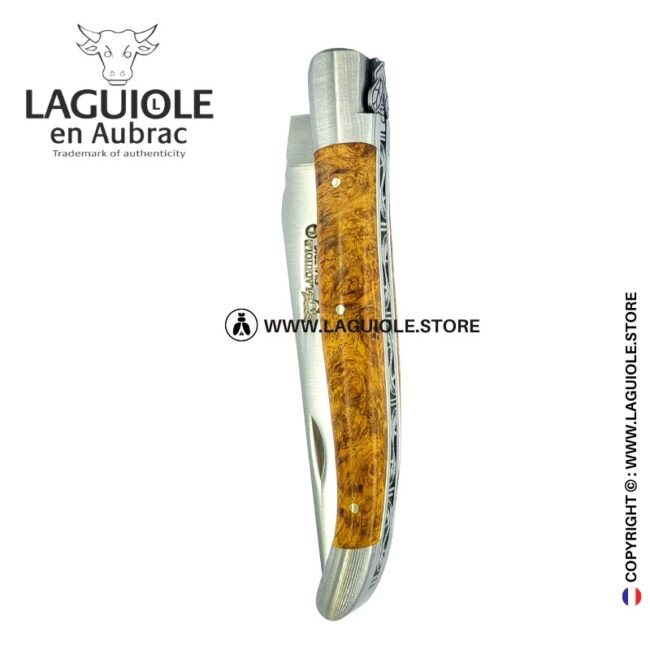
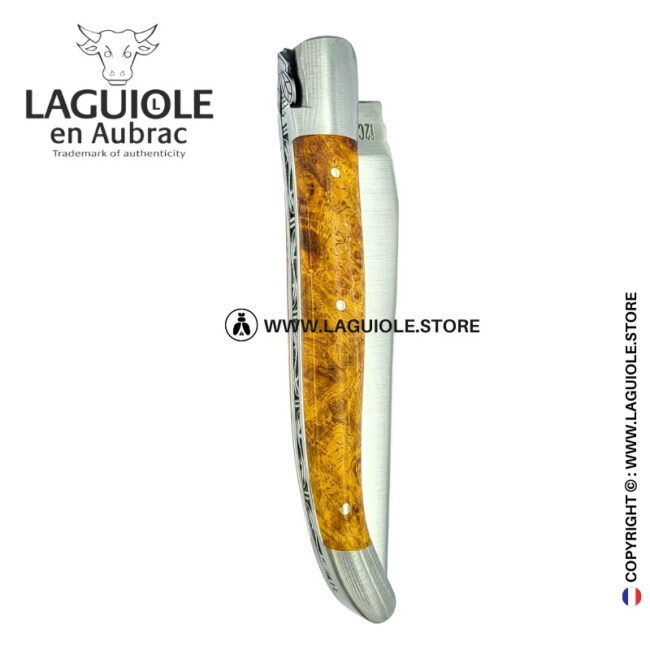
“Elven Bee” blends the soft glow of old wood with the finesse of a design that feels almost otherworldly. Its handle in golden Amboina burl plays with honey and amber tones, crossed by subtle movements in the grain. Slim white liners run along each side of the wood like fine threads of light, outlining the silhouette of the knife and giving it a clean, luminous edge.
At the top, the sculpted bee draws the eye: slender lines and delicate engraving give it an almost elven grace. Along the spine, the spring is decorated with a sequence of five repeated, leaf-like motifs – precisely echoed, calm in rhythm and understated in style – creating an ornament that suggests more than it reveals.
“Elven Bee” is a seemingly understated Laguiole that quietly hides a wealth of allusions and fine details – made for those who prefer imagination to shimmer through rather than shout.
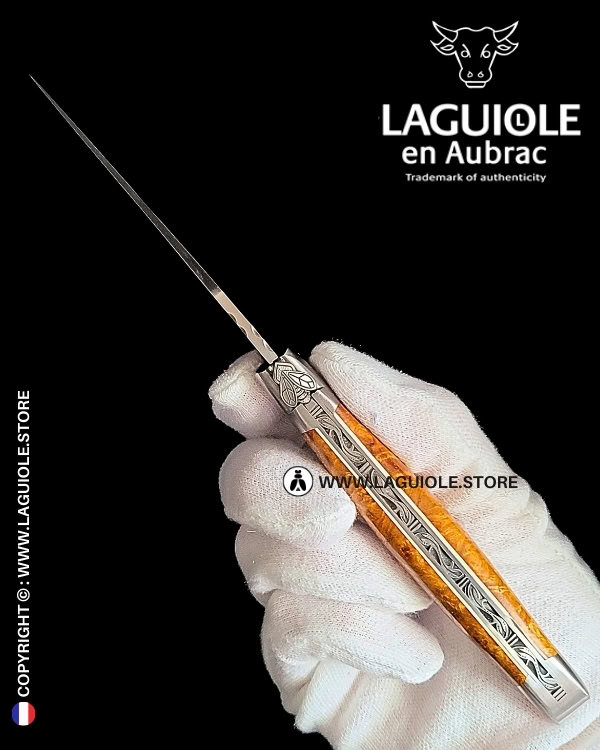
The Elven Bee feels like a knife that has slipped off a Rivendell table and into a human hand. Its handle in golden Amboina burl gives off a soft, almost unreal glow, where shades of honey, gold and light brown gently blend together. It’s a wood that seems to hold the memory of an ancient light – not harsh, not dazzling, but resting on the surface like a quiet halo.
At the top, the bee has left behind the rustic look of farm Laguiole knives. Chiselled with almost otherworldly precision, she follows slender, slightly pointed lines, as if the cutler had been guided by an elven dream. The markings engraved in the metal recall those elegant, weightless patterns one imagines on elven helms, jewellery or weapons. This is not a bee that shouts for attention, yet her outline is so distinctive that anyone who loves the realms of fantasy will recognise the reference at once.
Along the spine, the backspring carries on the story with five identical plant-like shapes running from end to end. They look like five stylised leaves, five shoots from the same tree, repeating at regular intervals. Simple in principle yet carefully executed, this pattern gives the back of the knife a quiet rhythm, almost like a whispered incantation. White liners between the golden Amboina and the steel trace a pale, luminous edge that reinforces the sense of purity running through the piece.
And still, Elven Bee remains a restrained knife. Nothing flashy, nothing loud – just a gathering of lines, signs and subtle details that gently evoke Tolkien’s universe, like a discreet nod meant for those who know how to look.
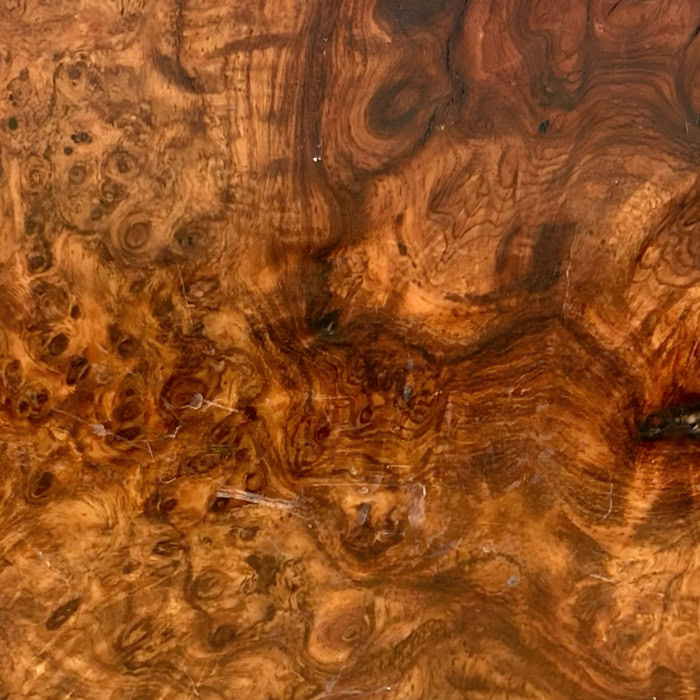
Amboina burl is one of the most sought-after woods in fine knifemaking, prized for its intricate patterns and natural warmth. Taken from irregular growths in the trunk or root, this burl reveals, once shaped, a tangle of veins, ripples and knots that answer one another like small flames frozen in the wood.
In its golden shade, Amboina plays across a palette that runs from honey blond to deep amber. Some areas catch the light intensely, while others stay softer and more muted, creating subtle contrasts that give the handle a sense of depth and movement. Each block of golden Amboina burl has its own unique figure, making every knife a piece with a truly individual visual character.
This dense, refined wood is particularly well suited to high-end handles. A satin polish brings out the full richness of its tones while offering a soft, warm feel in the hand. Paired with the meticulous work of a skilled cutler, golden Amboina burl gives the knife an elegant presence, right at the crossroads of precious material and living craftsmanship.


Leather Sheaths & Sharpener

Leather Sheaths & Sharpener


Leather Sheaths & Sharpener


Leather Sheaths & Sharpener


Leather Sheaths & Sharpener


• Made in France, in the historic area of origin.
• Engraving and shipping carried out on the day of the order.
• Deliveries to France, European Union, and internationally.
• Delivery within 48h in EU. 4 days to USA with DHL Express.
• Provided with: certificate of authenticity, 14 page manual of genuine Laguiole knives, protective case.
FREE LASER ENGRAVING
Laser engraving on the blade is an innovative technique that combines art and technology to enhance and personalize a knife. Choose from 6 fonts and 12 symbols.
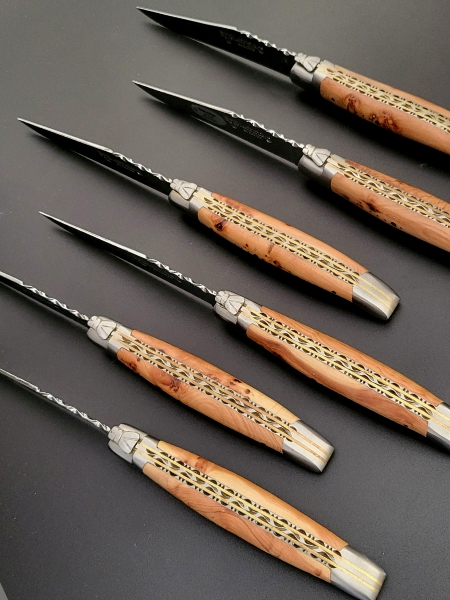
Laguiole FOLDING KNIVES
Discover our selection of Laguiole en Aubrac folding knives, a staple of French artisanal cutlery. These high-quality pocket knives, combining elegance and practicality, are the result of traditional craftsmanship and unique expertise in knife making.
All Laguiole Folding Knives
Our models without corkscrew
Stainless Steel or Brass Bolsters
Shiny or Mat finish
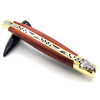
With or Without Corkscrew
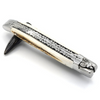
With or Without Corkscrew
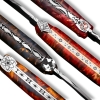
This exclusive collection from Laguiole en Aubrac showcases exquisite pocket knives that epitomize the art of fine cutlery.
French cutlery tradition elevated by Damascus steel and masterful craftsmanship
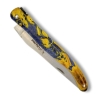
Exclusive Laguiole Knives: One-of-a-Kind Masterpieces
Where French Heritage Meets Everyday Utility
Sheaths, Box & Belt Pouches
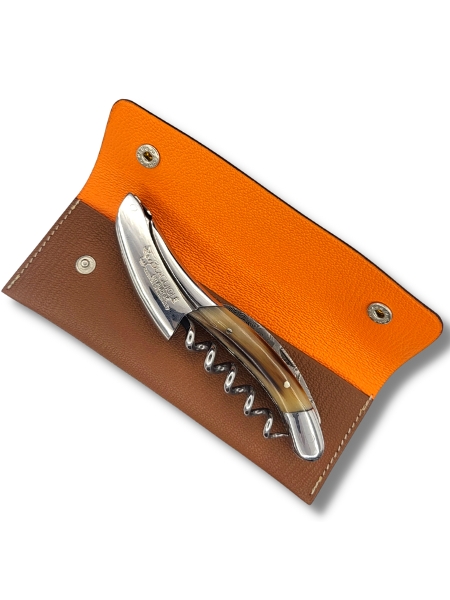
LAGUIOLE CORKSCREWS
Discover our range of Laguiole en Aubrac sommelier corkscrews, essential accessories for wine lovers and oenology professionals. Each corkscrew is crafted with the same care and quality standards as the famous Laguiole en Aubrac knives.
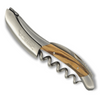
Marquetry - Wood - Horn or Bone
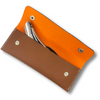
Leather Sheaths
FREE LASER ENGRAVING
Choosing a personalized Laguiole en Aubrac sommelier corkscrew means adding a touch of originality to an object already known for its quality and aesthetics!
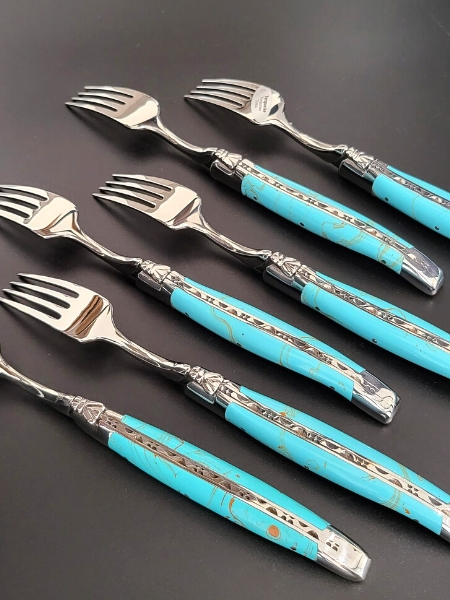
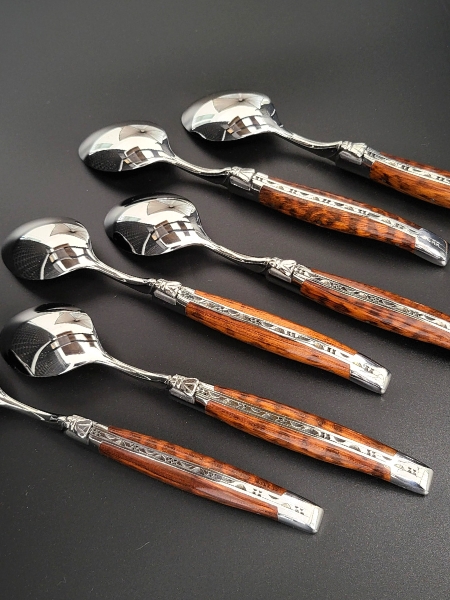
LAGUIOLE CUTLERY SETS
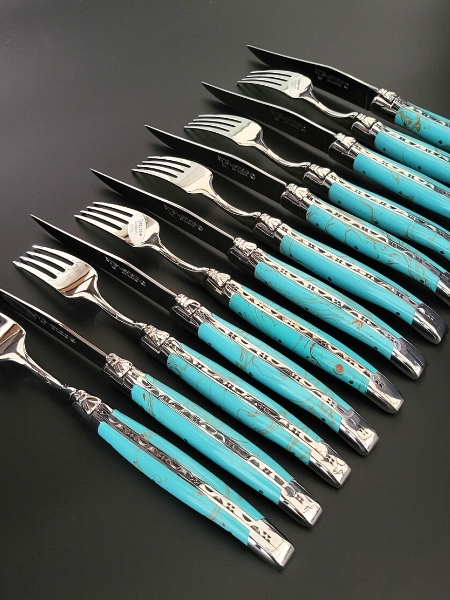
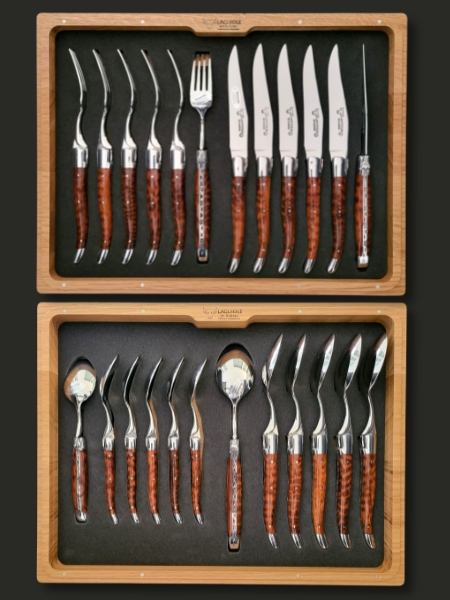
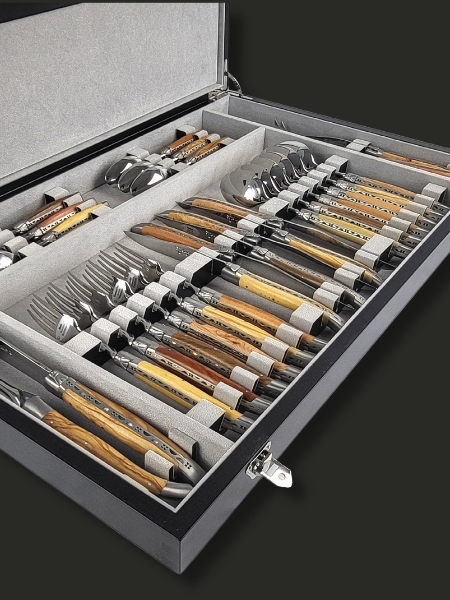
Our selection of Laguiole en Aubrac cutlery offers a range of choices from classic to modern models, featuring various colors and original handle materials. Available in sets of 2, 4, or 6, with or without forks, as well as soup and dessert spoons. Not to mention the famous table sets.
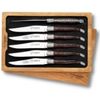
Various handle materials
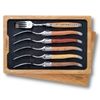
Various handle materials
Various handle materials
Various handle materials
Various handle materials
Various handle materials
Various handle materials
Various handle materials
Various handle materials
Various handle materials
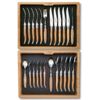
Various handle materials
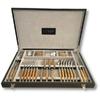
Various handle materials
Additional Knives and Sets
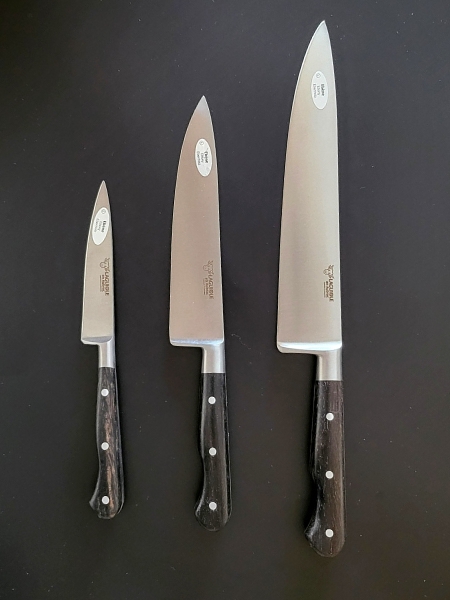
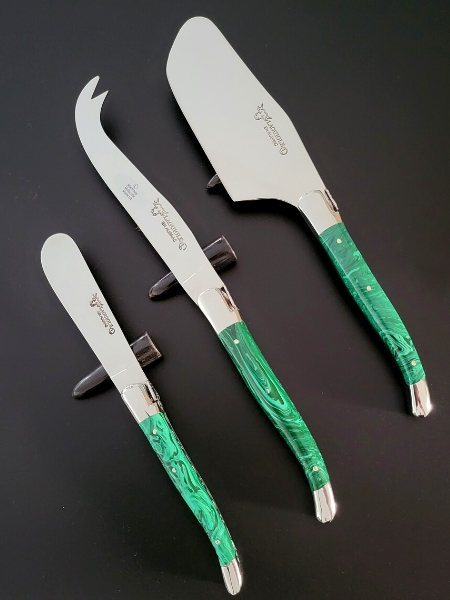
Discover the complementary cutlery range, designed to enhance your meals and offer you an unparalleled culinary experience. This refined and elegant collection includes cheese knives, oyster knives, carving sets, and many other essential accessories for a carefully set table.
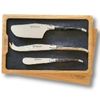
Individuals or in sets x3
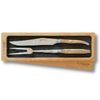
Various handle materials
Various handle materials

Various handle materials
Individuals or in sets x3
Recycled seashell handles
Various handle materials
Various handle materials