Handcrafted in Aveyron, the historic home of the Laguiole knife
Salamander’s Breath: Laguiole Knife with Full Elder Burl Handle – Chiseled Bee – Chiseled Spring and Guilloché Liners
645€
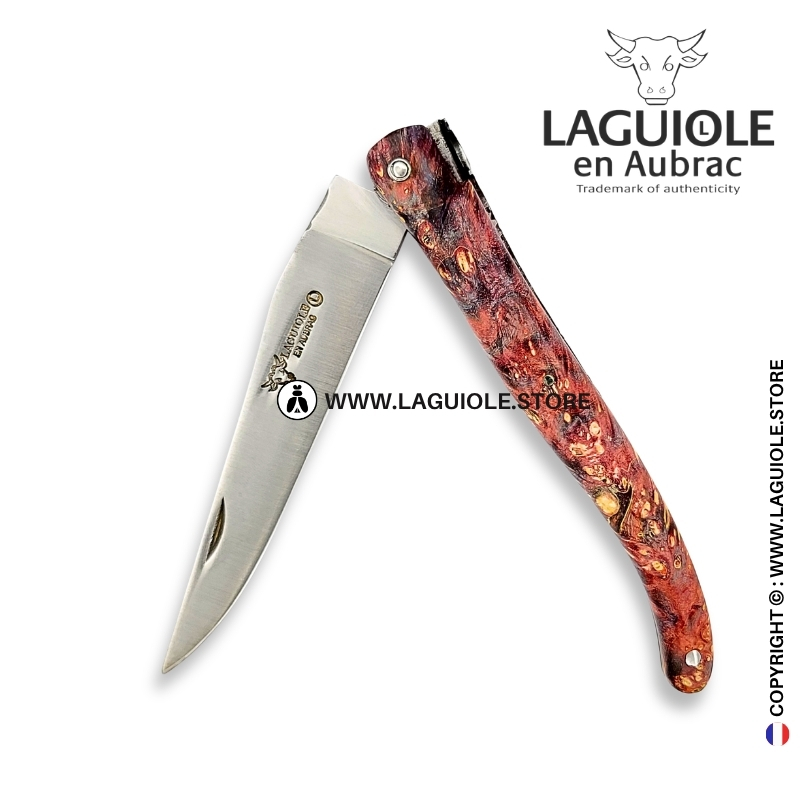
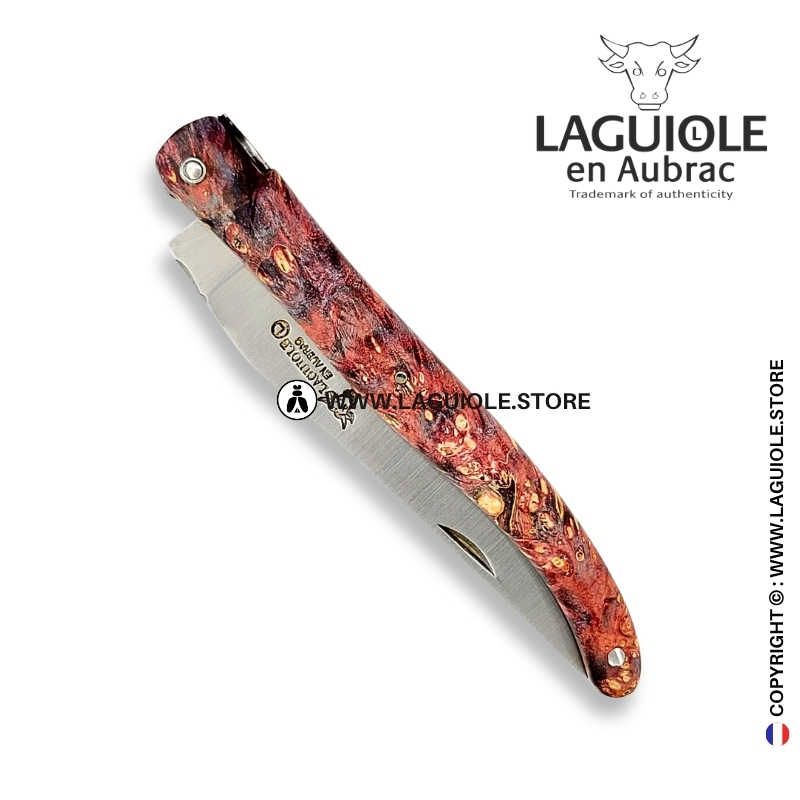
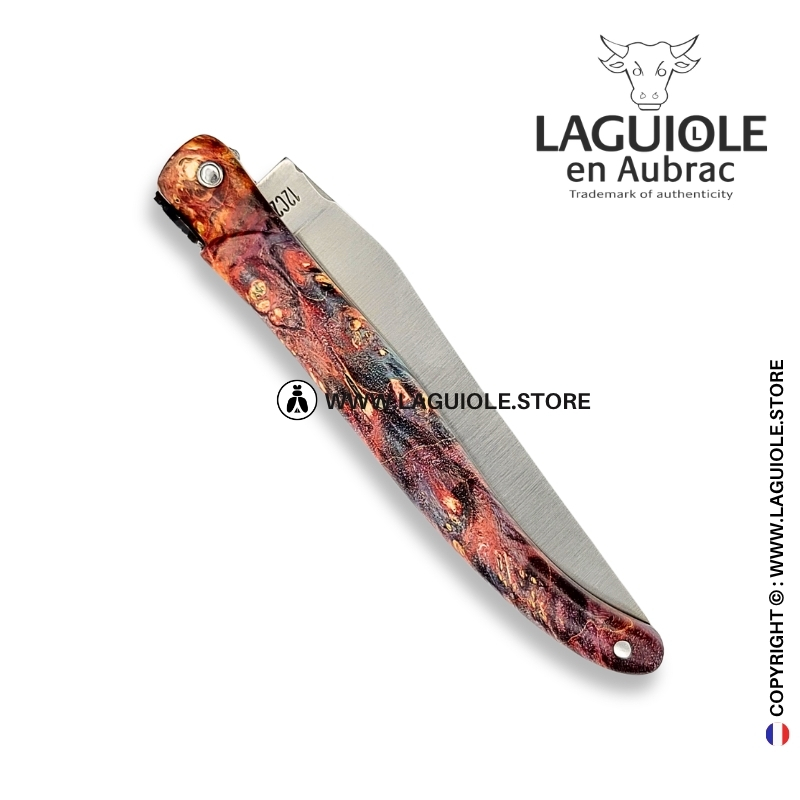
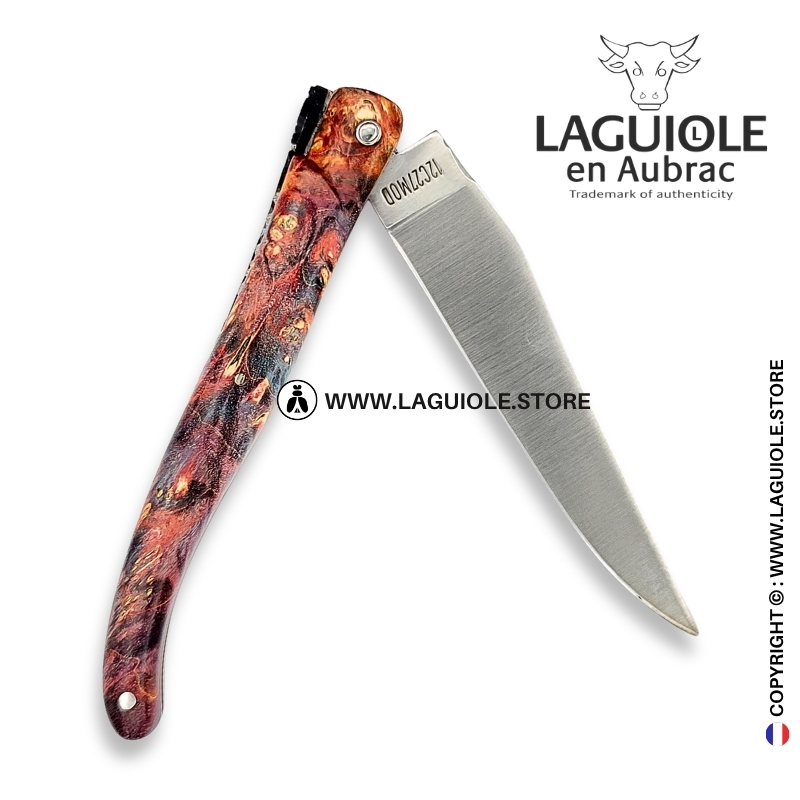
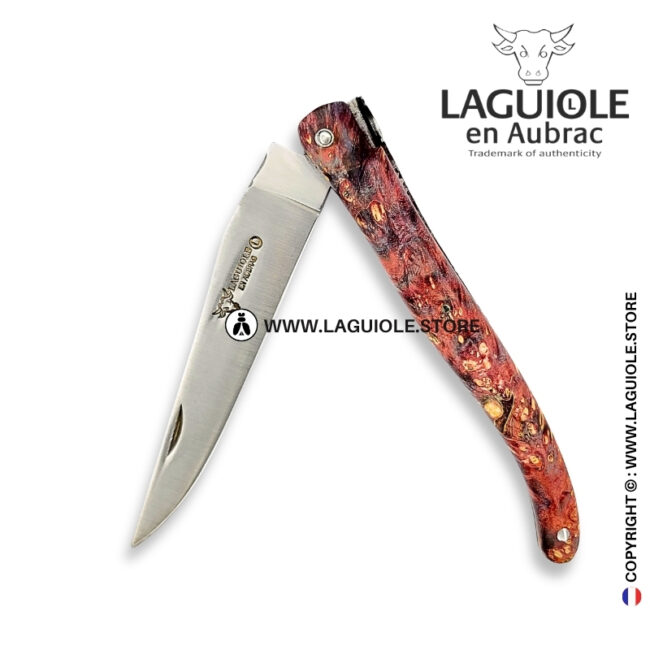
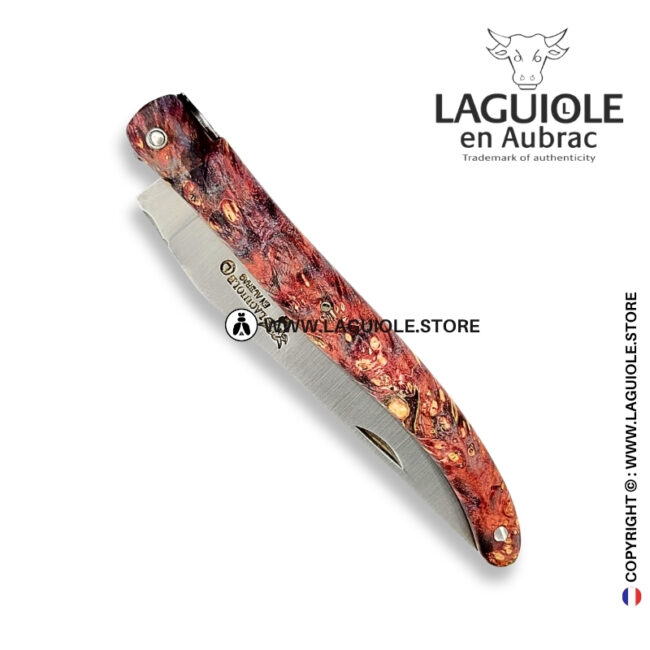
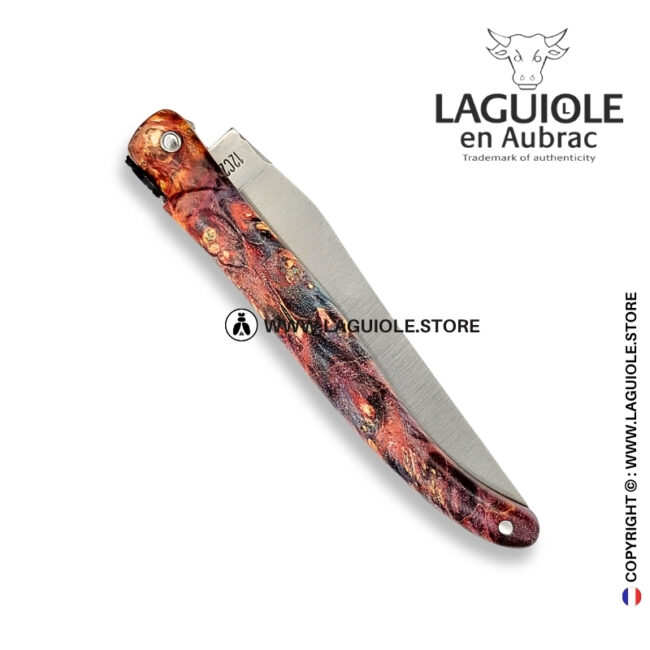
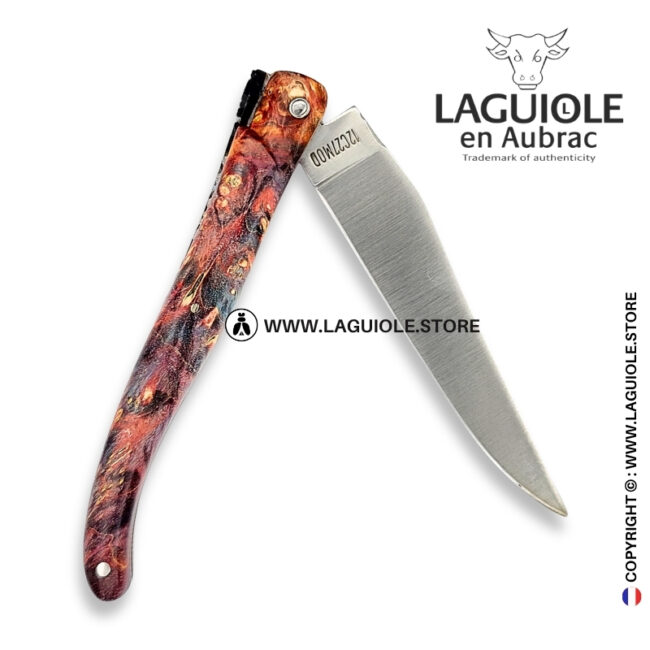
“Salamander’s Breath” is a unique Laguiole, and the whole of it, start to finish, is the handwork of one Laguiole en Aubrac cutler. The full handle, in elder burl that was stabilized and then dyed, has the color of a fire banked for the night: a dense midnight blue, nearly ink black. Through it tear streaks of orange and amber, edged here and there with cream, crossing the wood end to end, no two along the same course. Like live coals under ash, the burl’s eyes break through, and each shift of the light rekindles an ember in a spot where, a second earlier, there was only darkness.
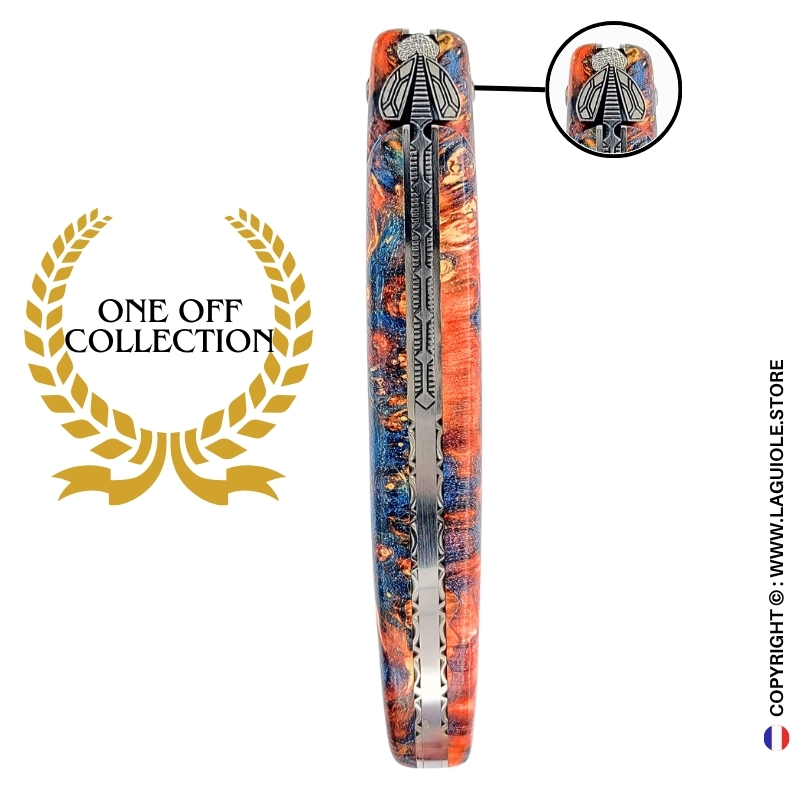
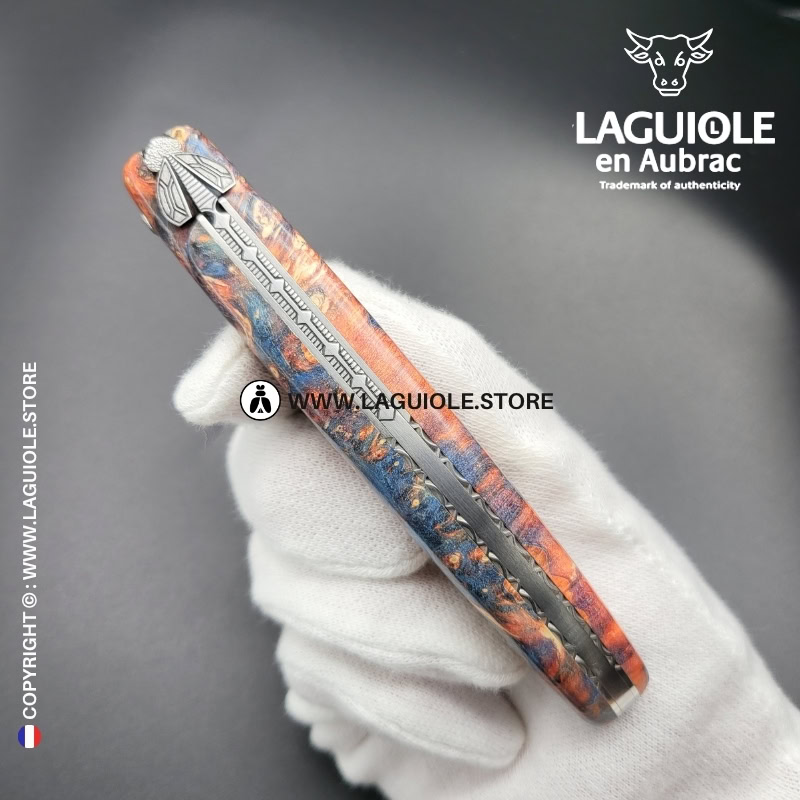
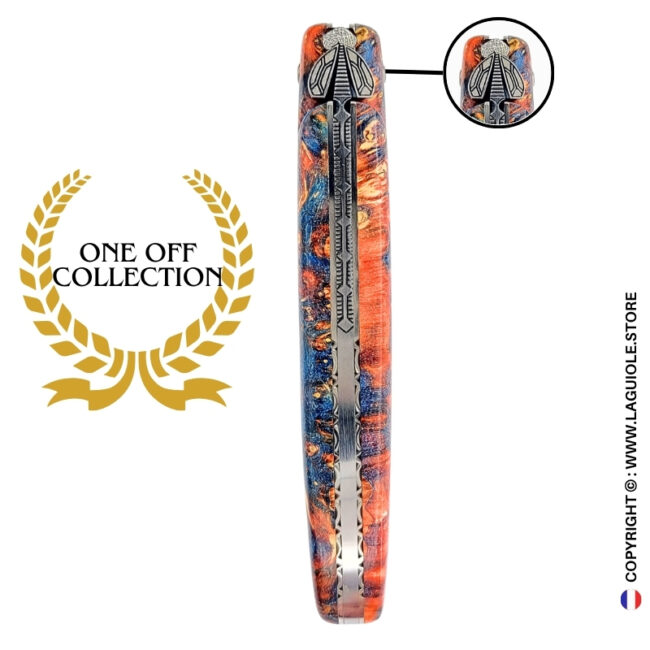
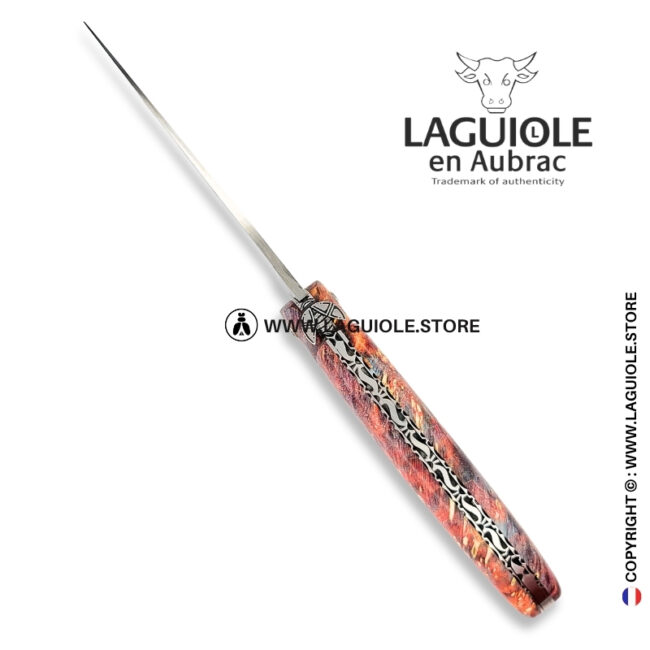
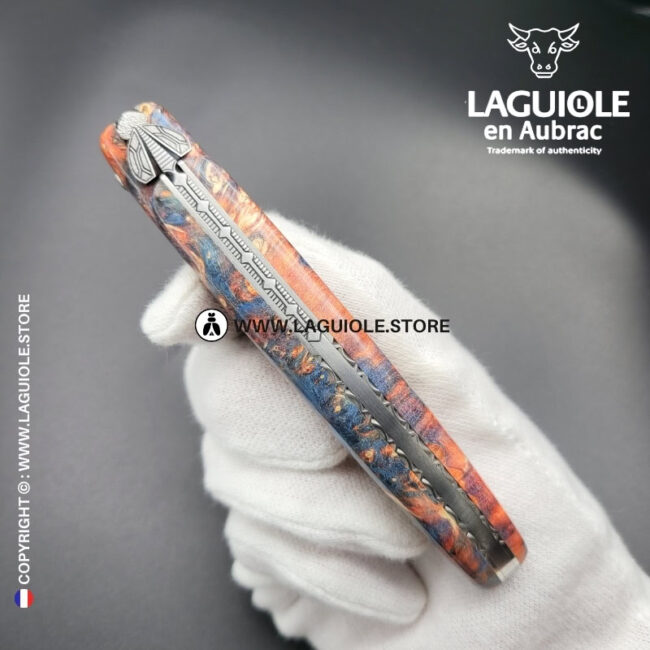
Up at the head sits the centerpiece of this blaze, the bee. A long spike forms its body, ribbed with parallel lines so tightly spaced they almost seem to quiver, like the white heart of a flame. On each side opens a generous wing, paneled by raised veins and outlined in a clean, decisive stroke. A domed knot of stippled beads sits behind the head, a burst of sparks caught and held in steel.
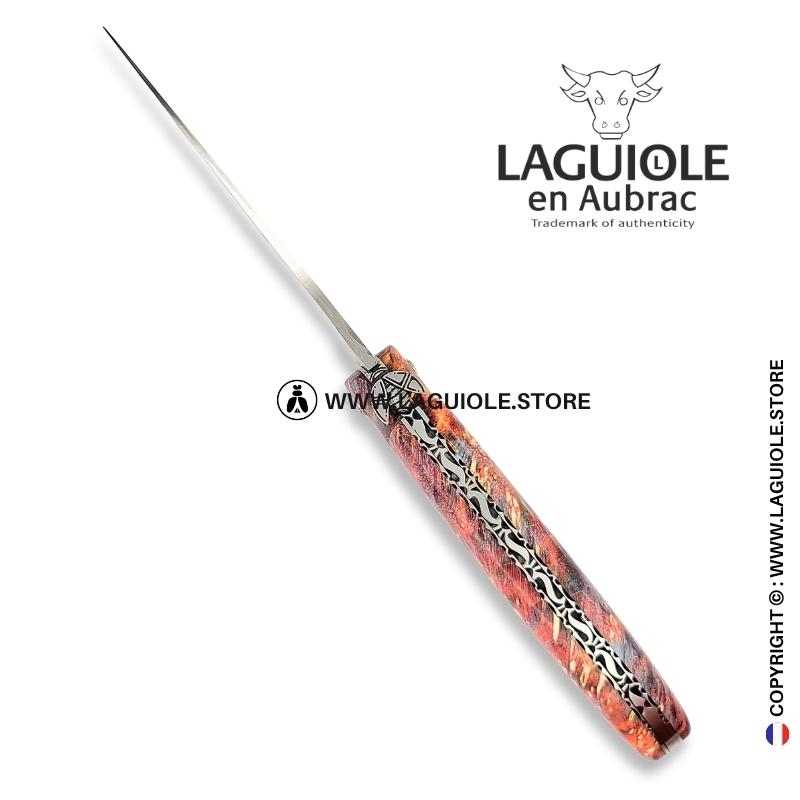
This bee does more than crown the knife. It is the hearth the whole design revolves around. Below it, the spring is still burning, chiseled with a dense frieze of chevrons and ribbed diamonds that interlock like the links of a chain. Then, about halfway along, the fire sinks low. From there the spring is plain polished steel, and the two liners pick up the ornament, guilloché with a delicate notched pattern. The flame has drawn back from the center and now only flickers along the sides in small embers. Few knives take this approach, since it means working two separate surfaces instead of one.
“Salamander’s Breath” is meant for Laguiole collectors drawn to a fiery piece, where color and chiseling say the same thing. Elder burl glowing with orange coals, a flame-bodied bee with its cluster of sparks, a chiseled spring, and guilloché liners make up a design of rare intensity, built for the pleasure of the eye as much as for the hand.