Handcrafted in Aveyron, the historic home of the Laguiole knife
Son of the Sun: Laguiole Knife in Mustard Yellow Mammoth Molar – Sculpted Bee – Chiseled Spring and Bolsters
1659€
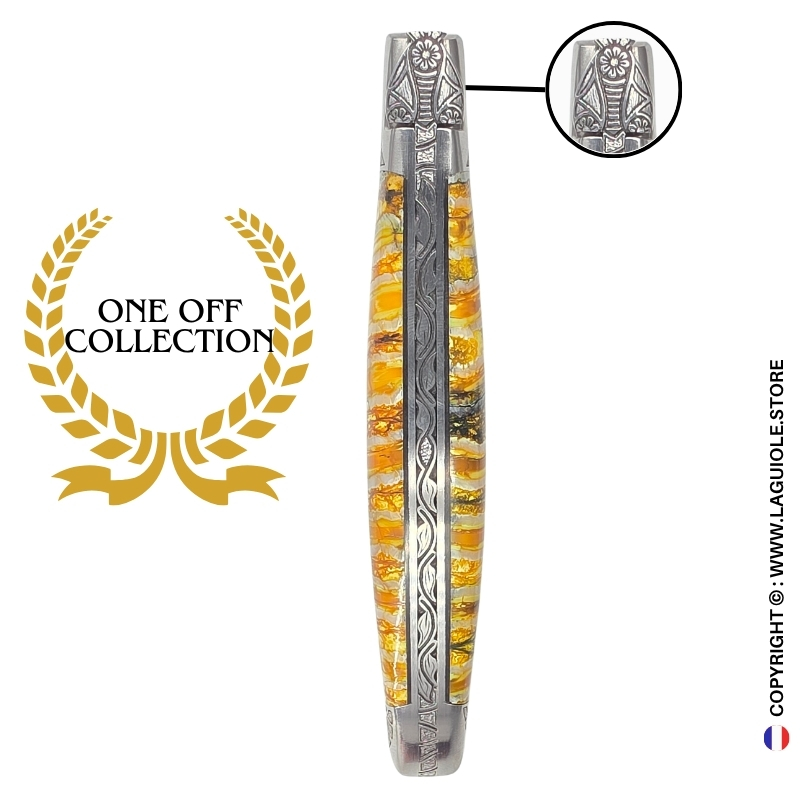
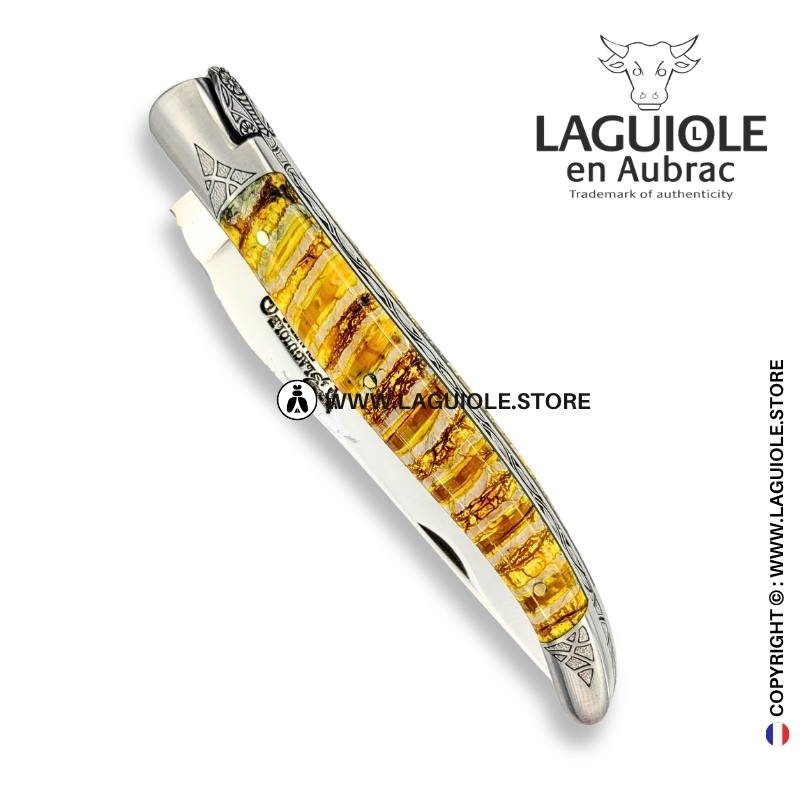
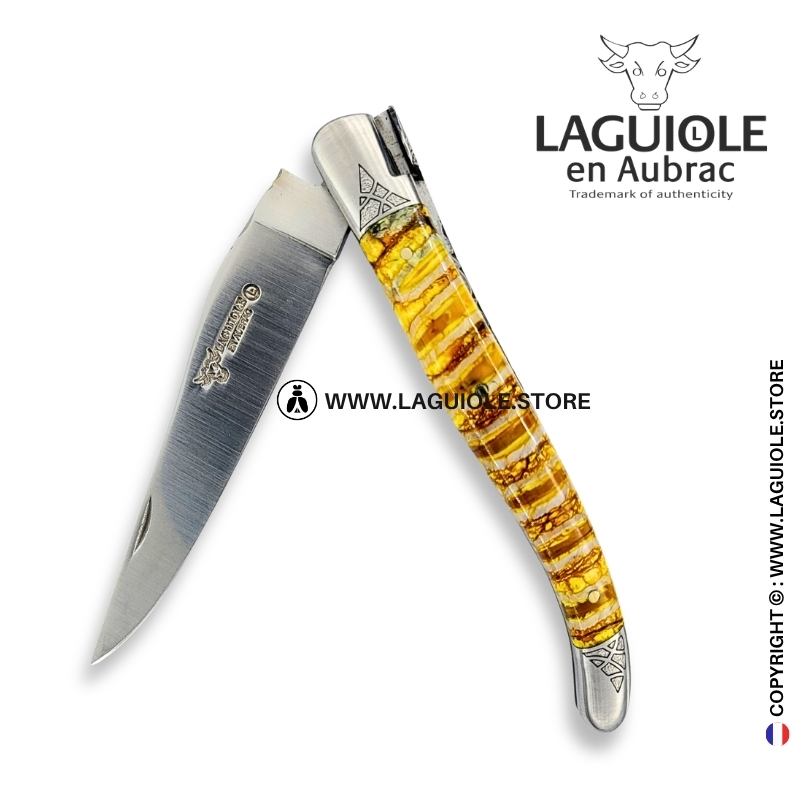
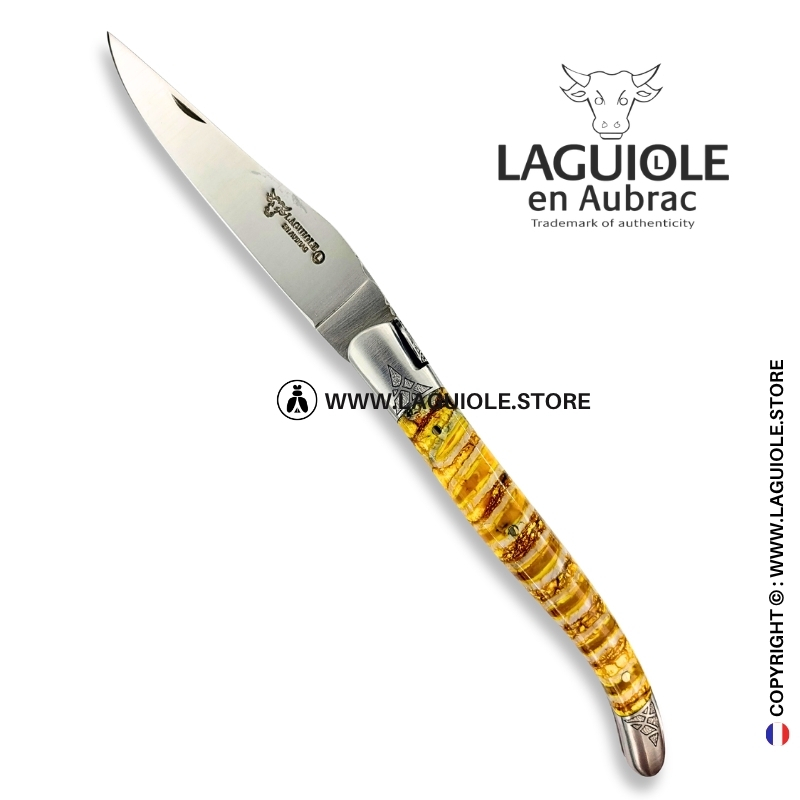
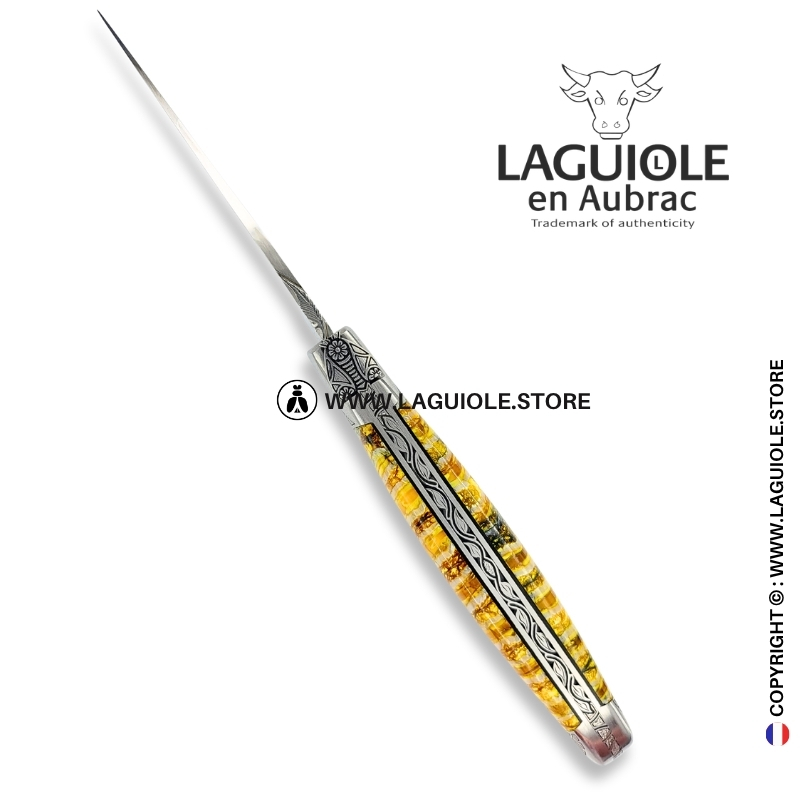
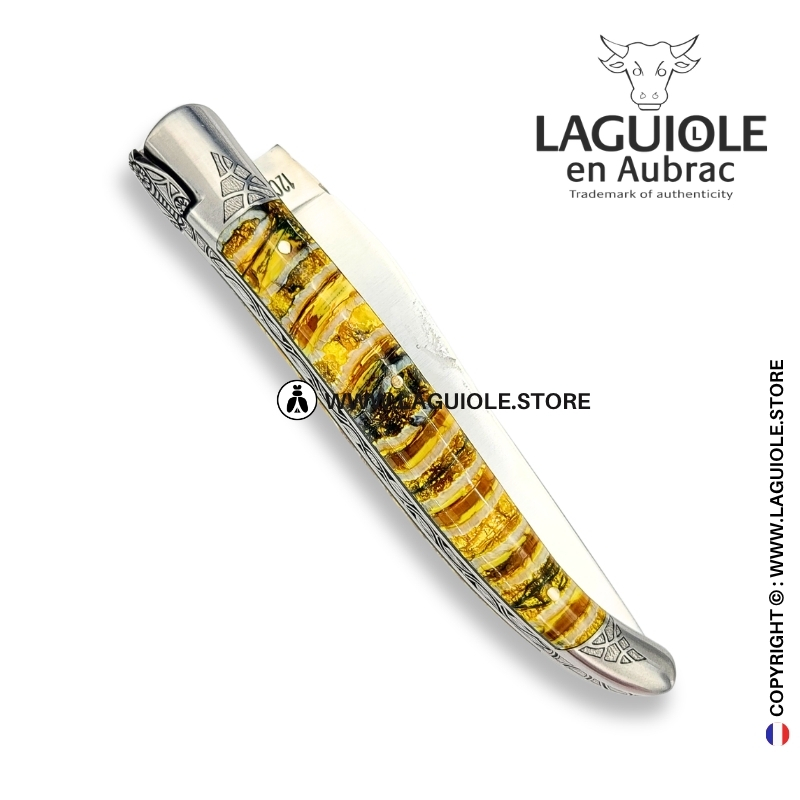
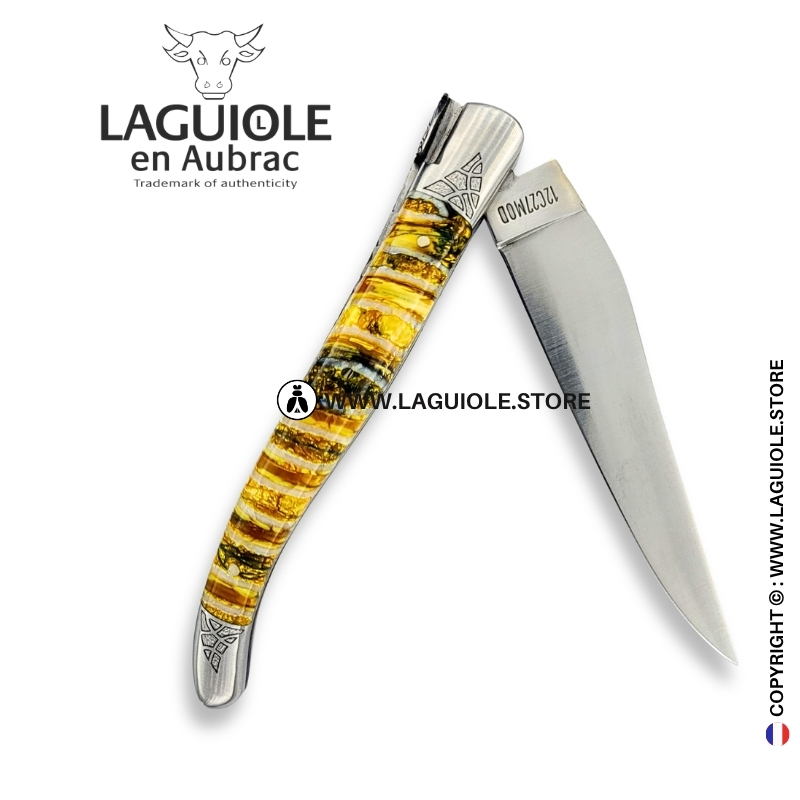
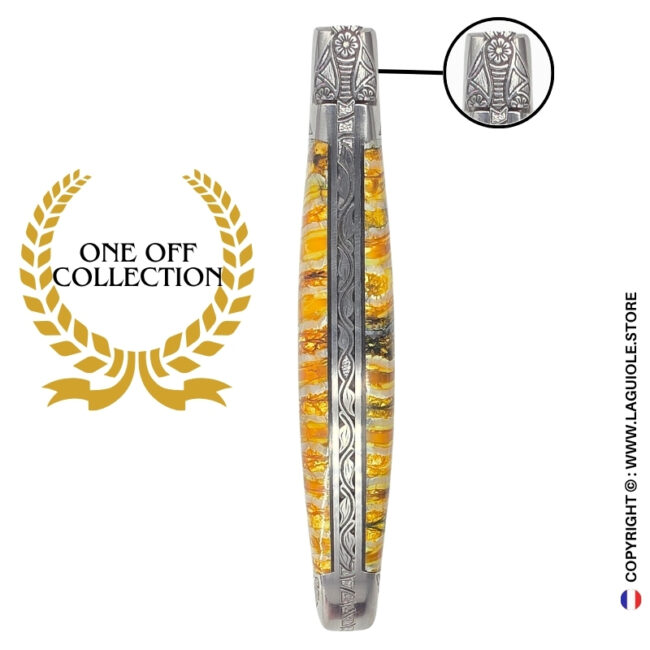
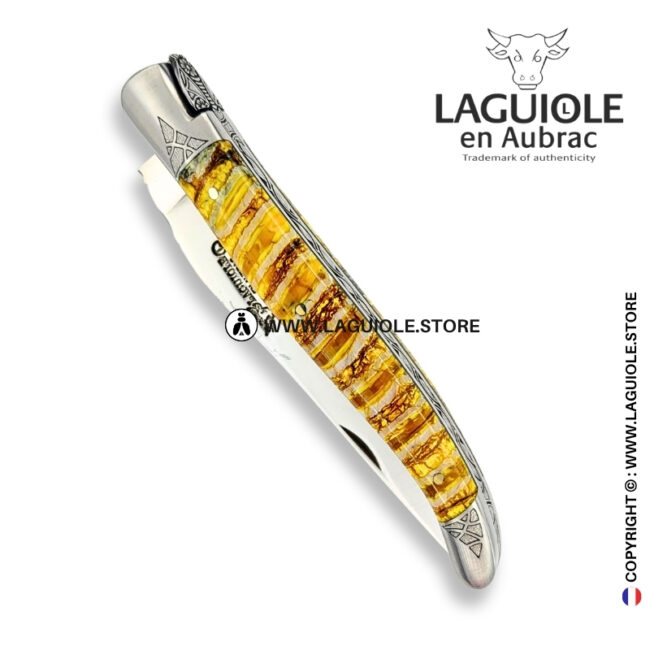
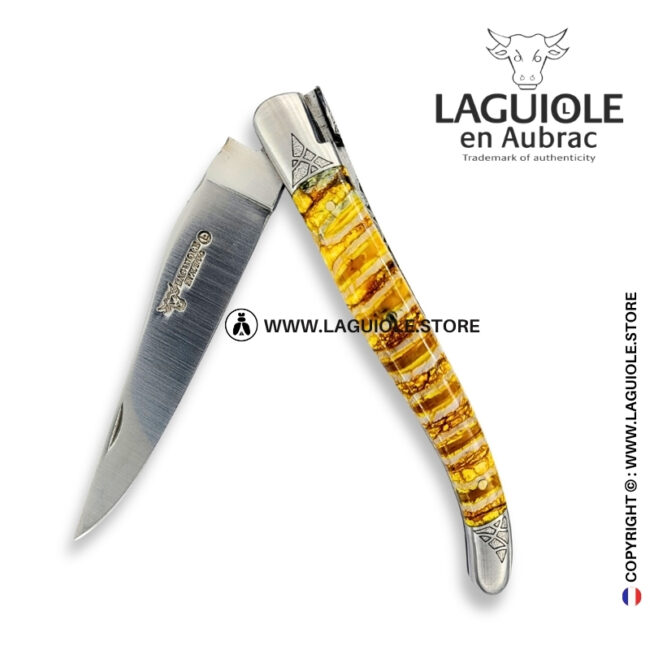
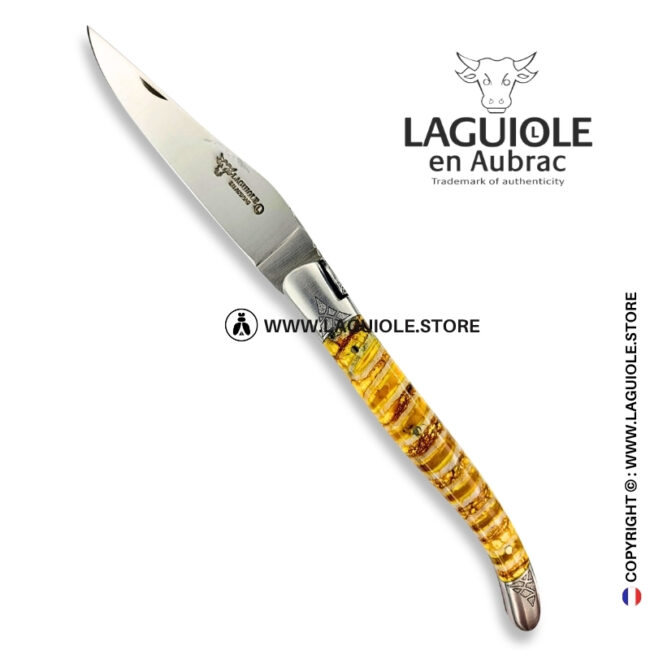
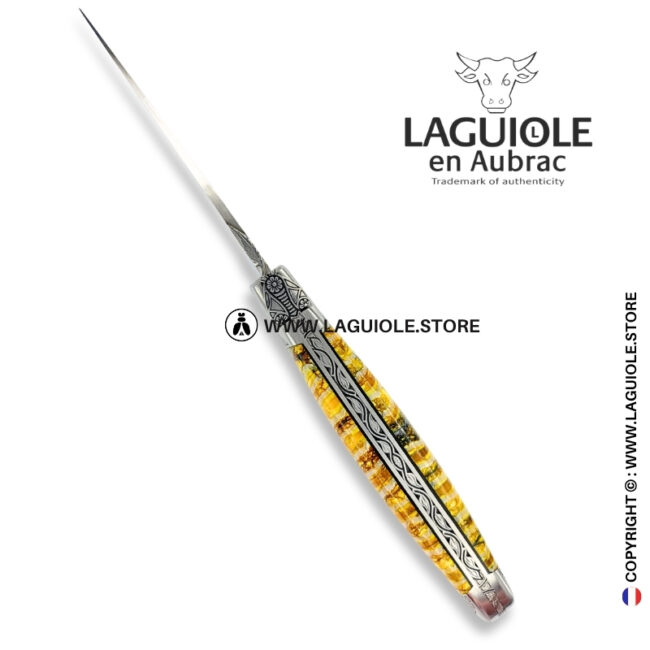
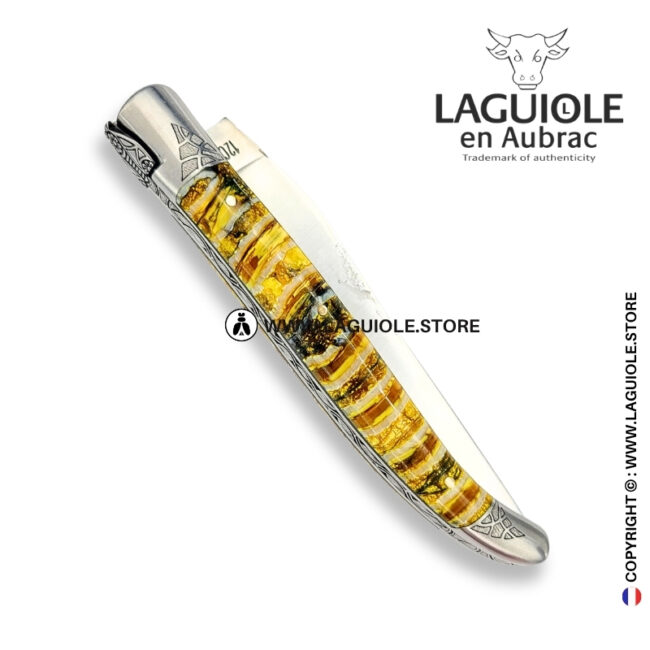
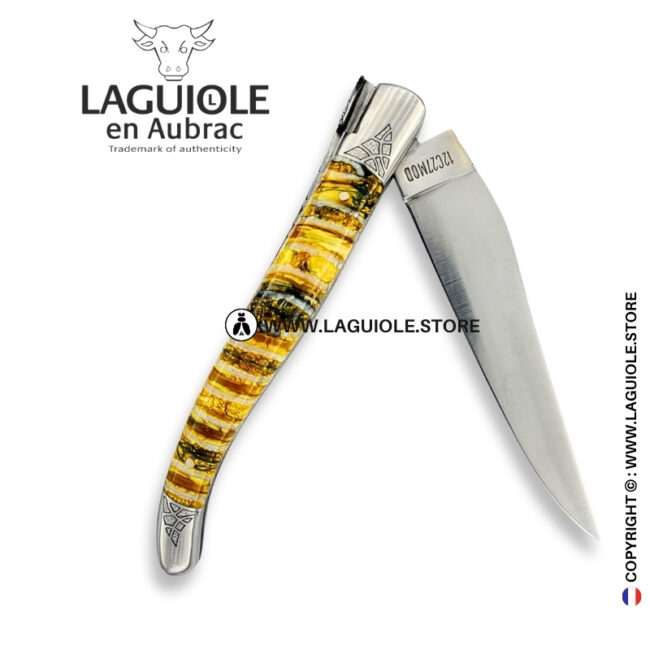
A handle the color of old gold and a bee that wears an open flower like a small sun: put the two together and you have “Son of the Sun.” It is a unique piece, and one cutler at the Laguiole en Aubrac manufacture made it by hand from beginning to end. The mustard yellow mammoth molar has been sawn to expose the stacked plates of the fossil tooth, and they file across the handle in close bands of deep amber, honey, and creamy white, interrupted here and there by darker streaks that break up the glow. A black spacer draws a firm line between fossil and stainless steel liners, which keeps the edge of the handle crisp.
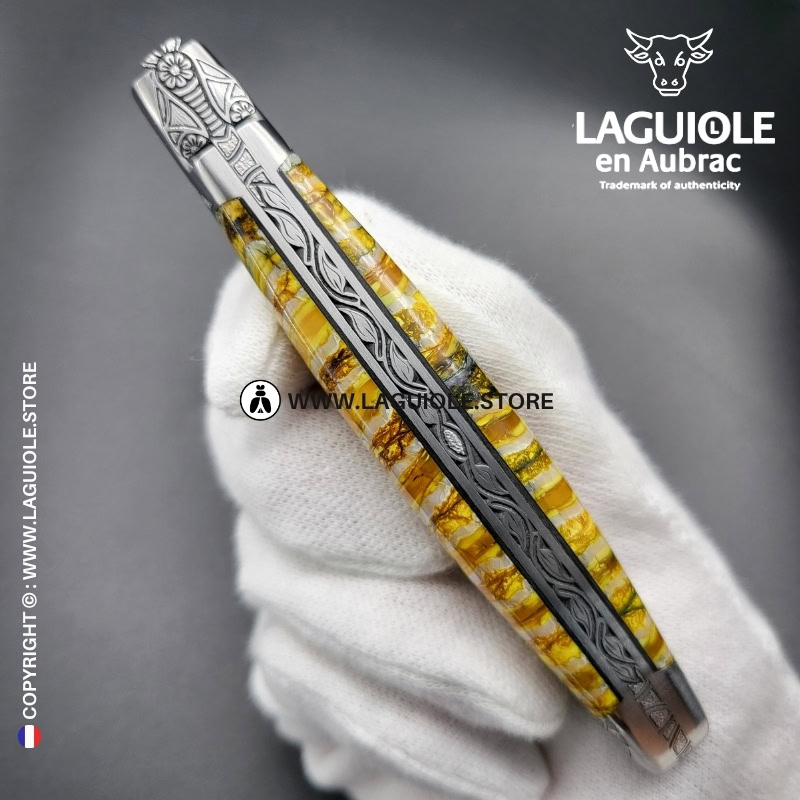
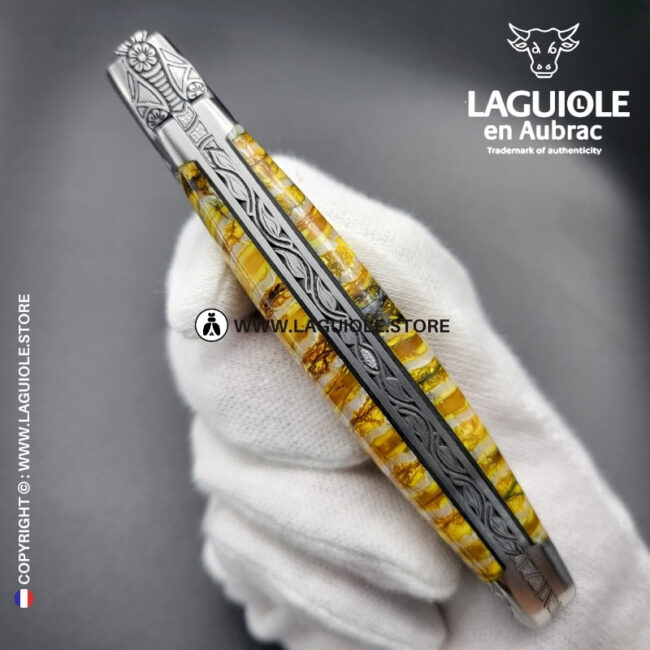
The bee at the head is composed like a ceremonial pectoral. An open blossom sits at the very top between two little ribbed fans. Below it the body steps down in a ladder of even rungs, while an almond-shaped wing opens on each side, divided by a central vein, polished on one side of it and stippled on the other. Two more fans close the figure at the base, and the symmetry is exact.
The spring takes up the work without a single pause. Just under the bee, a framed and stippled panel sets things in motion, and from there a garland of slender, lance-shaped leaves twines around a wavy stem, the leaves leaning alternately toward one edge and then the other, each one outlined and veined individually. The garland covers the full length, climbs onto the rear bolster, and ends there in stippled triangles. Since both bolsters are chiseled as well, the ornament wraps the whole piece and the steel never goes bare.
Collectors who look for a ceremonial piece, one where material and chiseling speak with a single voice, will find it here. Mustard yellow molar, a black spacer, steel liners, a garland of leaves running down the spring, and a flower-crowned bee hold together with rare poise, as pleasing in the hand as they are to the eye.