Handcrafted in Aveyron, the historic home of the Laguiole knife
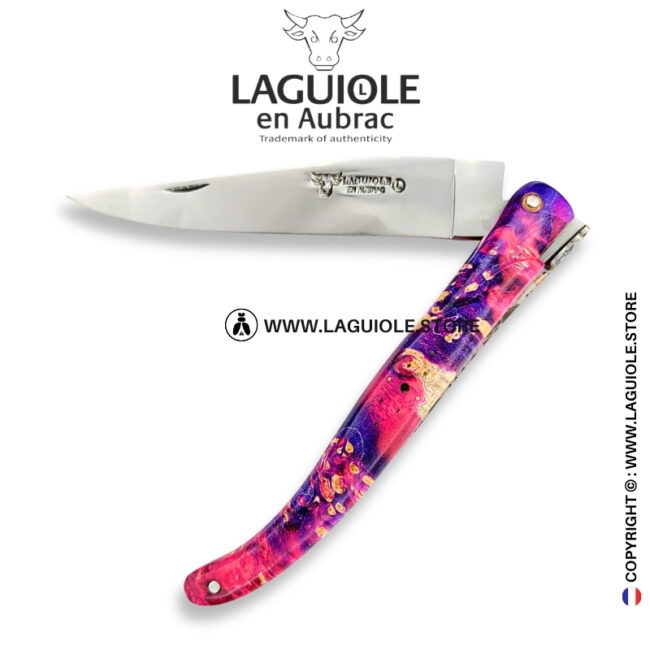
Reliquary of Dawn: Laguiole Knife with Full Pink Elder Burl Handle – Chiseled Bee – Copper Liners with Set Stones
989€
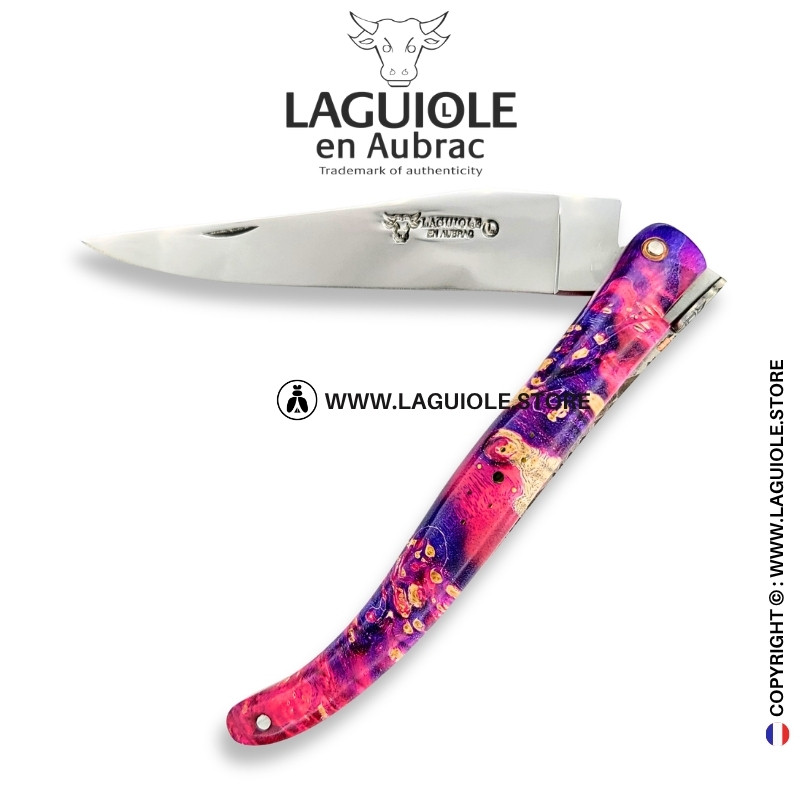
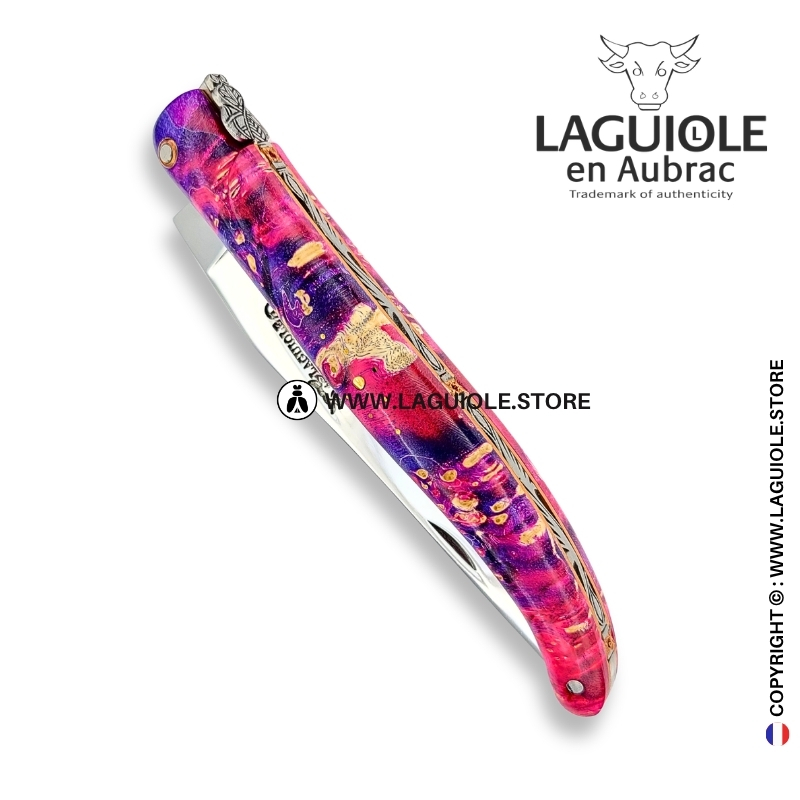
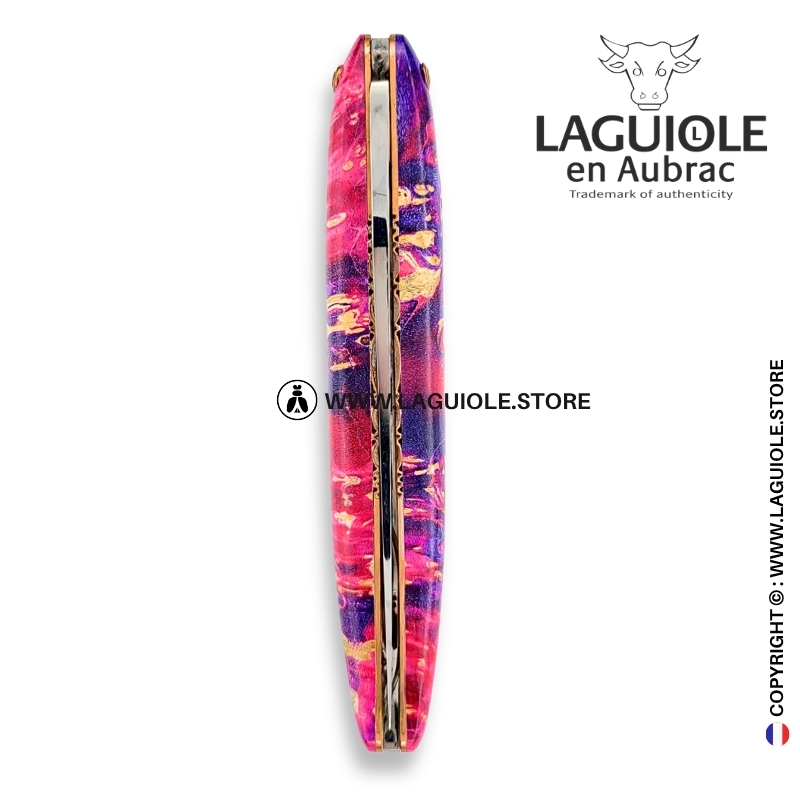
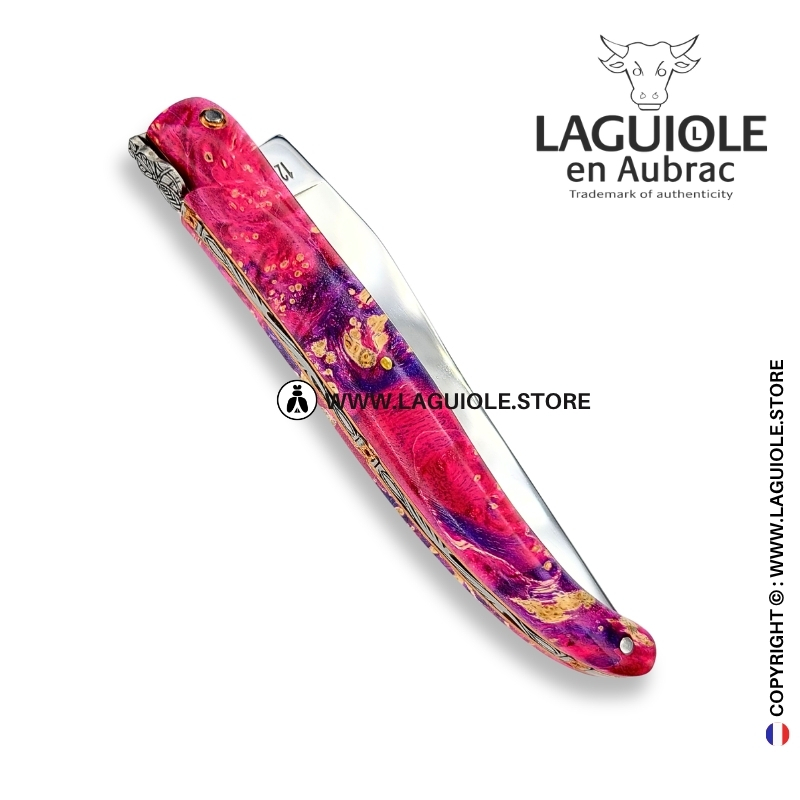
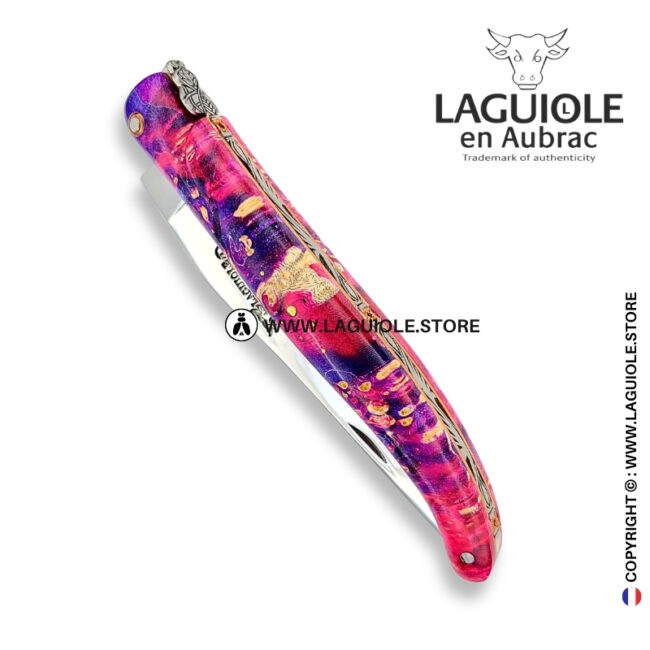
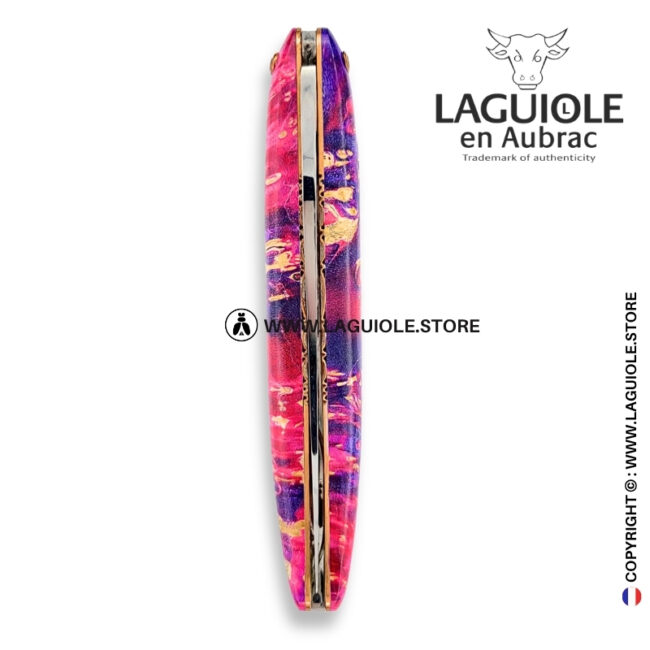
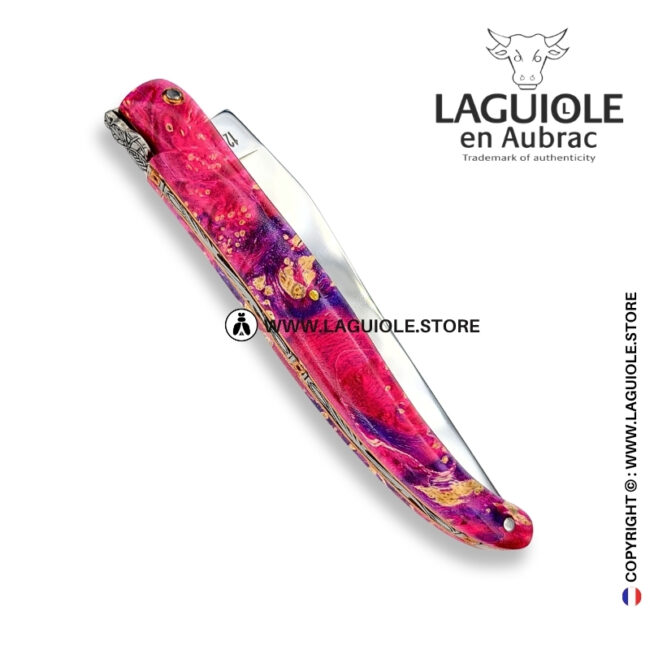
There is only one “Reliquary of Dawn,” and it was handmade at every stage by one cutler at Laguiole en Aubrac. The full handle, in elder burl dyed pink, carries the color of the sky in the minutes before sunrise: a saturated fuchsia that turns violet deep in the grain and lightens toward raspberry on the high points, its shade changing with the smallest movement of the hand. Wherever the wood is tightest, the dye did not take, and broad stretches of cream and honey open up, like the first gaps of light in a night that is finally ending.
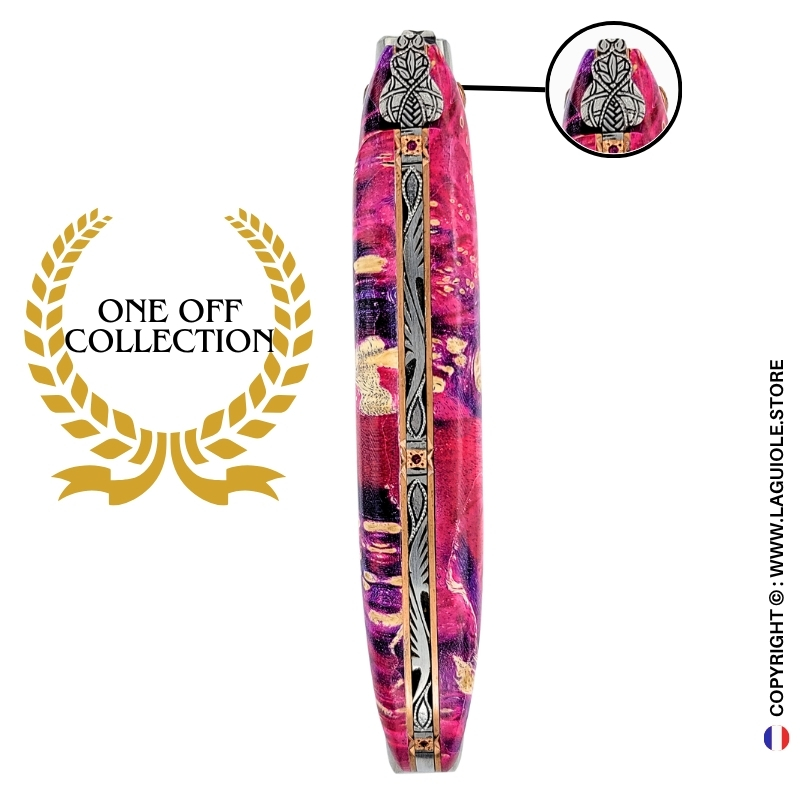
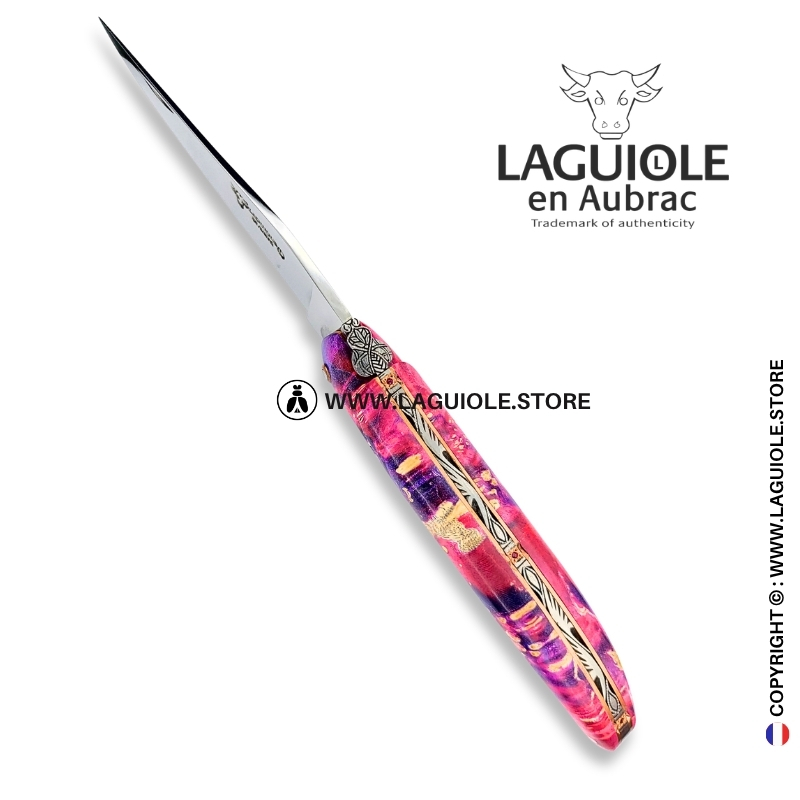
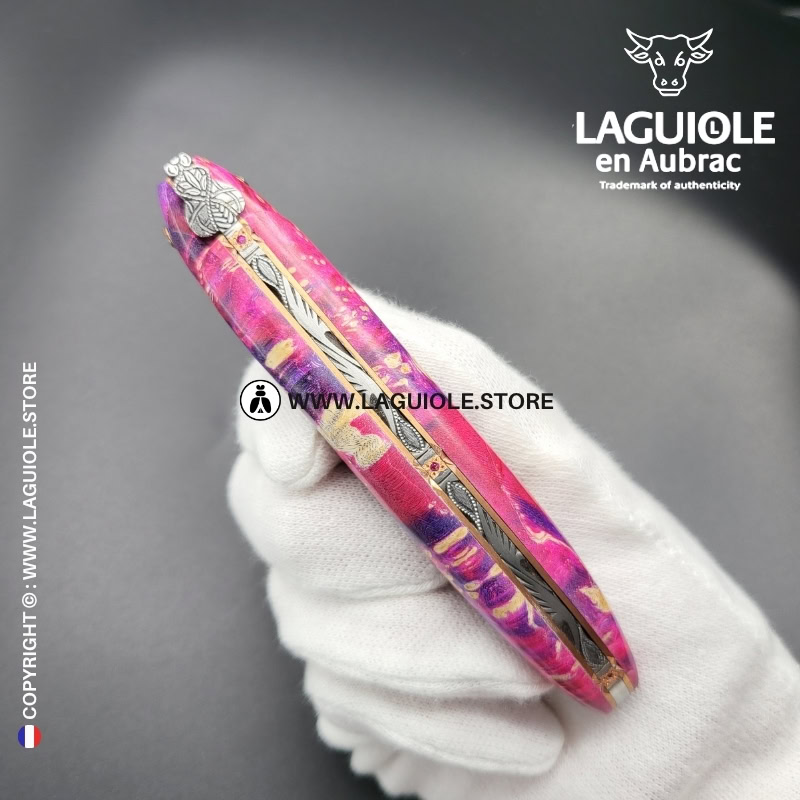
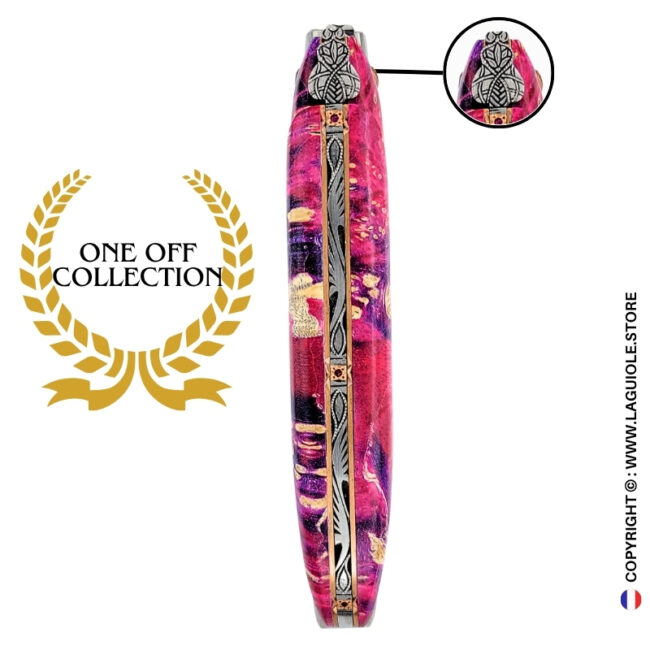
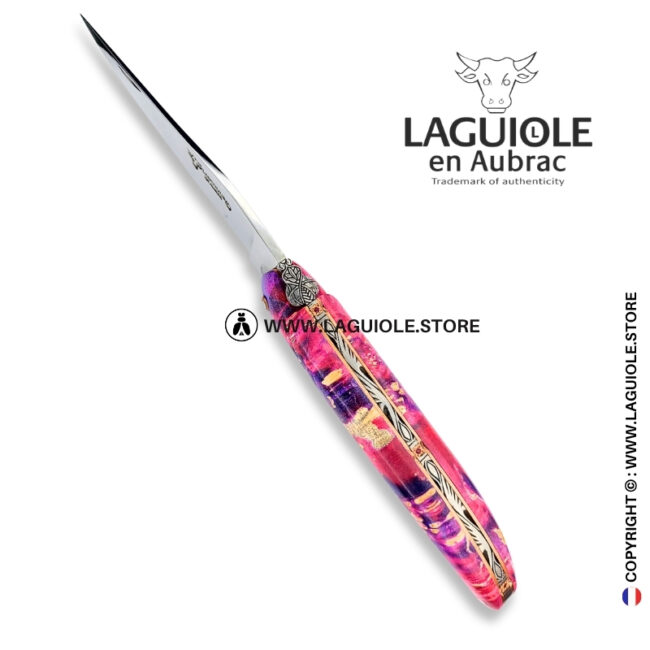
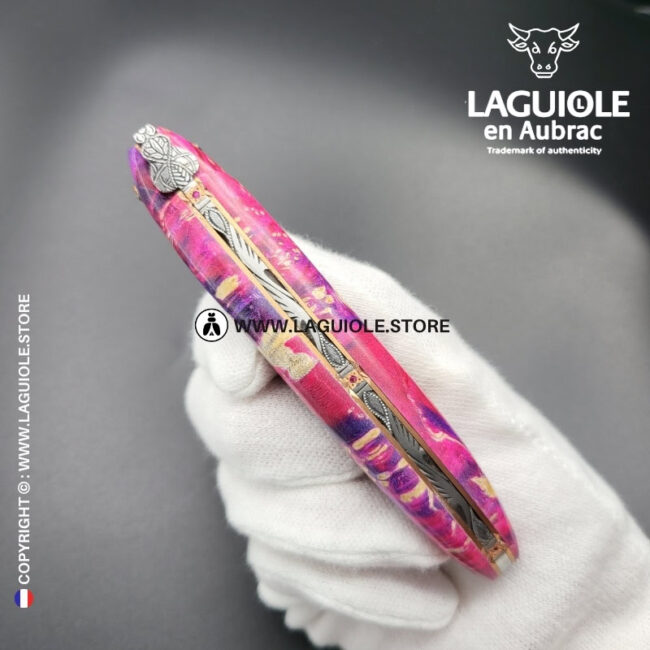
At the head, the bee is botanical through and through. Two round, polished buds top it like a pair of eyes not yet open. Under those buds, pointed leaves fan out in a rosette, every vein finely chiseled, and the body is simply a bundle of pliant stems that cross over, loop together, and break out again into foliage. Rather than a bee resting on a plant, this is a bee grown out of one.
Two copper liners enclose the spring along its full length, their warm metal answering the pink of the wood without clashing with it. Between them, two chiseled motifs take turns: long almond shapes, each ringed by its own cord of beads, and fans lined with tightly packed ribs, like palm leaves folded shut. At intervals, pink stones in copper bezels punctuate the line and give the ornament its pauses, much as gems do on a piece of jewelry.
“Reliquary of Dawn” is intended for Laguiole collectors who want a piece precious in every detail, its wood, metal, and stones all in perfect agreement. The deep pink of the burl, the stone-set copper liners, the chiseled spring, and the leafy bee come together in a richly worked design, made to be enjoyed by the eye and the hand in equal parts.