Handcrafted in Aveyron, the historic home of the Laguiole knife
Gilded Watercolor: Laguiole Knife in Multicolor Elder Burl – Sculpted Bee – Brass Bolsters and Copper Liners
649€
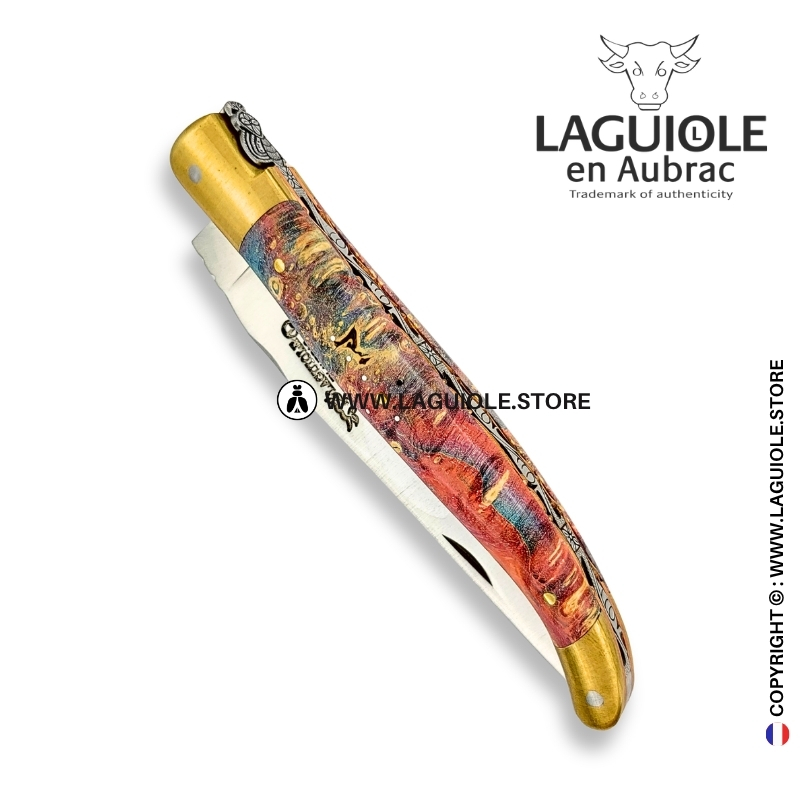
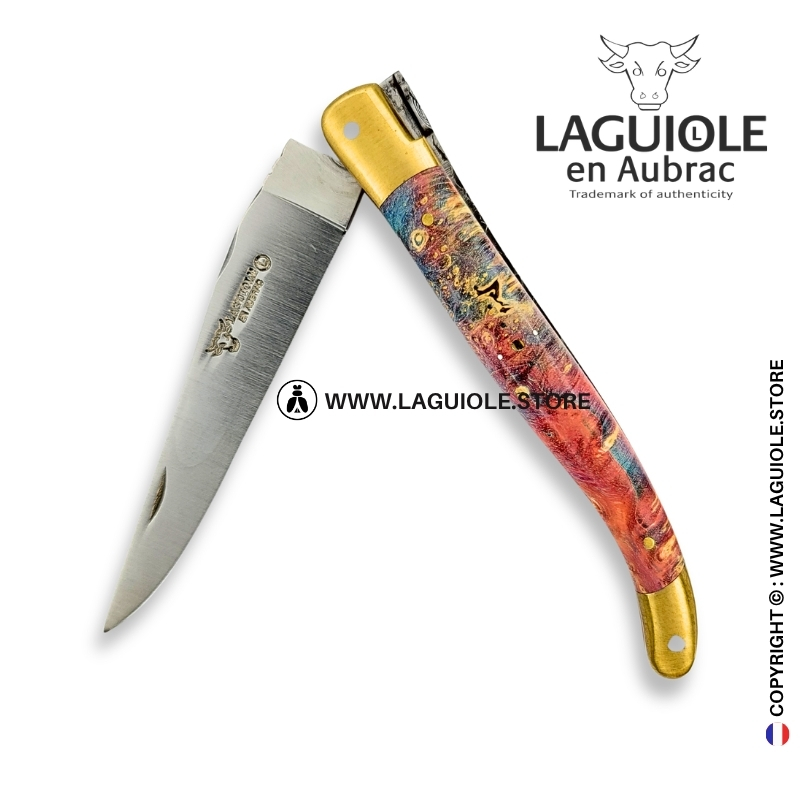
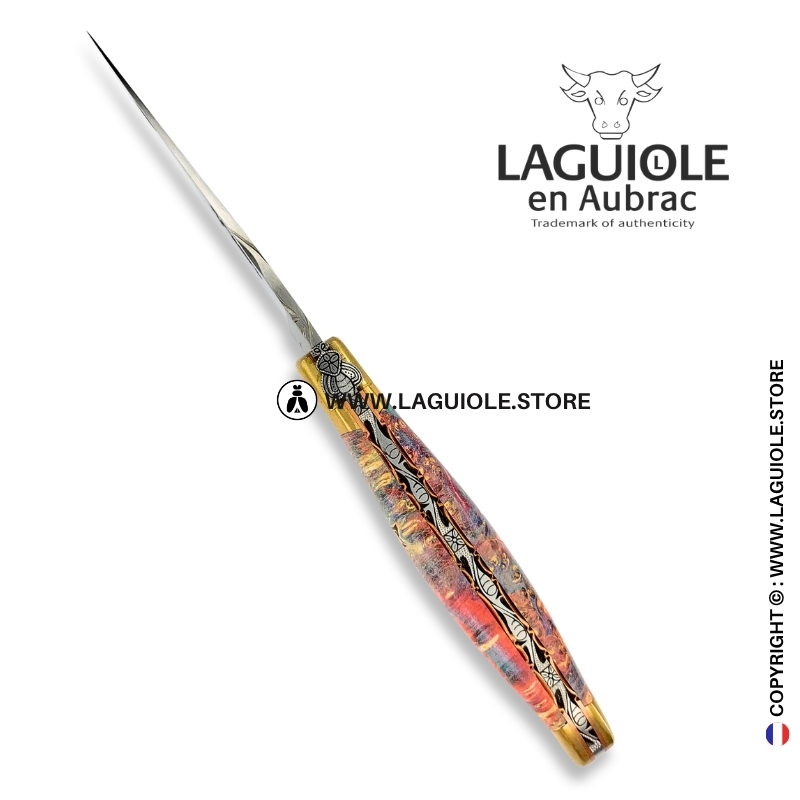
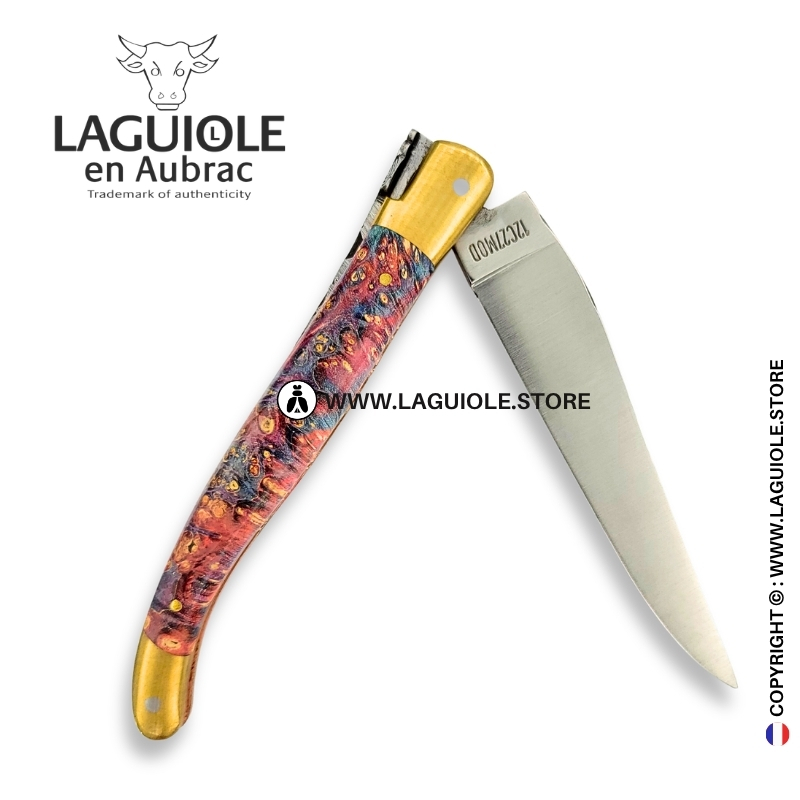
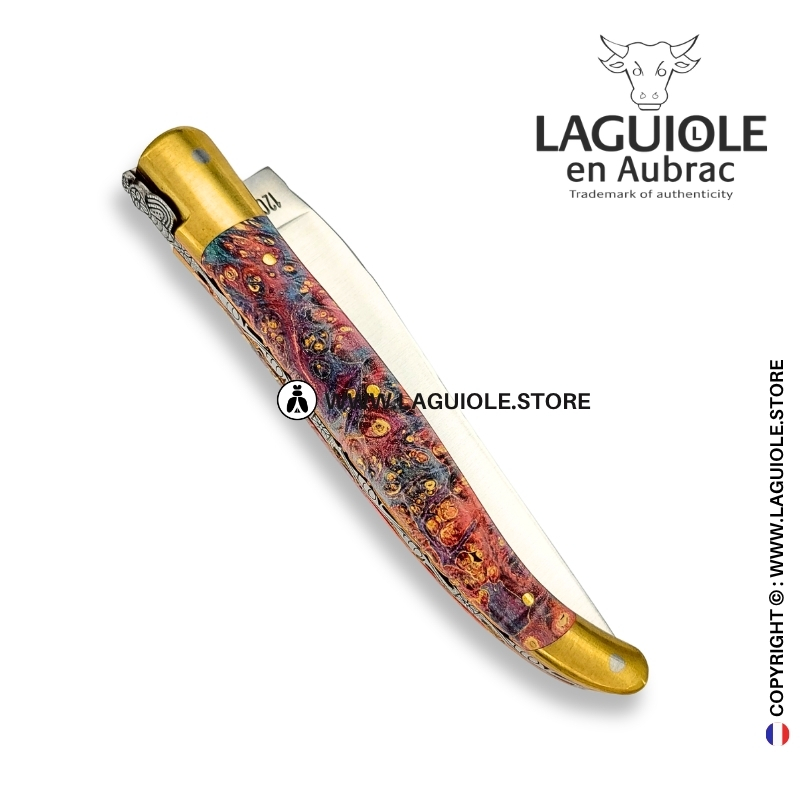
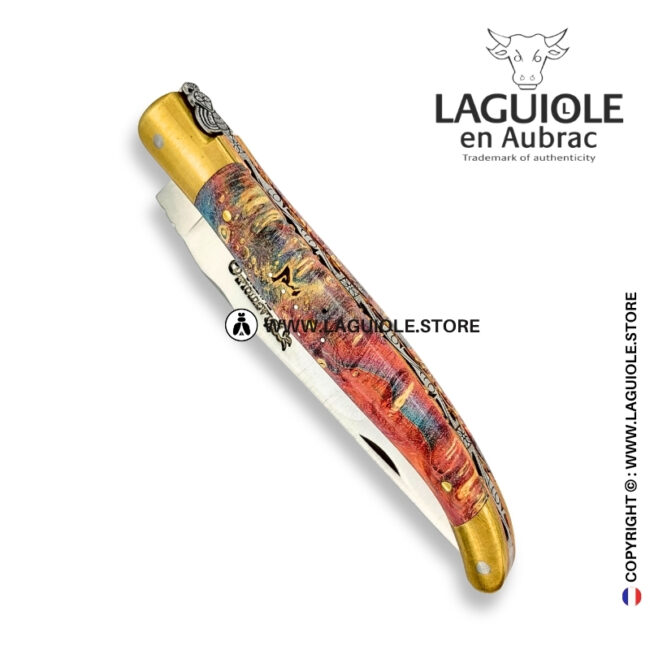
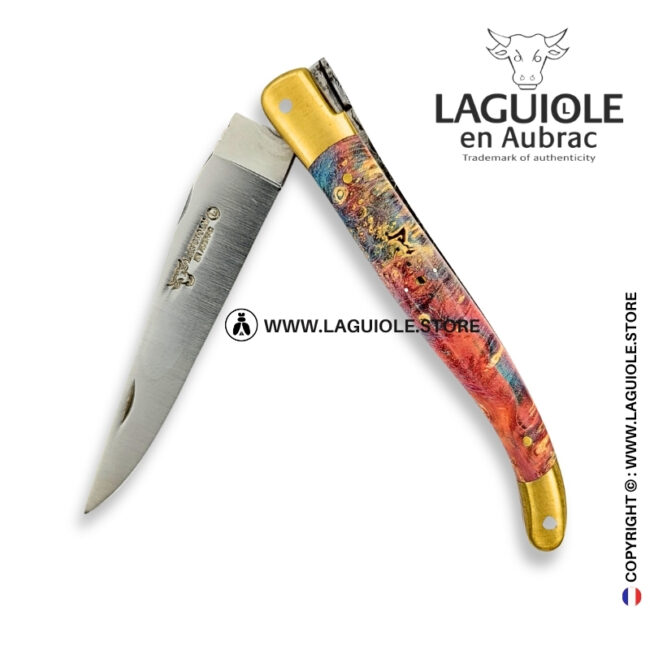
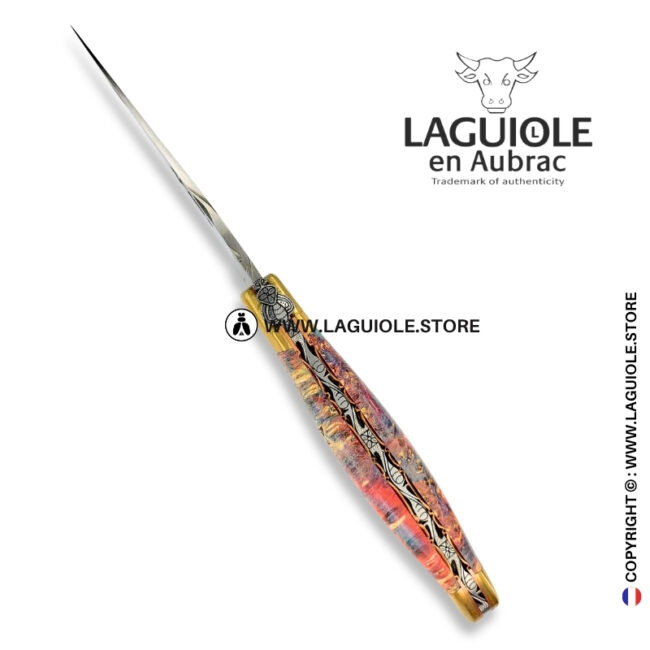
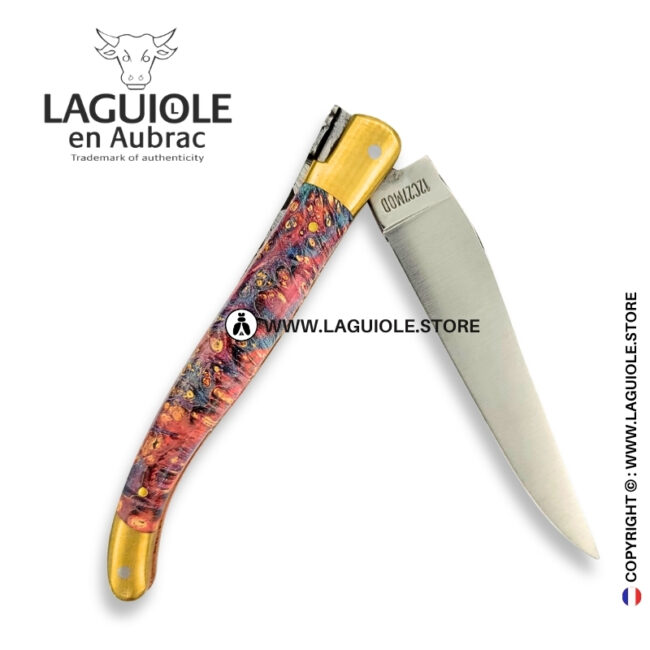
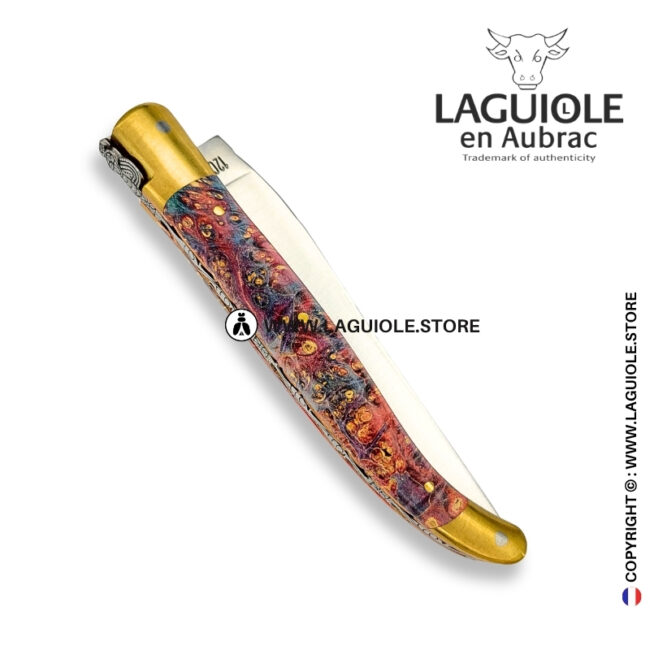
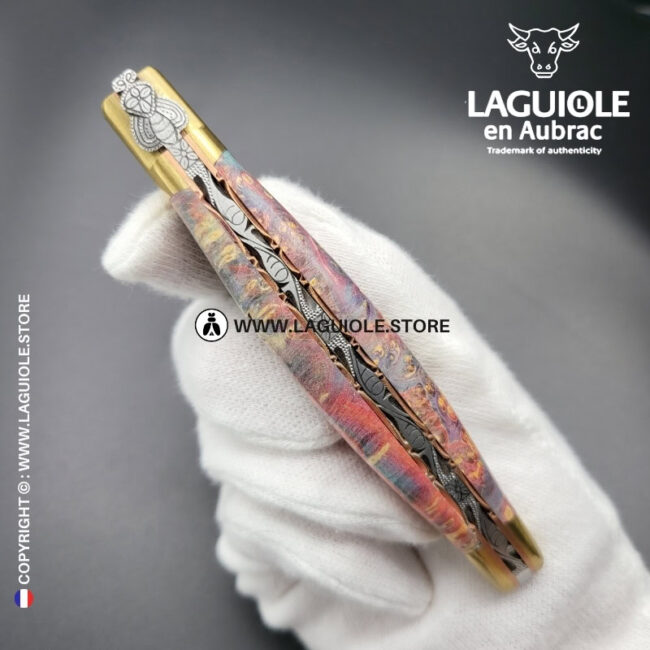
“Gilded Watercolor” owes its name to the handle, where the colors have run together like pigment on damp paper. It is a one-off Laguiole, the handwork of a lone cutler at Laguiole en Aubrac. Multicolor elder burl forms the handle: washes of vermilion and burnt sienna flow up against patches of slate blue, slide toward ochre and golden yellow, and fade to cream wherever the eyes of the wood come to the surface. Every shade dissolves into the next through soft, wet transitions without a single crisp outline, so each side of the handle paints a slightly different landscape.
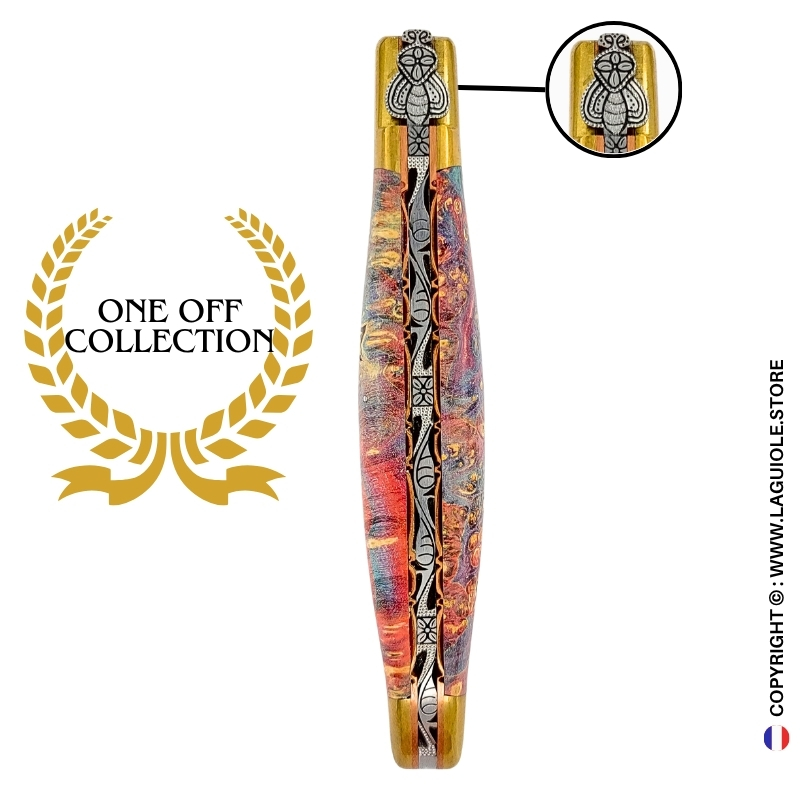
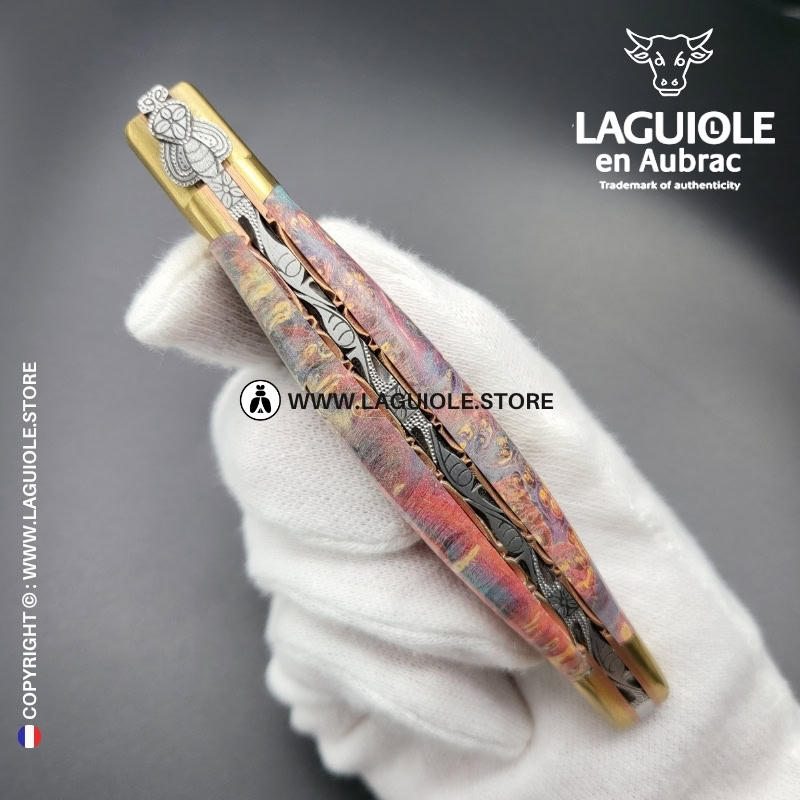
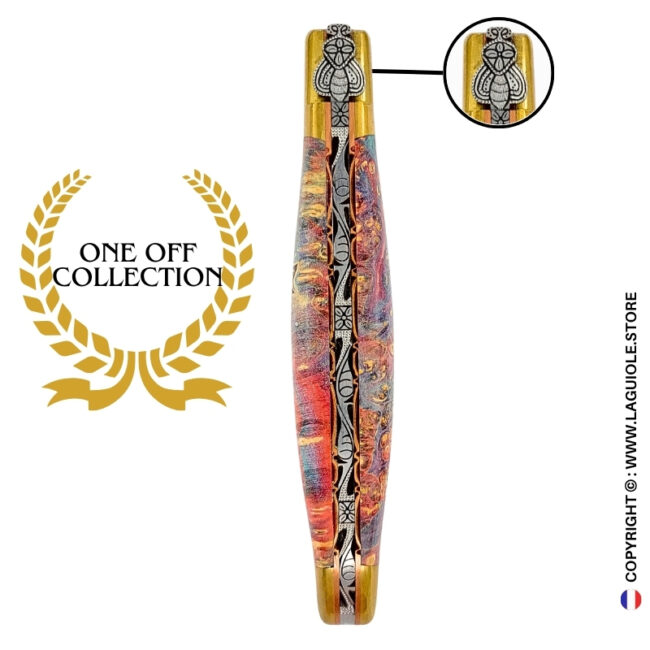
The spring is held between two scalloped copper liners in a deep, orange-tinged pink. Three motifs alternate along its length without ever repeating exactly: long flames chiseled in polished relief, rows of beads raised one at a time with a pointed tool, and small four-petal rosettes nested in square cartouches. The bee wears this very flower as its head, and the spring repeats it all the way down to the far end of the knife.
At both ends, the handle is closed by brushed brass bolsters with a soft, matte sheen that answers the copper while remaining distinct from it. At the top, the bee is treated like a jewel. A cord of tiny beads surrounds it completely, outlining it like the bezel around a gemstone. For a head it has a four-petal rosette, its wings are two broad teardrops trimmed with the same beading and marked with a line of punched dots, and its body, between them, is scored with fine, perfectly regular ribs carried all the way to the tip.
“Gilded Watercolor” will appeal to collectors who respond to color as strongly as to the jeweler’s art. Free-flowing washes in the burl, the warm pairing of copper liners and brass bolsters, a spring alternating flames, beads, and rosettes, and a bee ringed like a jewel add up to a richly detailed piece, made to be savored by eye and by hand alike.
This unique piece has been sold