Handcrafted in Aveyron, the historic home of the Laguiole knife
Embers of the Steppe: Laguiole Knife in Red Mammoth Molar – Damascus Blade – Chiseled Bee – Mosaic Pins
1889€
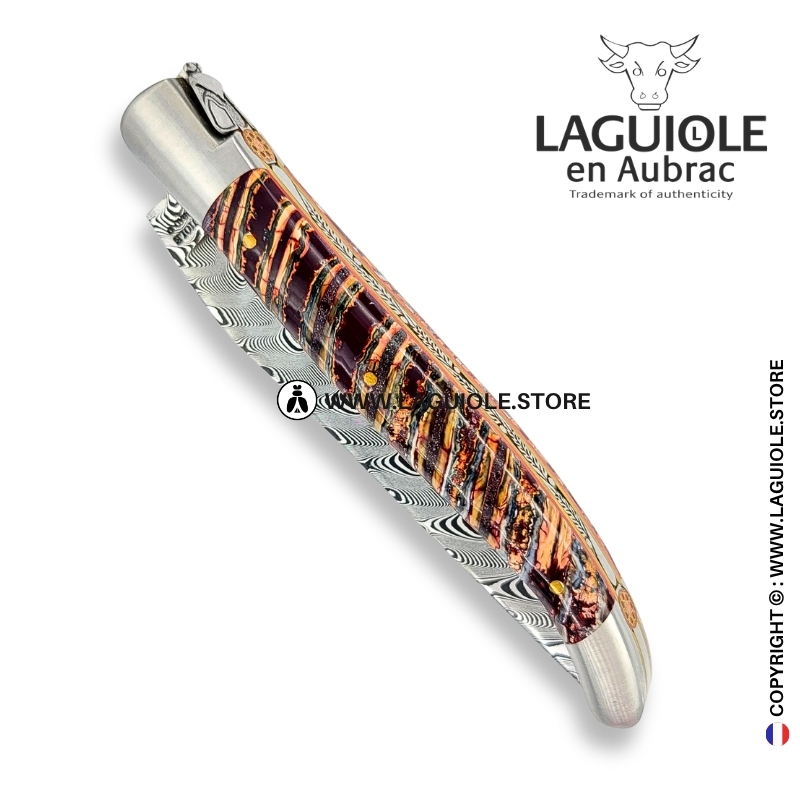
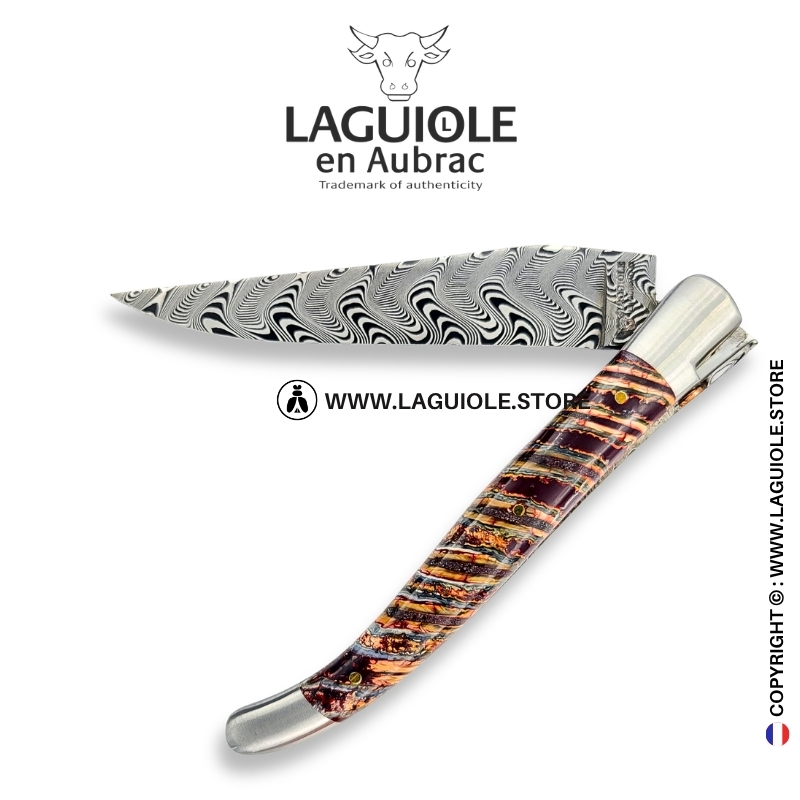
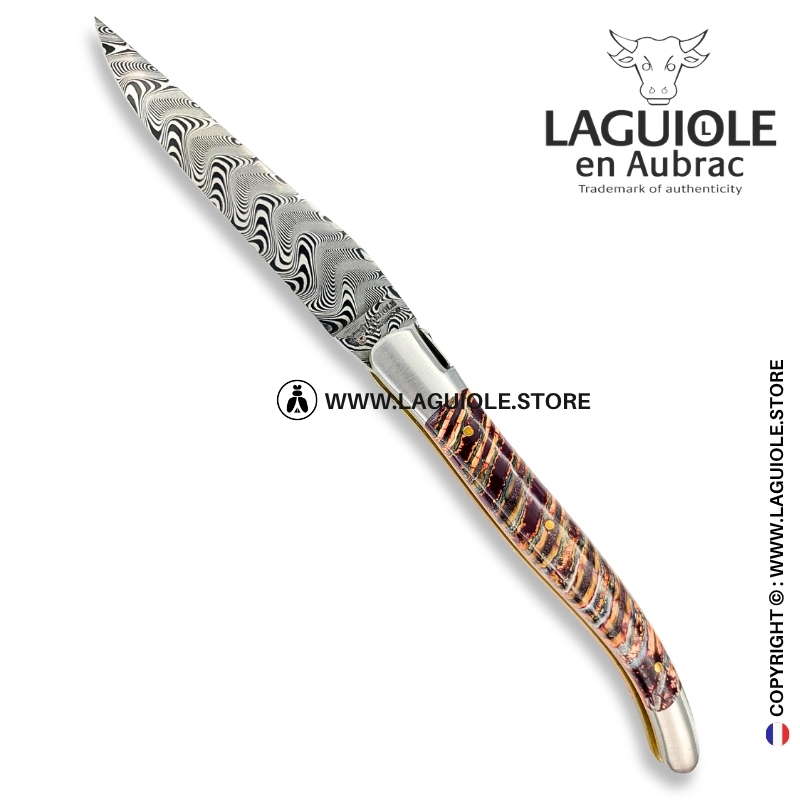
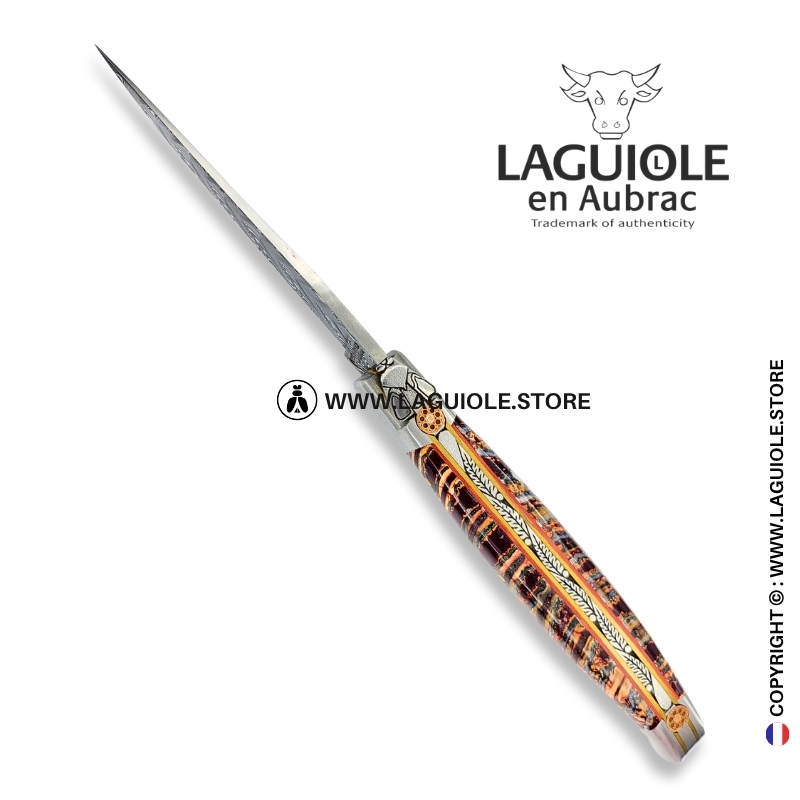
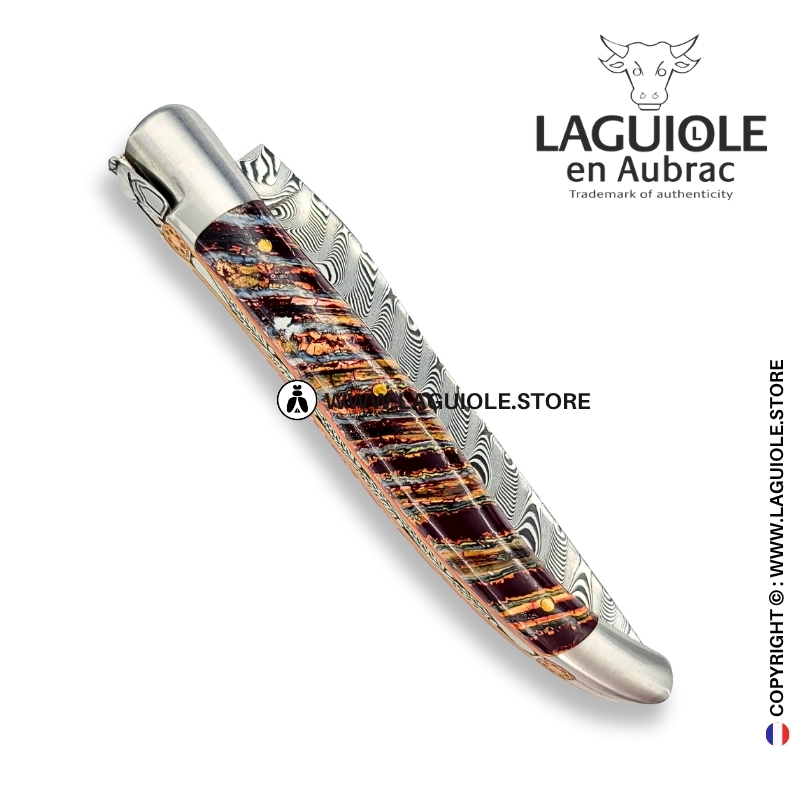
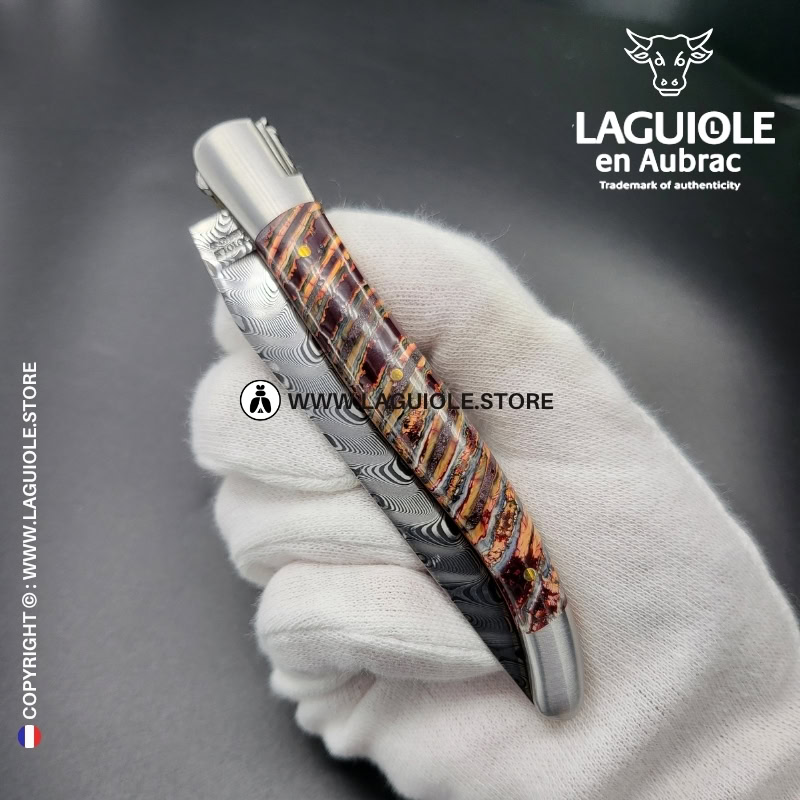
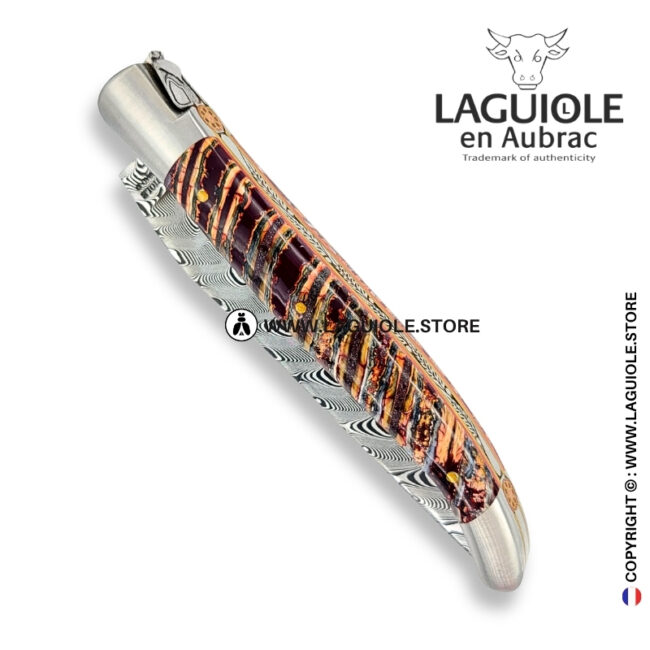
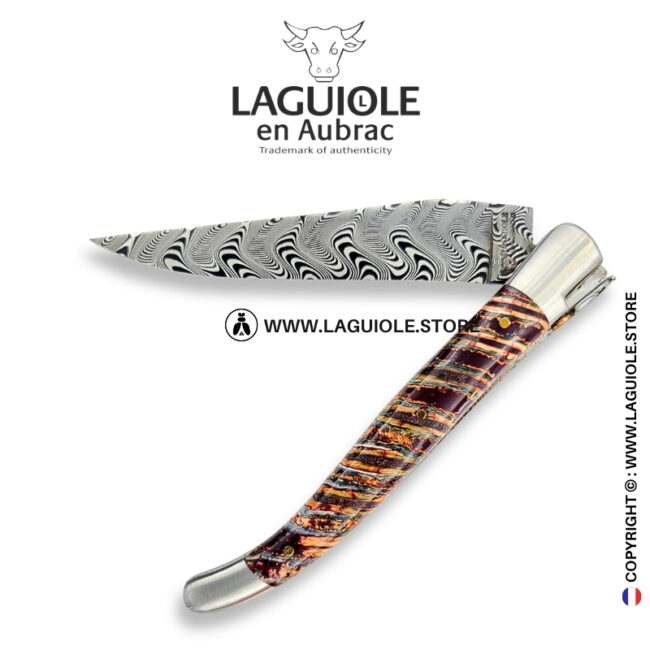
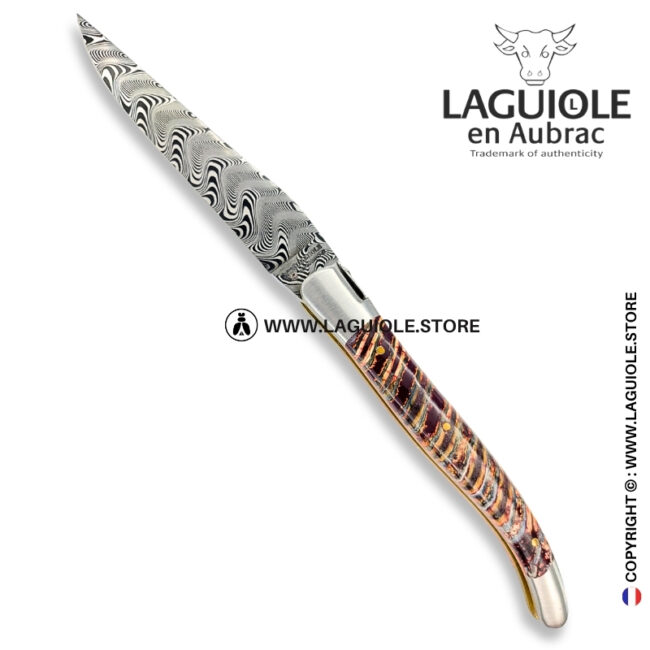
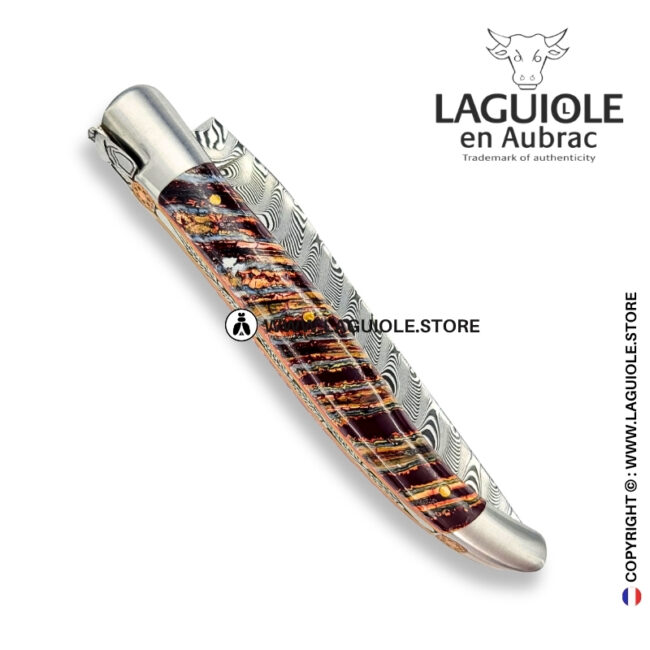
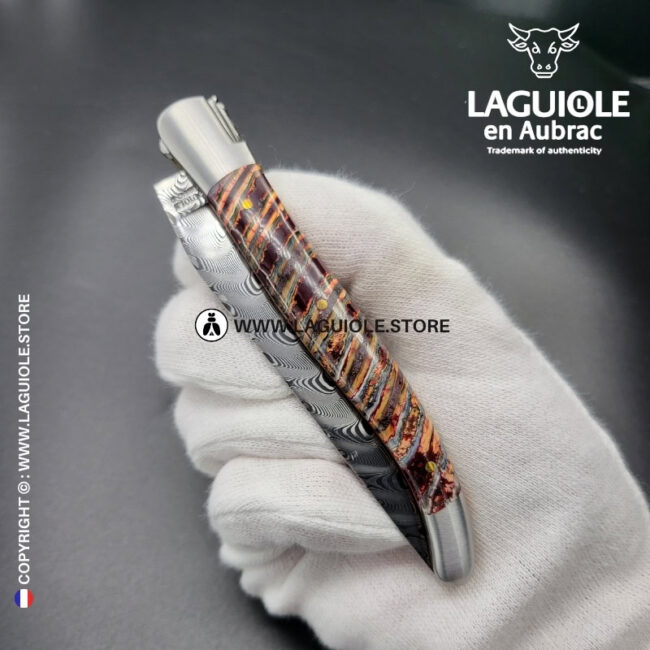
Stripes of red, orange, and charcoal that smolder across the handle, cut from a tooth that lay for millennia in frozen ground: that is where “Embers of the Steppe” gets its name. Only one exists, and a single cutler at the Laguiole en Aubrac manufacture took it through every stage of its making. Sawing the mammoth molar open has laid bare the stacked plates of the tooth, and they cross the handle on a slant in tight, wavy bands: deep red, the orange of live coals, cream, charcoal, and here and there a patch of blue-gray. Every band is a growth layer the animal built up and the earth later mineralized. The red was brought in during stabilization, and it makes each layer stand out in relief.
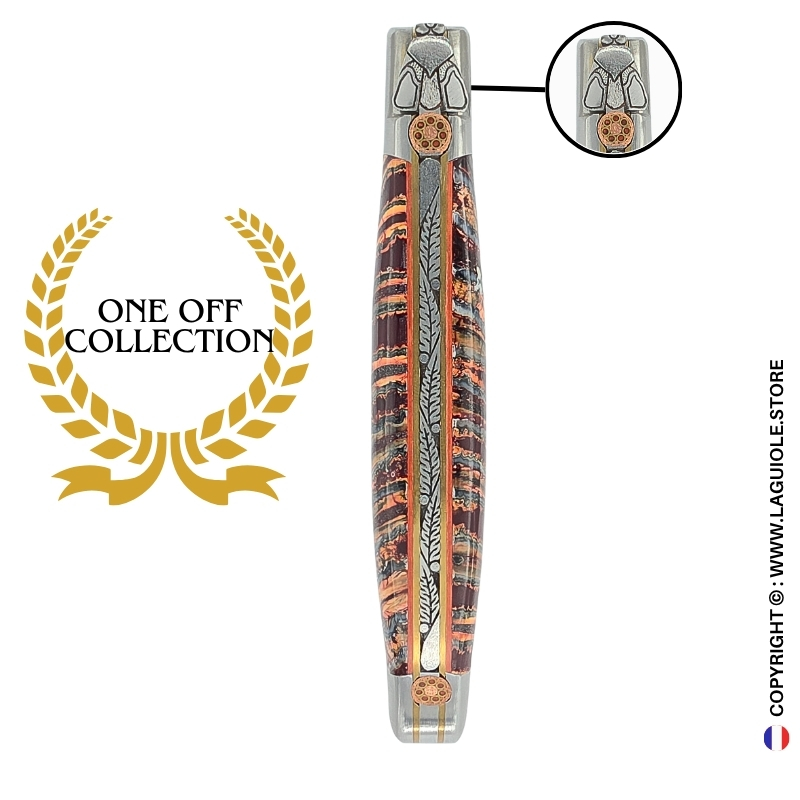
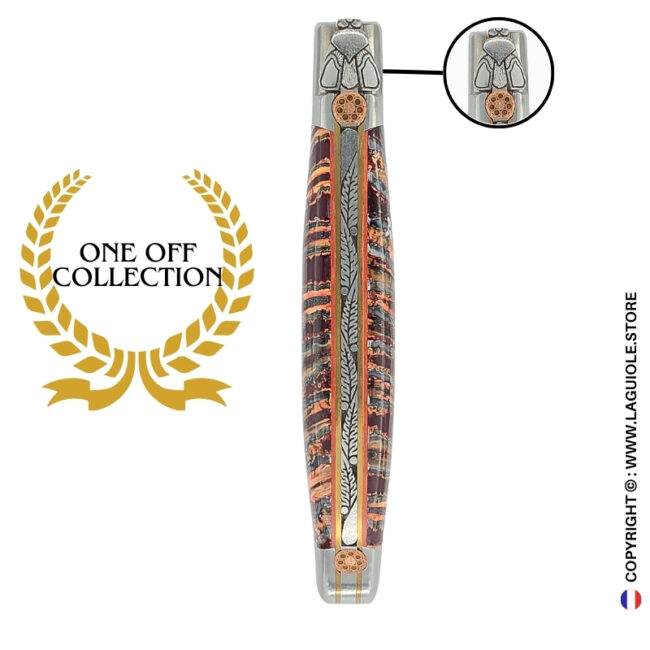
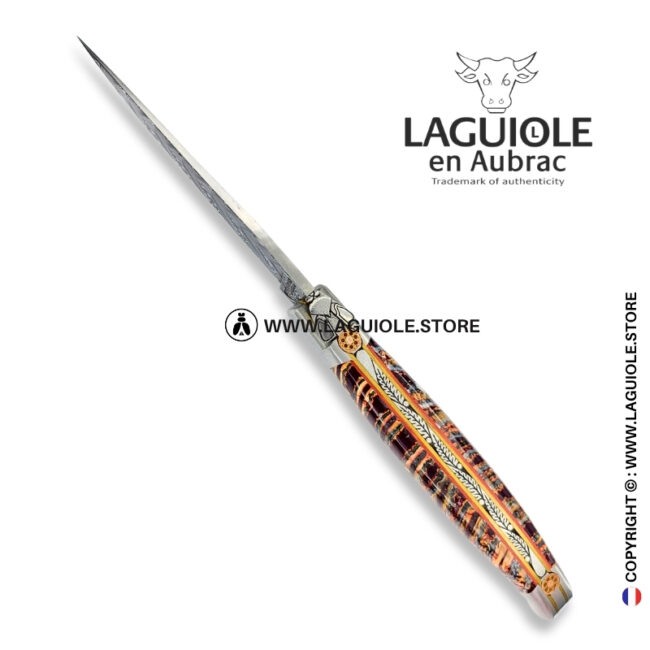
The bee on top is broad and settled. Its wings are split into clean panels inside a polished rim, around a finely stippled body, and a two-lobed head completes the outline with restraint. Right beneath it, a red spacer slips in between molar and brass liner. Seen edge-on, the handle lines up four materials in the space of a few millimeters: fossil, red, the warm yellow of brass, then the steel of the spring.
A chiseled wheat ear travels the whole length of the spring without a break, its nested chevrons laid like the barbs of a feather and dotted with tiny raised beads. At either end, a mosaic pin is inlaid in the bolster, a small disc where a circle of red dots surrounds a copper heart, as fine as a jeweler’s setting. The damascus blade completes the composition with concentric ripples, dark and light sheets of steel born from the layering of the metal and brought out by etching.
“Embers of the Steppe” will speak to collectors who like each material on a piece to arrive with a past of its own. Molar banded like a banked fire, a damascus blade, mosaic pins at both bolsters, red spacers, and brass liners make for an unusually intense knife, built to be used every bit as much as admired.