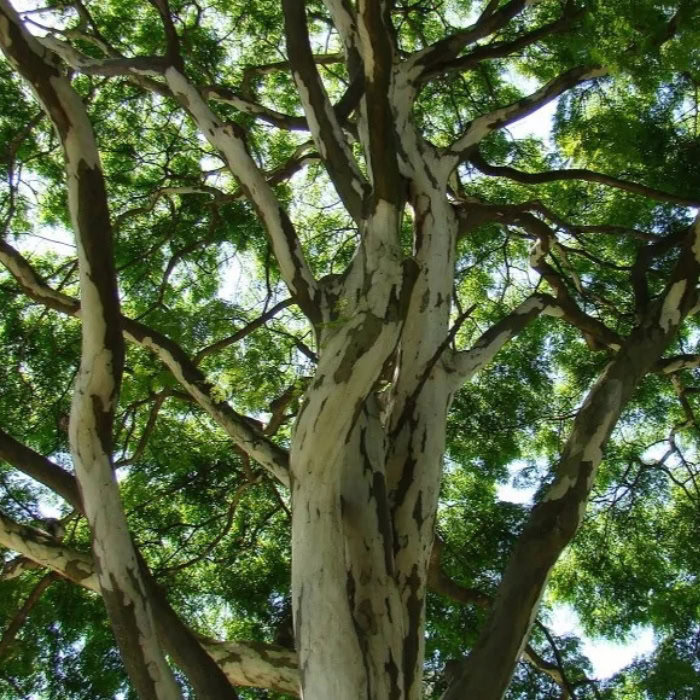
Handcrafted in Aveyron, the historic home of the Laguiole knife
Celestial Vine: Laguiole Knife in Desert Ironwood Burl – Bee with Stained-Glass Wings – Chiseled Spring
789€
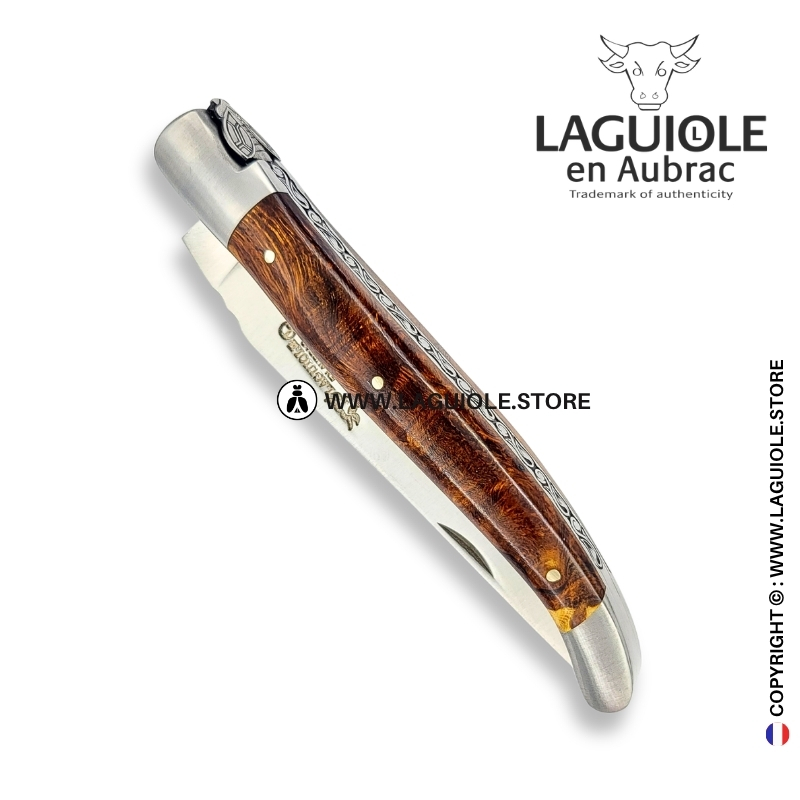
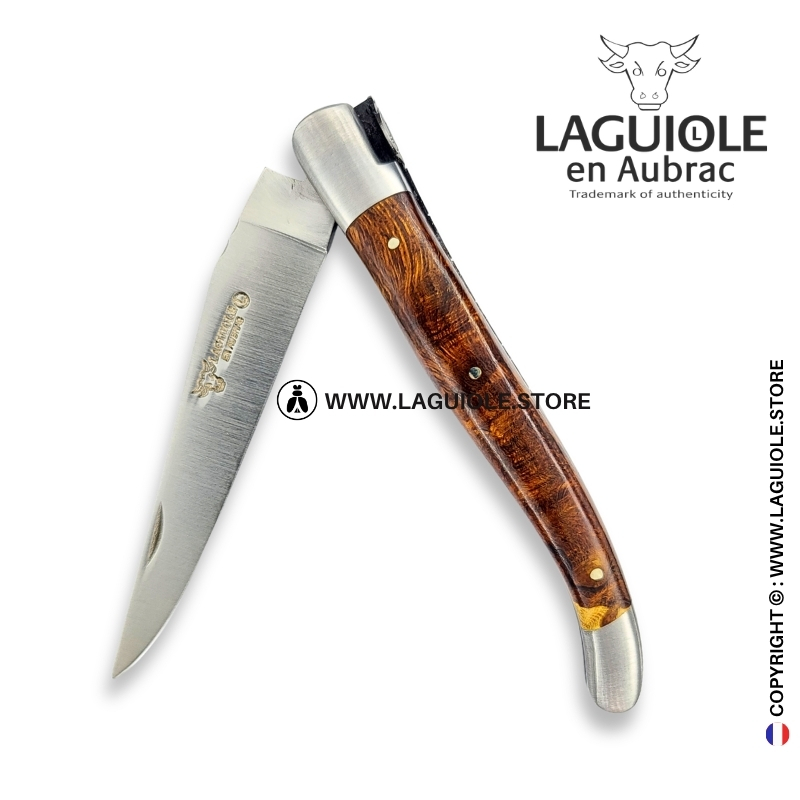
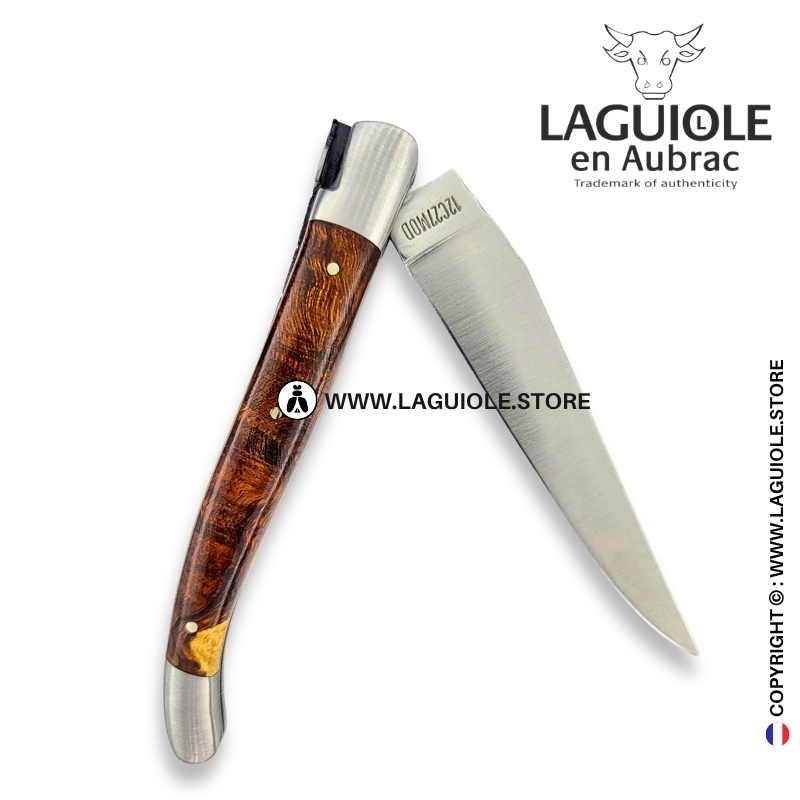
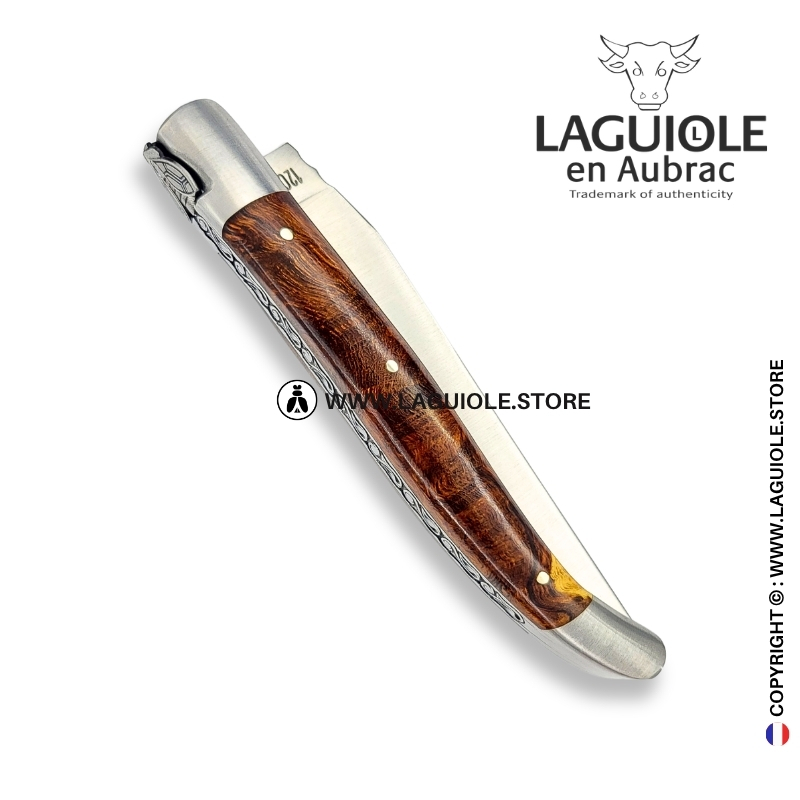
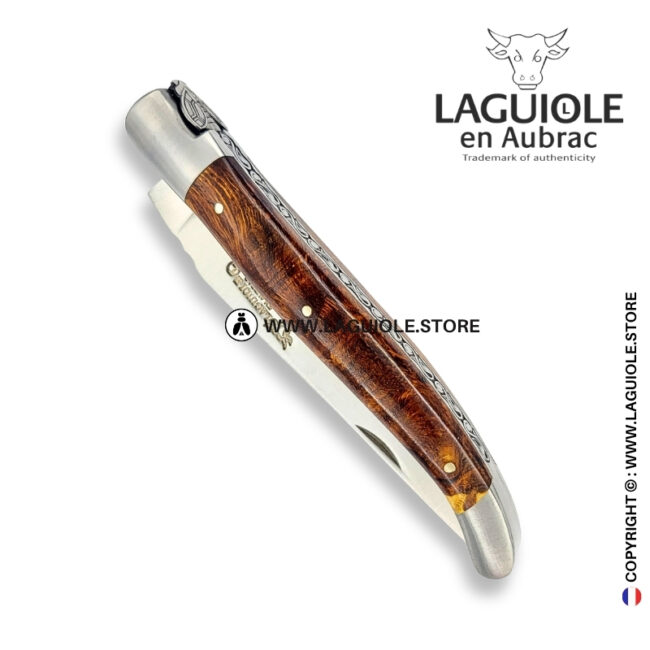
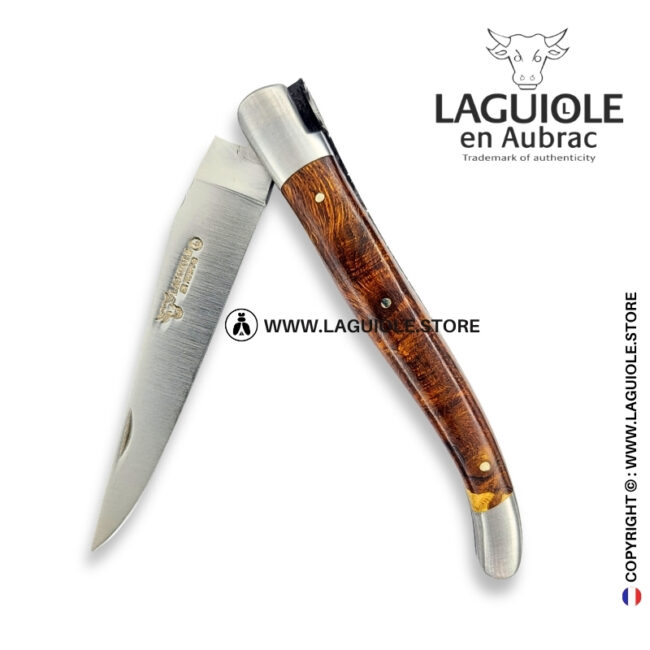
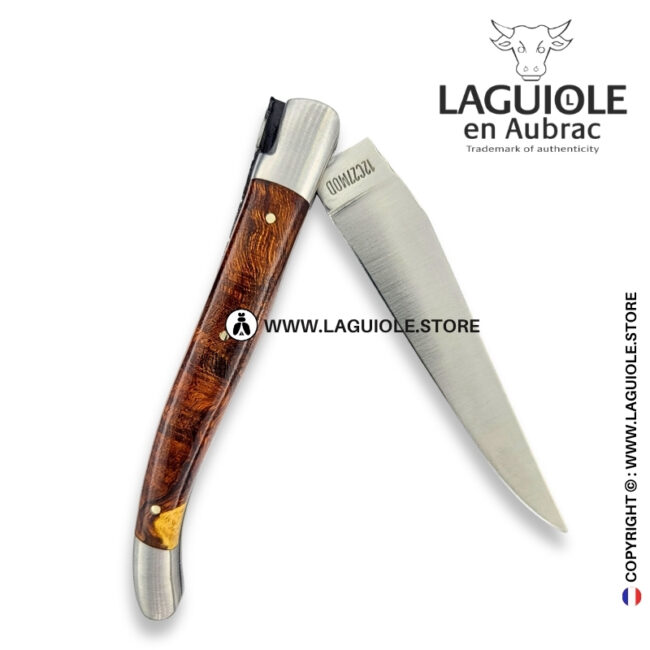
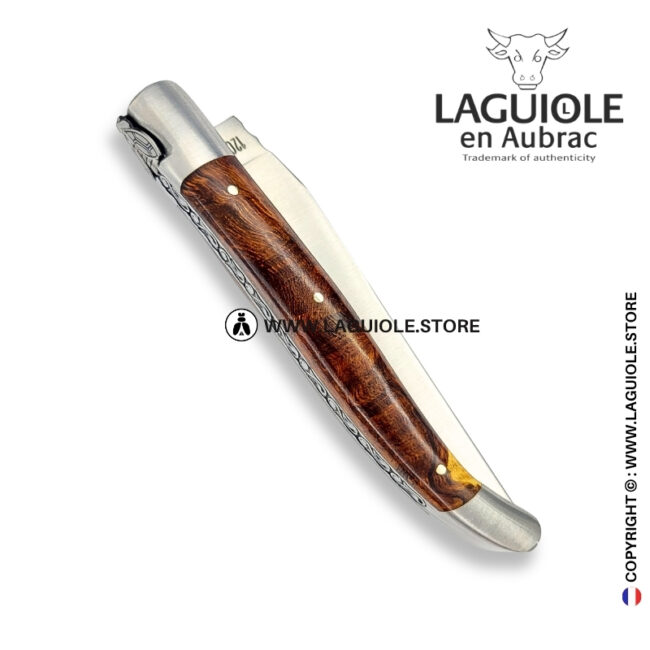
Only one “Celestial Vine” exists, the work of a lone Laguiole en Aubrac cutler who took charge of each stage by hand. Its desert ironwood burl handle churns with caramel, mahogany, and russet, like flames frozen in the wood, and the deep polish makes them stir whenever the knife moves. The stainless steel bolsters at either end are intentionally smooth and restrained, holding that fire in place without trying to outshine it. They open and close the piece like a pair of cornerstones, so that all the attention goes to the burl’s tumultuous grain and to the chiseled spring.
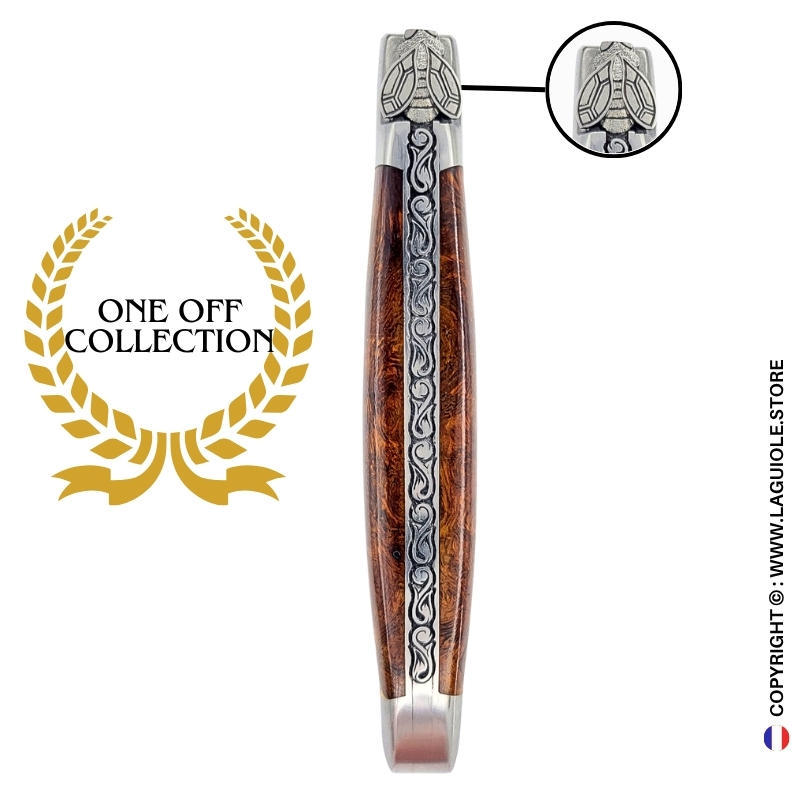
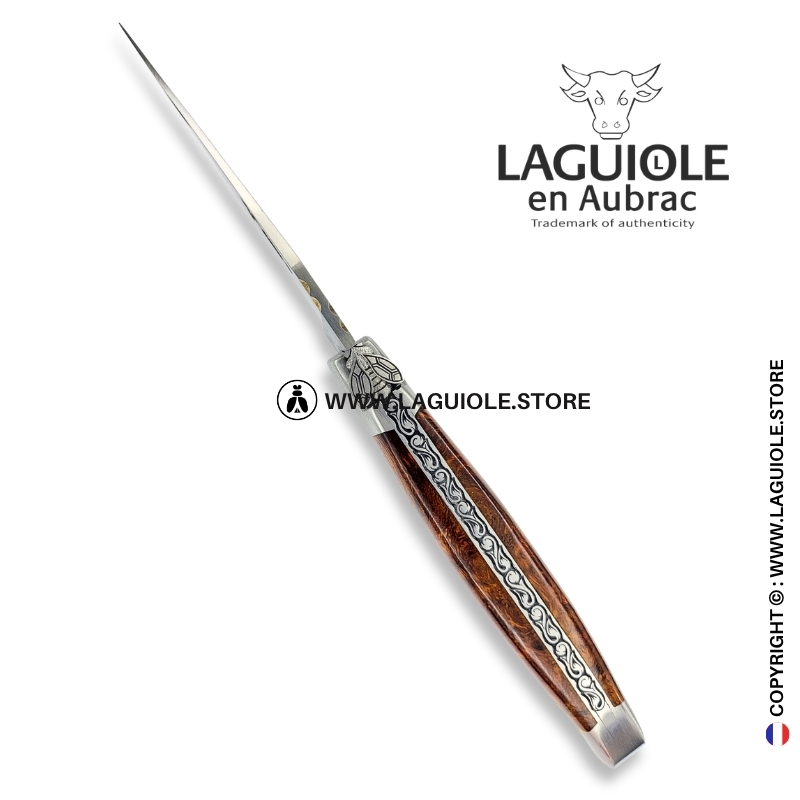
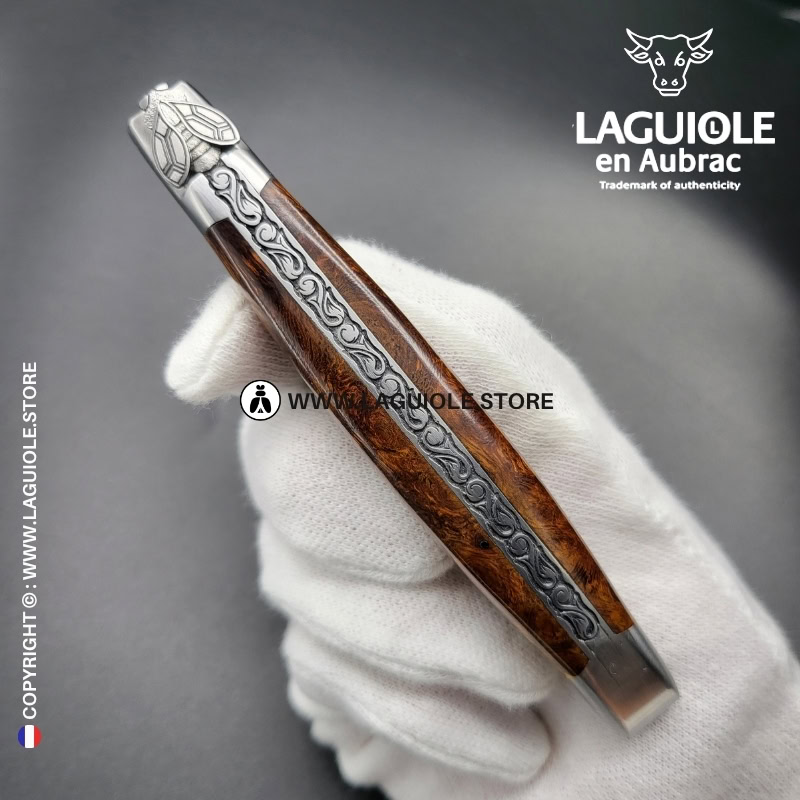
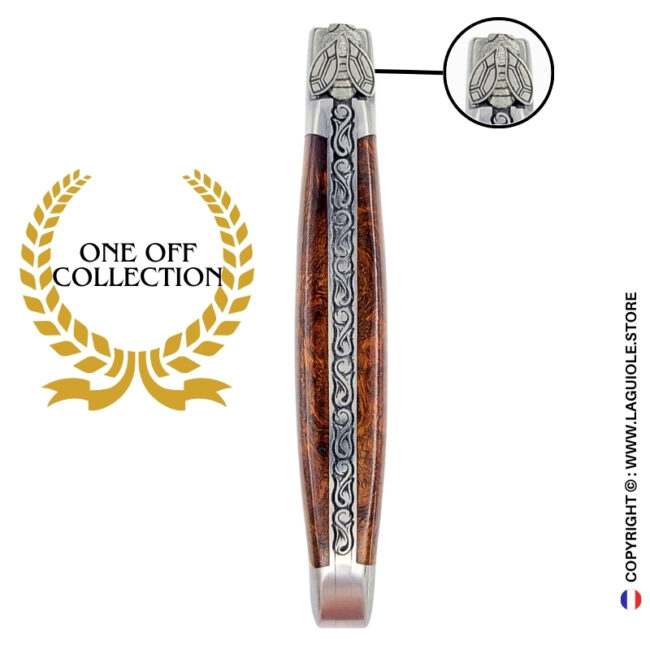
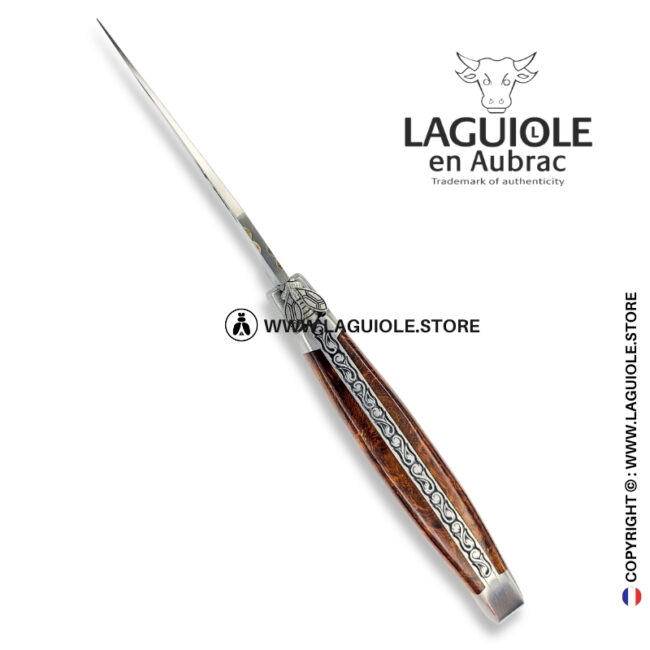
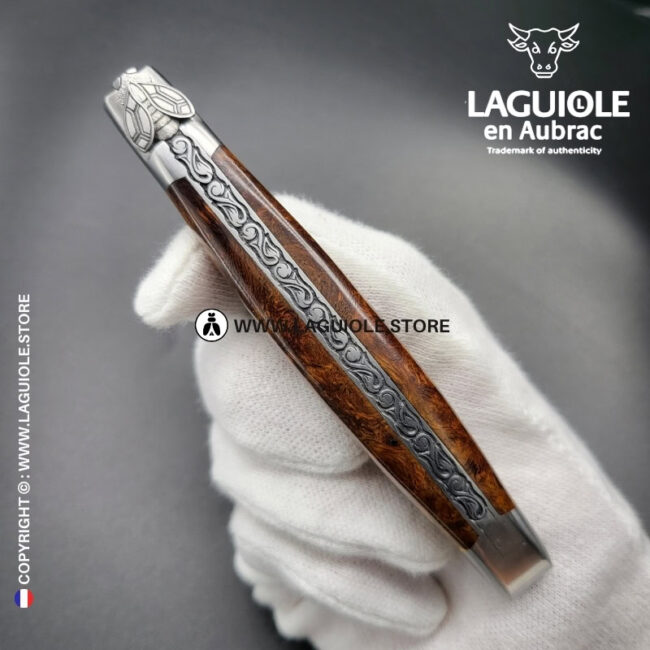
It is the wings that draw the eye first, treated like stained glass. Raised veins split each wing into geometric panels, as though pieces of glass had been set in lead, over a finely matted ground that tones the light down. The body, ringed with regular grooves and finished with the same meticulous care, dips its head toward the spring. This is an ornamentalist’s work, and it gives the insect a presence both precious and solemn.
A vine has been chiseled along the spring: a botanical scroll that coils around itself, puts out pointed leaves, and climbs the whole back of the knife, carved in deep relief against a shadowed ground and flanked by the polished liners. The vine even carries on over the bolsters, which are otherwise left unadorned, so the plant seems to travel the whole length of the piece, curl after curl, toward the bee at the top. Every coil is outlined with remarkable sharpness and each leaf individually hollowed. The design gives itself up slowly, the way a finger follows a stem.
“Celestial Vine” will please anyone who likes a Laguiole composed as a climb. From the flame-figured ironwood and its quiet bolsters, the eye travels up the chiseled vine to the stained-glass bee, one unbroken line from wood to insect. It is a piece to study for a long time, and one that is just as satisfying to hold.