Handcrafted in Aveyron, the historic home of the Laguiole knife

Amethyst Acanthus: Laguiole Knife in Purple Elder Burl – Chiseled Bee – Chiseled Spring
789€
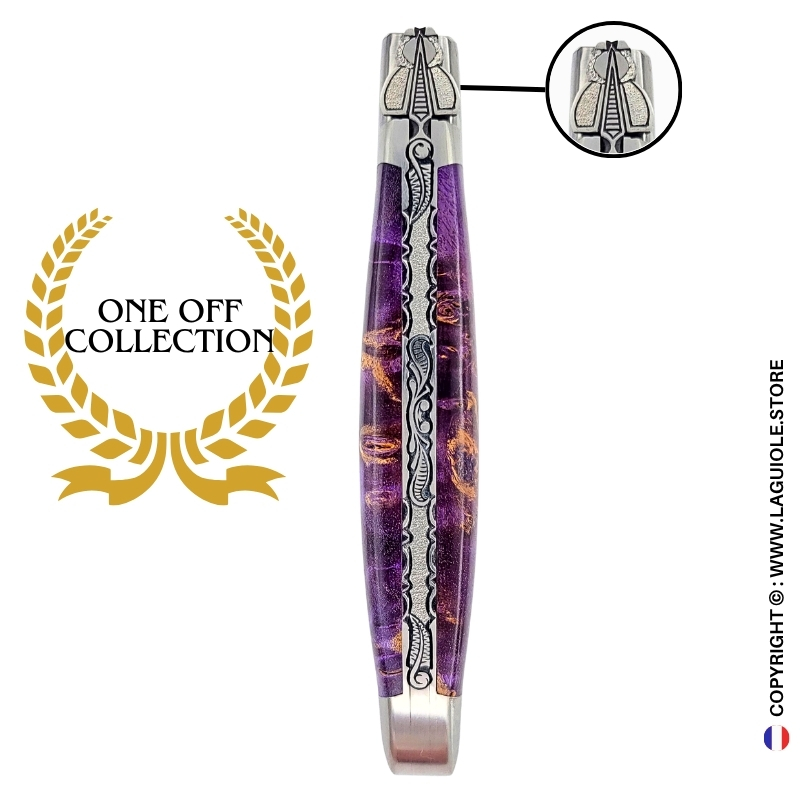
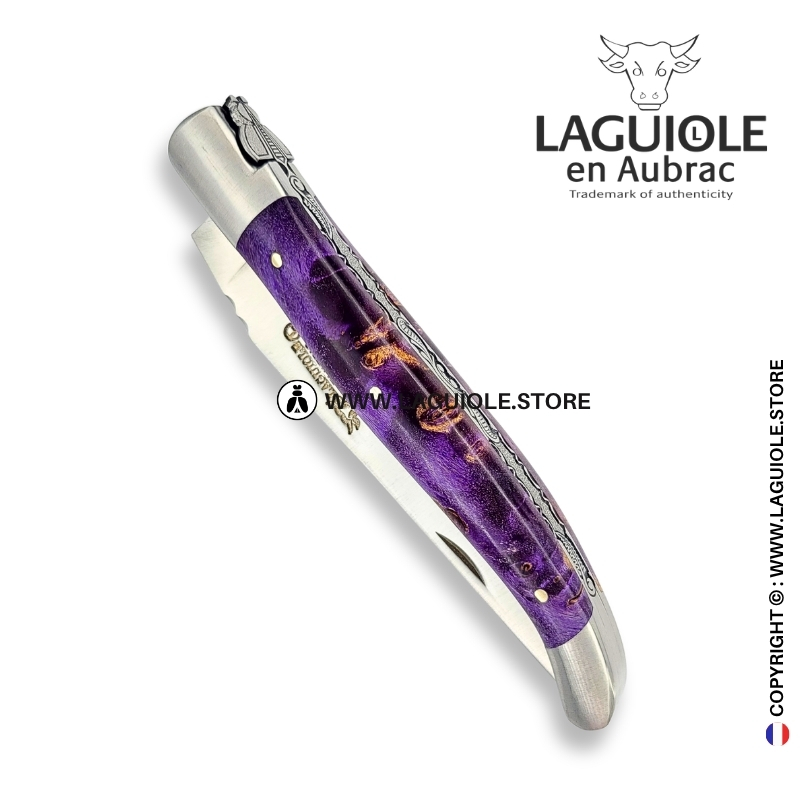
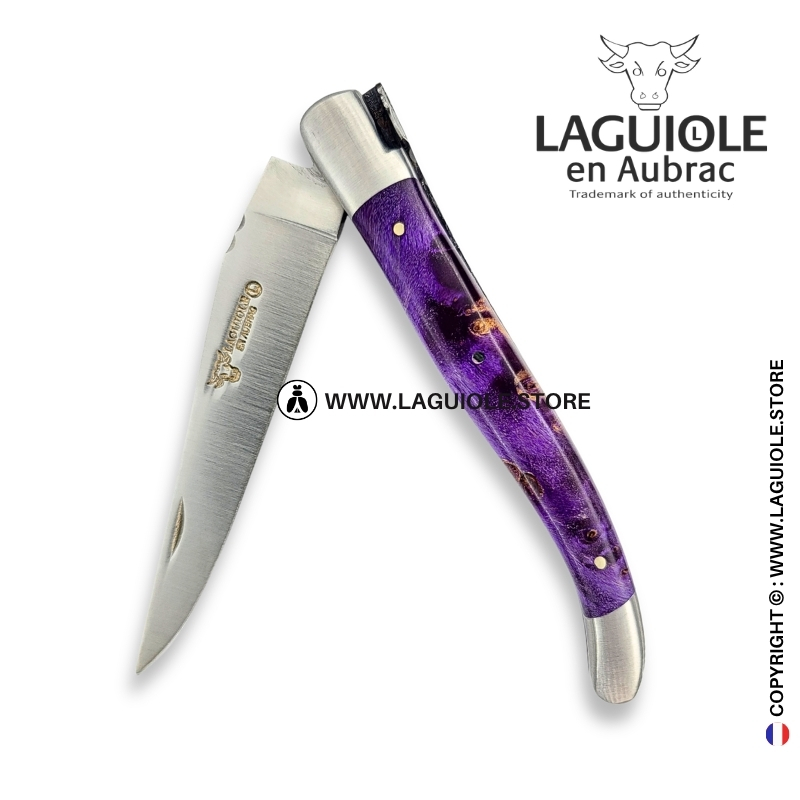
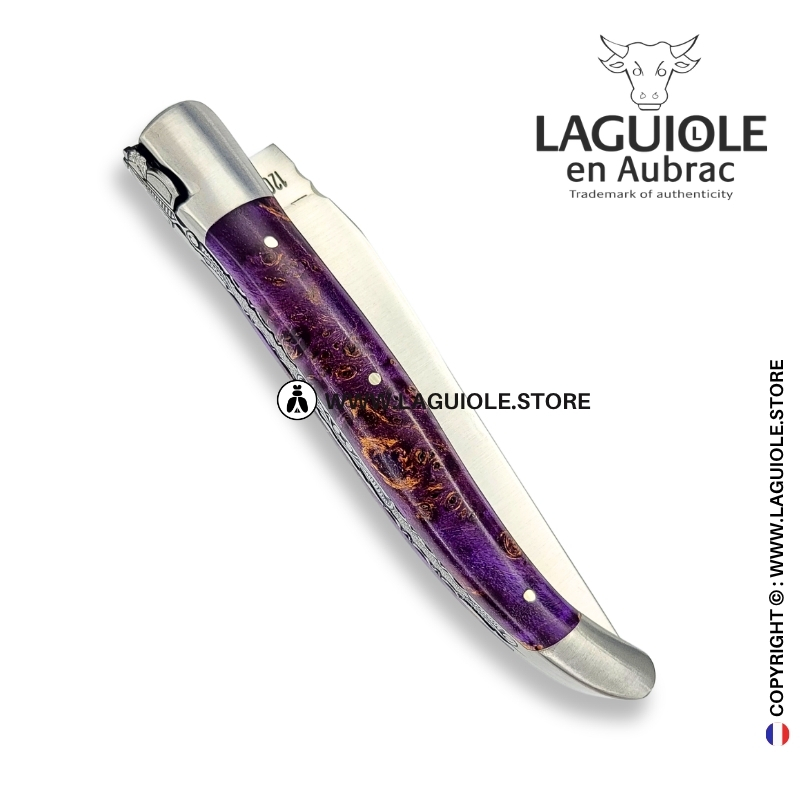
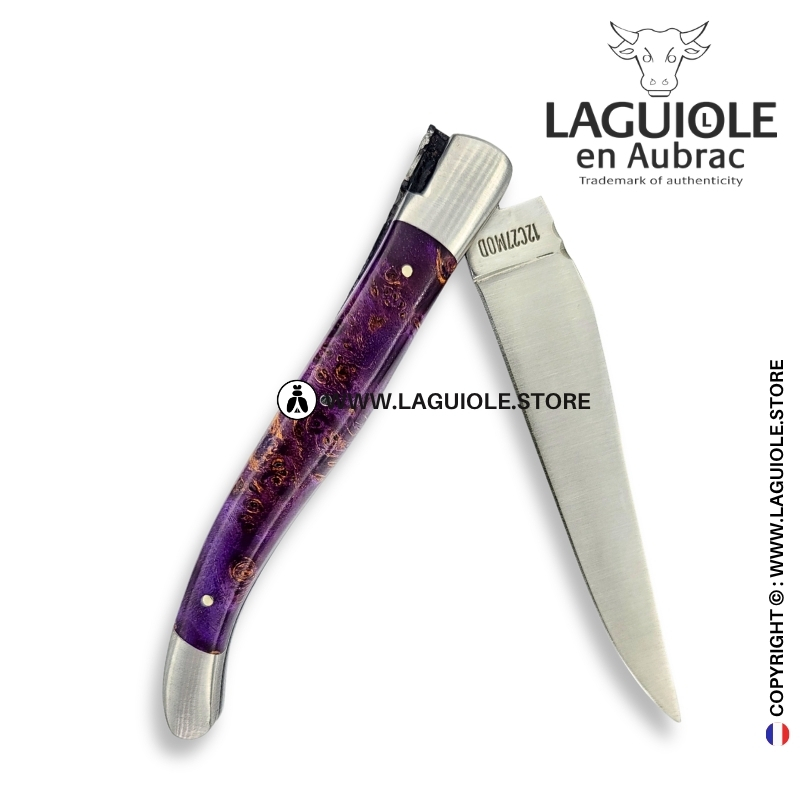
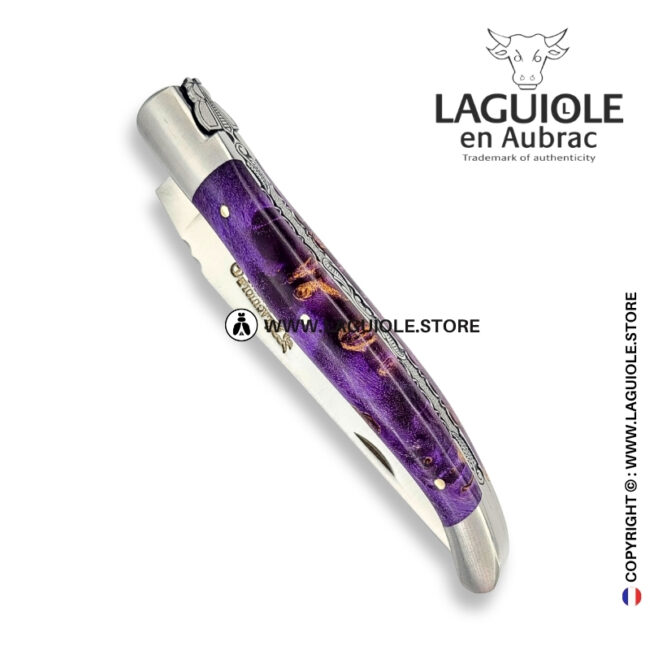
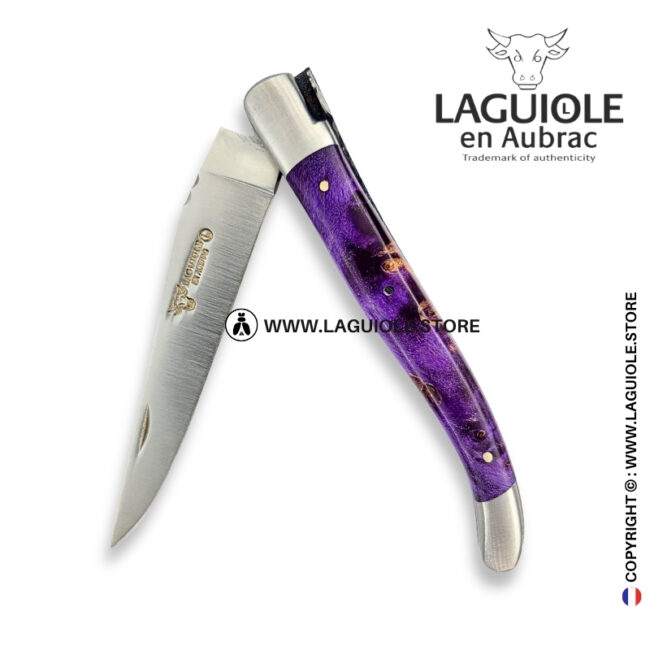
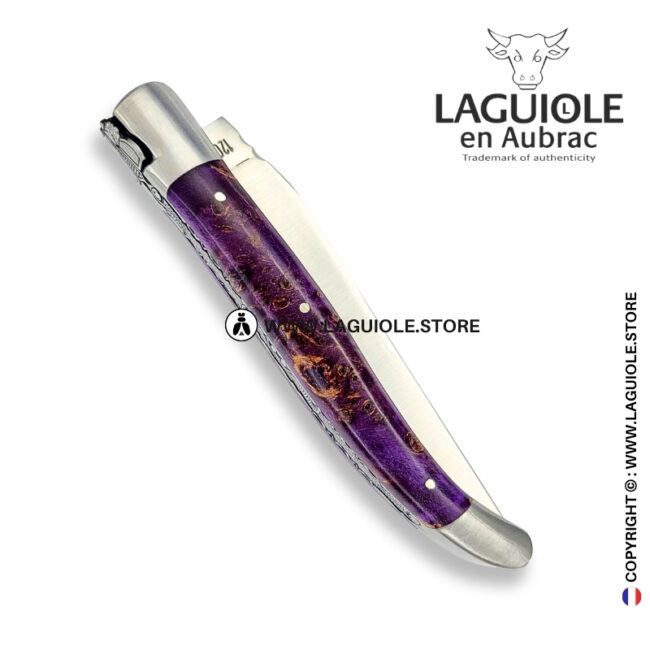
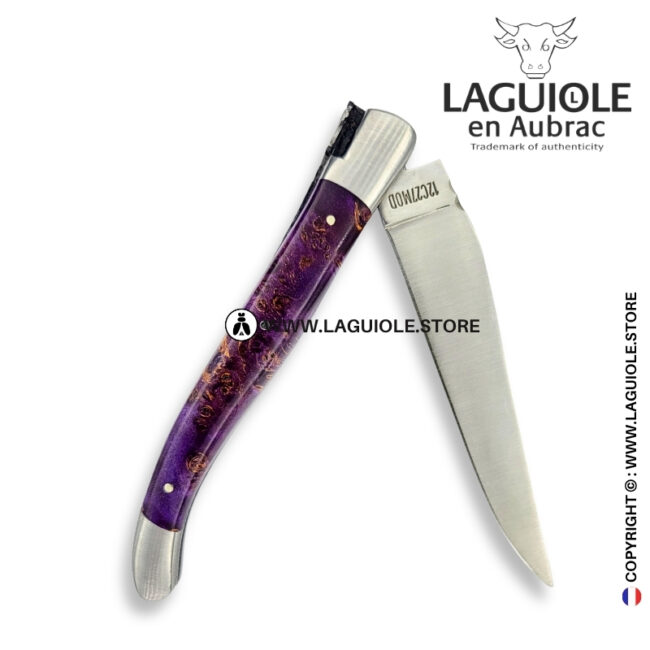
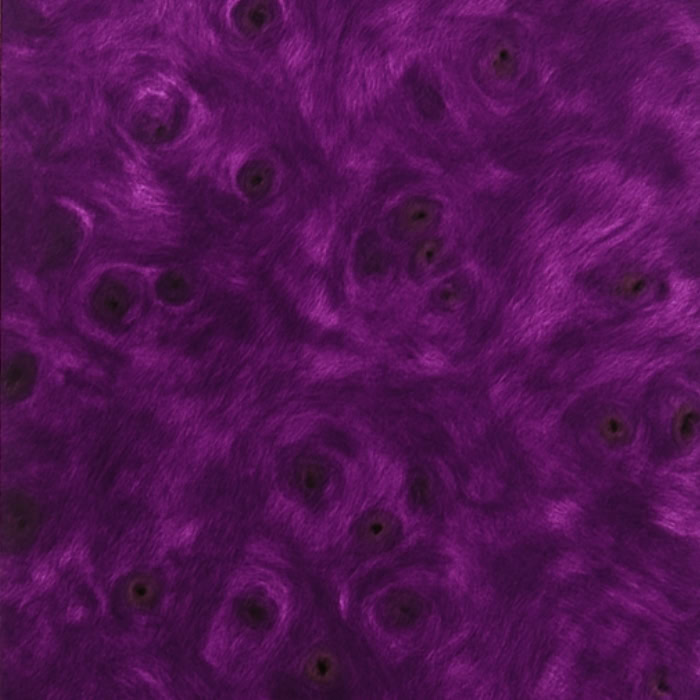
“Amethyst Acanthus” exists in a single example, and every part of it was shaped by hand by one cutler working at Laguiole en Aubrac. The elder burl handle, stabilized and then dyed, glows a deep amethyst that ripples between pale mauve and an inky, almost black plum, broken here and there by golden-brown streaks where the grain grows tighter. Its color looks cloudy and fluid, like a polished stone in which nobody could point to where the violet starts or stops. A pair of satin stainless steel bolsters frame it plainly and leave the brilliance to the wood and to the chiseled spring.
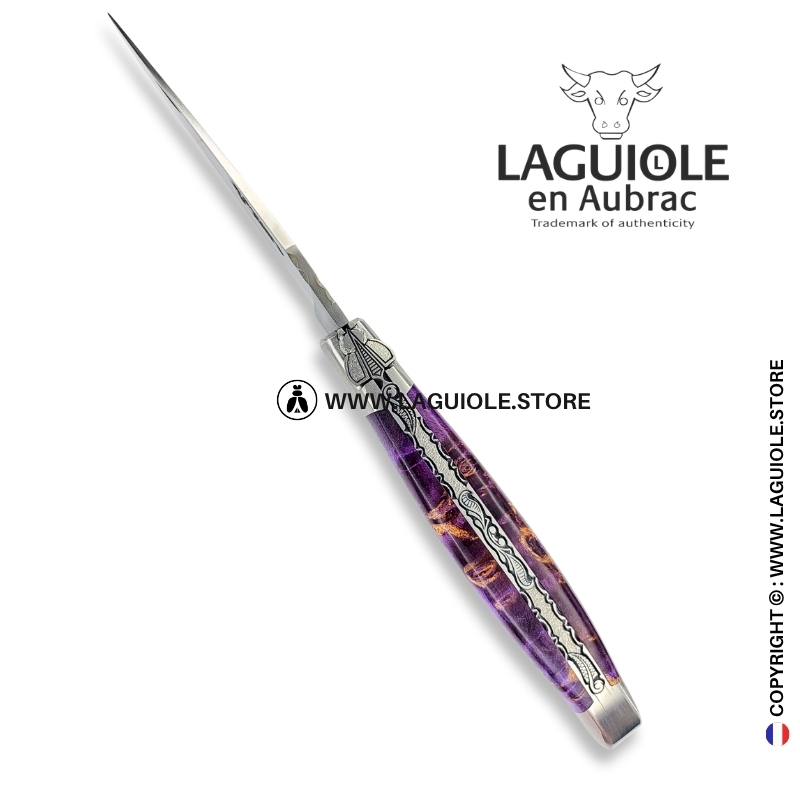
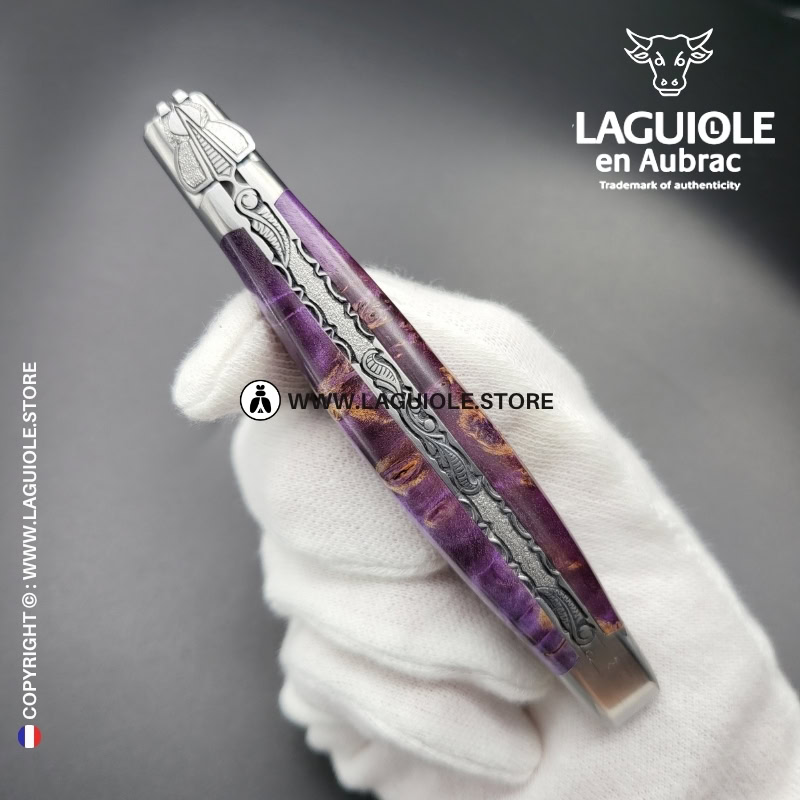
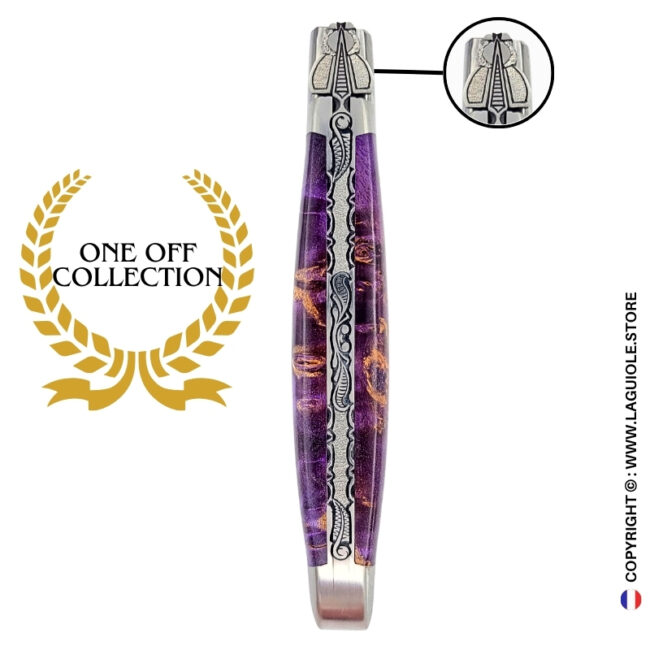
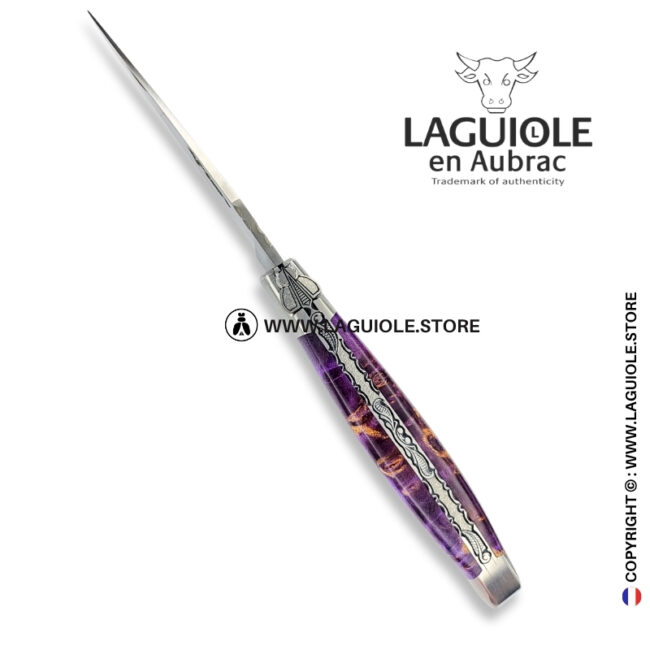
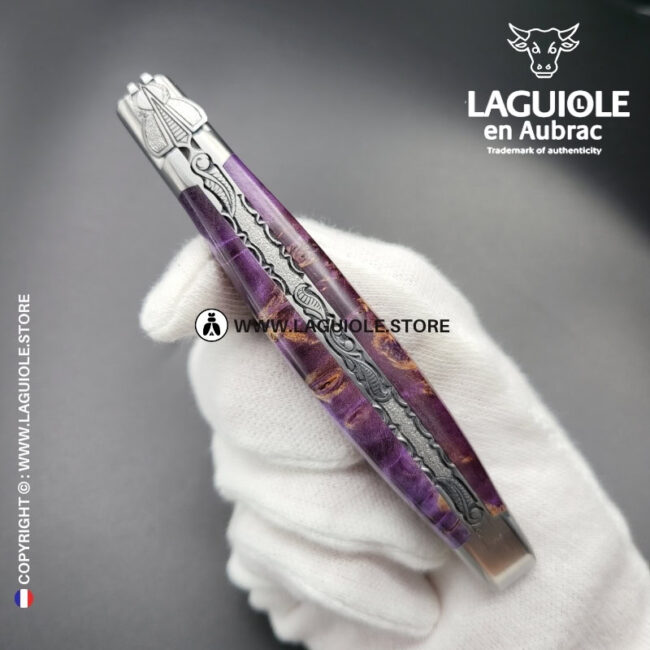
The spring holds the bulk of the craftsmanship. Two motifs take turns down its whole length: acanthus leaves chiseled in relief, each lobe scored with fine parallel veins before it rolls into a scroll, and cartouches with a matte, stippled ground, ringed by polished, wavy borders. Tiny spirals tie every element to its neighbor, so the decoration carries on unbroken along the entire back.
Alternating the two motifs means handling two separate surface finishes, a different tool and a different series of passes for each: deep stippling inside the cartouches, bright polish on the scrolls and their fine edging, across a strip of steel no wider than a few millimeters, with no chance to rework anything. The bee uses precisely the same vocabulary. Its wide wings share the stippling of the cartouches and are trimmed with a polished rim, while its body is ribbed at even intervals like the veins of the leaves. Everything links up, the spring flowing straight into the bee at the head.
Collectors who prize chiseling brought to a rare degree of finish will find it here. Shimmering violet elder burl, acanthus and stippled cartouches along the spring, and a bee that speaks their language come together in a closely knit design that pleases the eye and sits just as happily in the hand.