Handcrafted in Aveyron, the historic home of the Laguiole knife
Undine Green: Laguiole Knife with Full Handle in Green Elder Burl – Chiseled Bee – Chiseled Spring
1159€
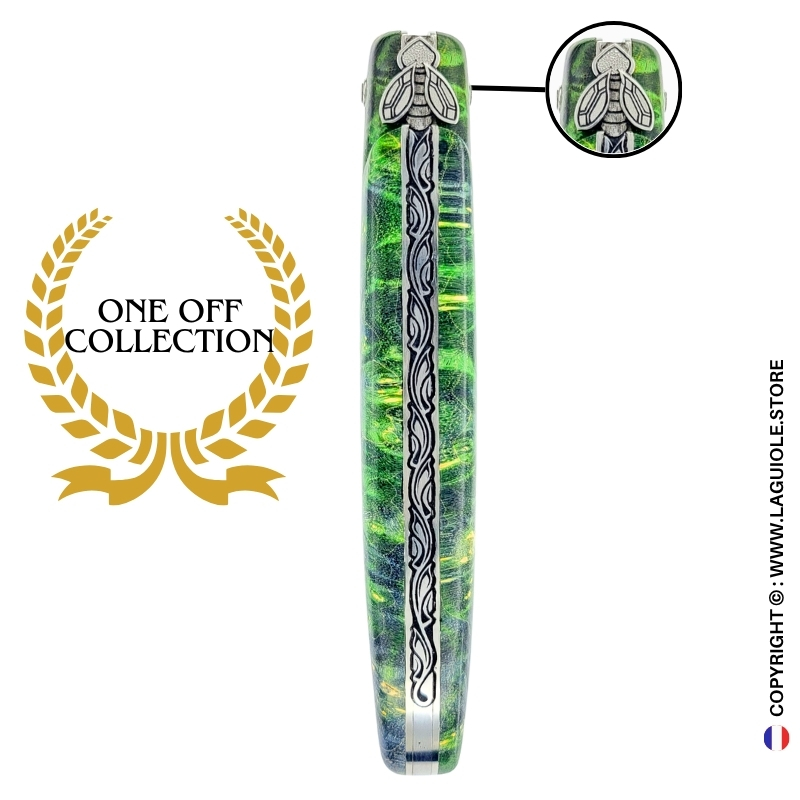
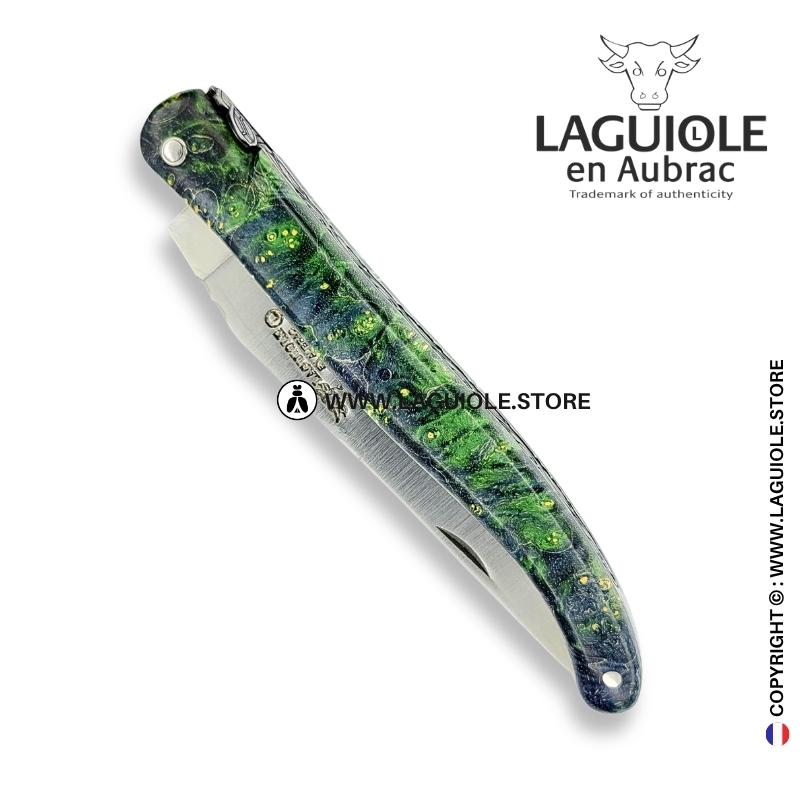
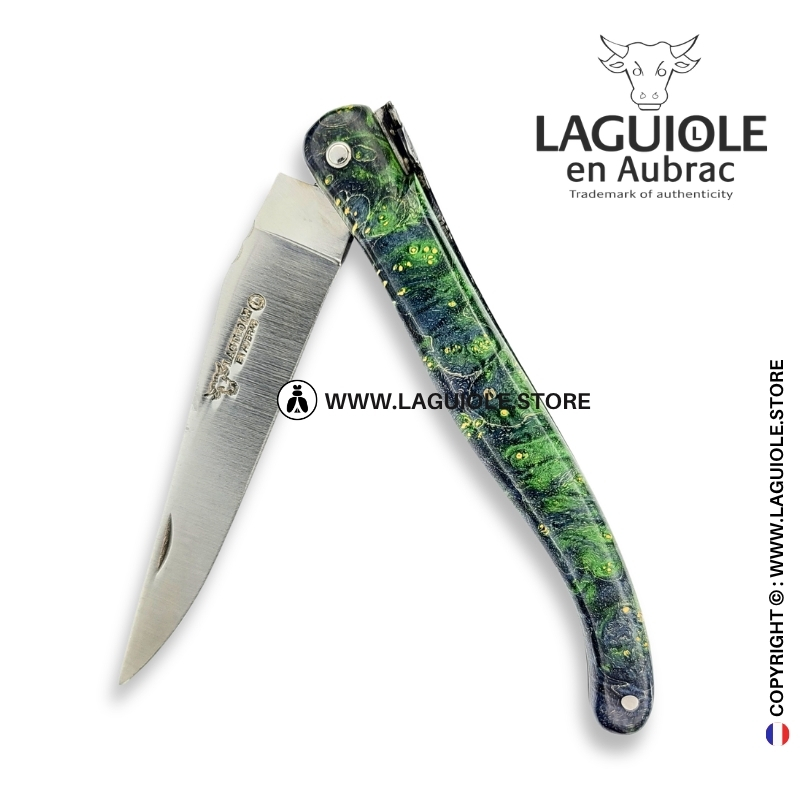
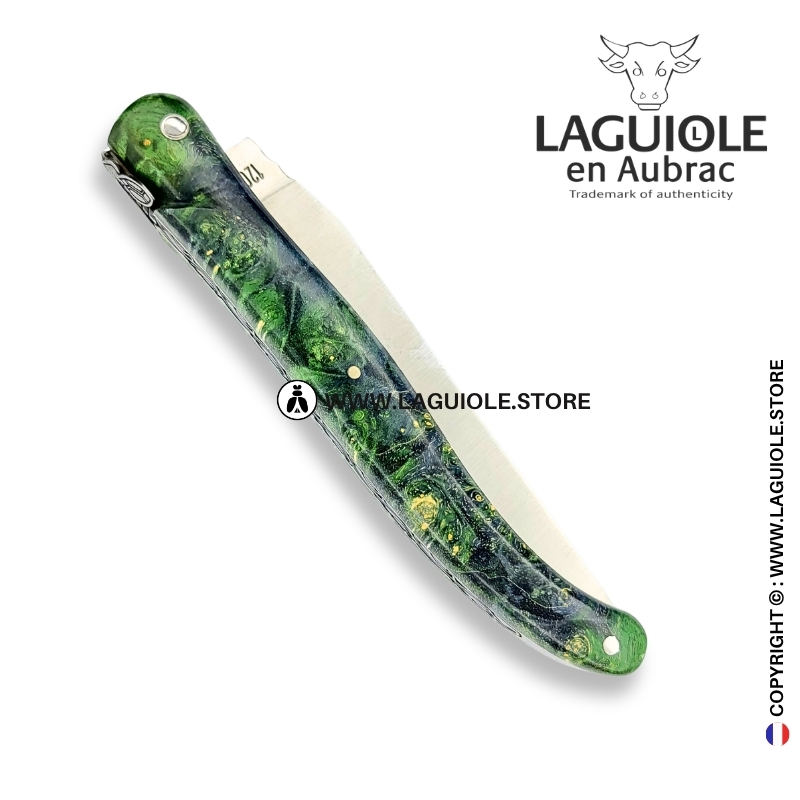
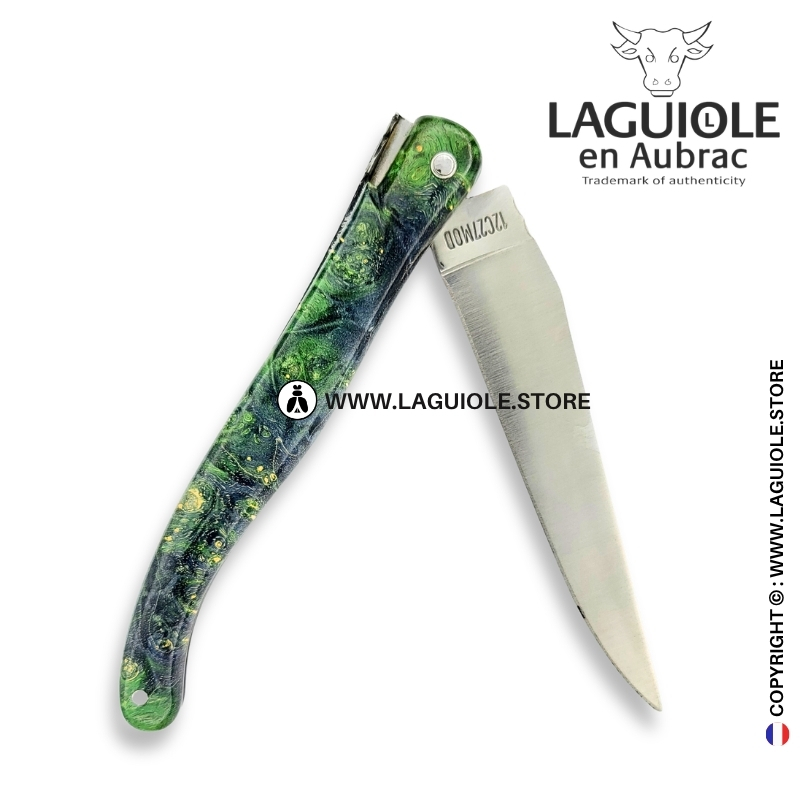
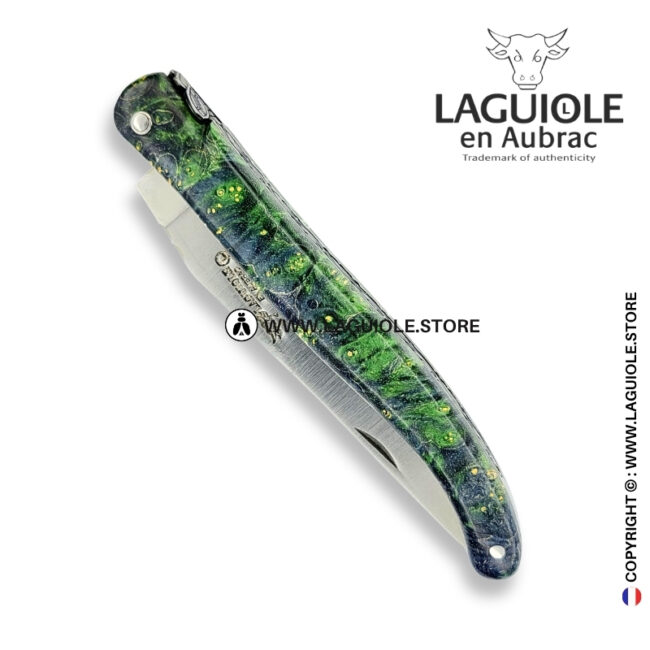
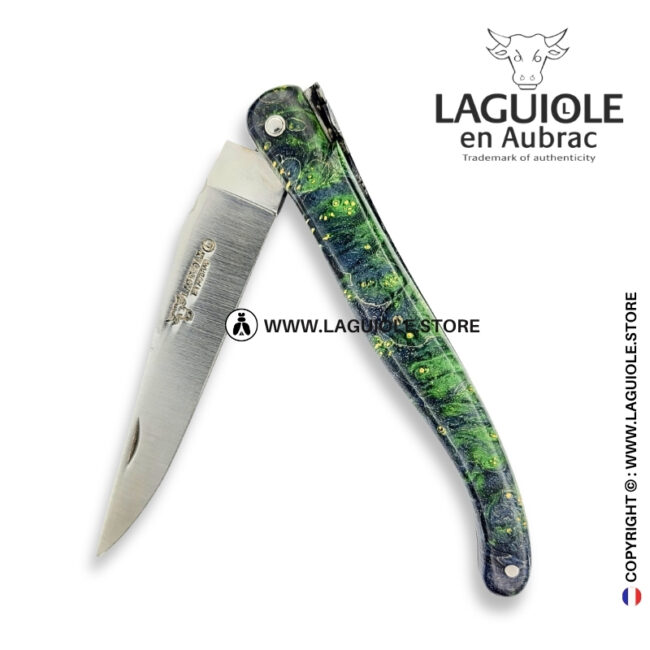
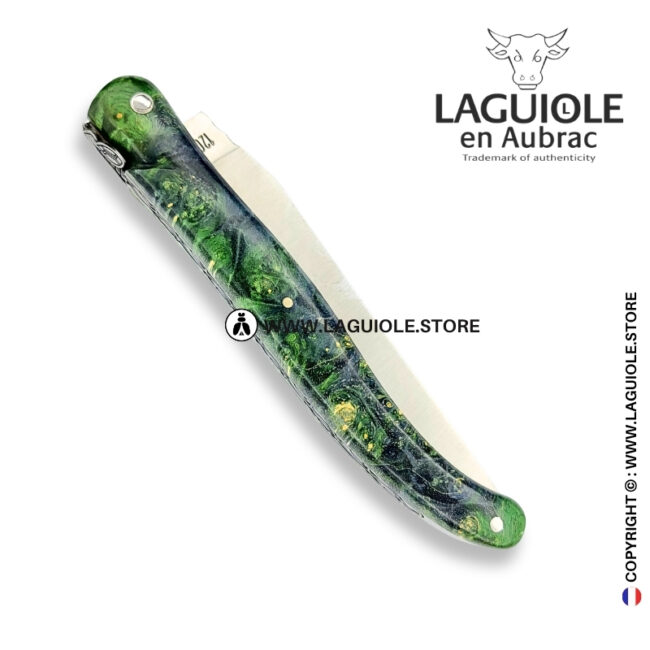
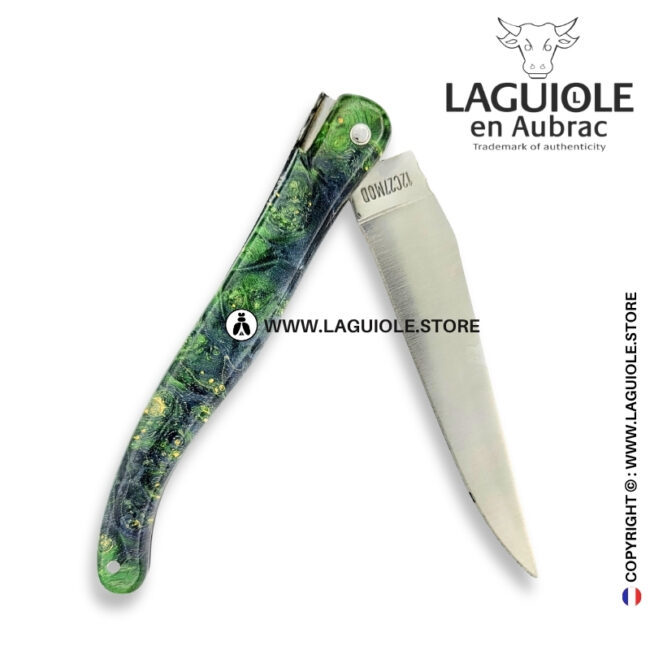
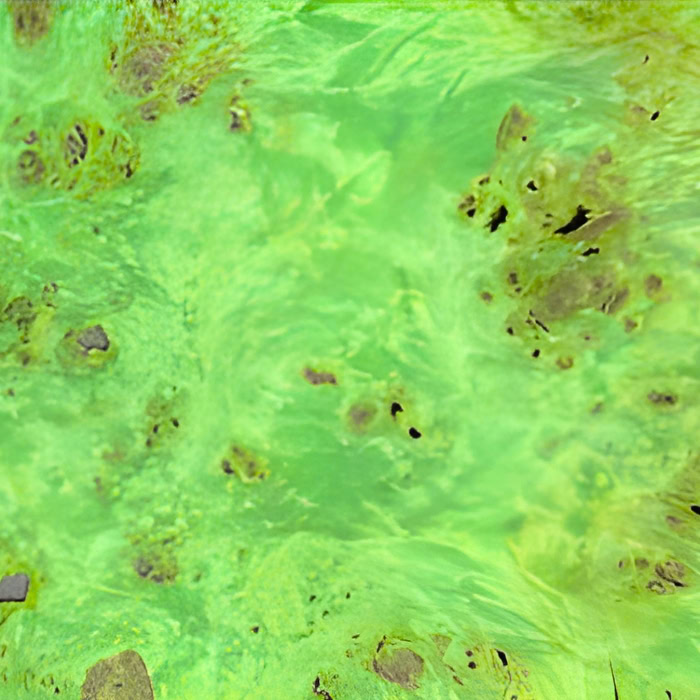
“Undine Green” is the only knife of its kind, and one cutler at Laguiole en Aubrac made all of it by hand. Its full handle in green-dyed elder burl has the color of a sleeping pond: a deep green bordering on bottle green, darkening almost to black wherever the grain dips and clearing into milky veils where the light catches it. Tiny golden glints rise to the surface in the eyes of the burl, like specks of sunlight that dropped to the bottom of the pond and stayed there, locked in the wood and brought back to life each time the hand moves.
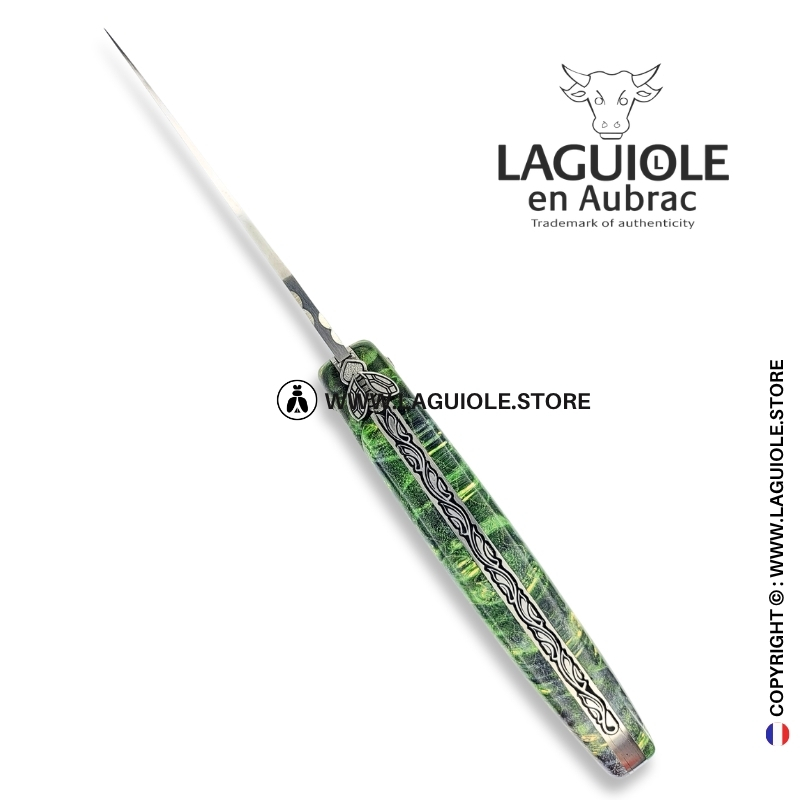
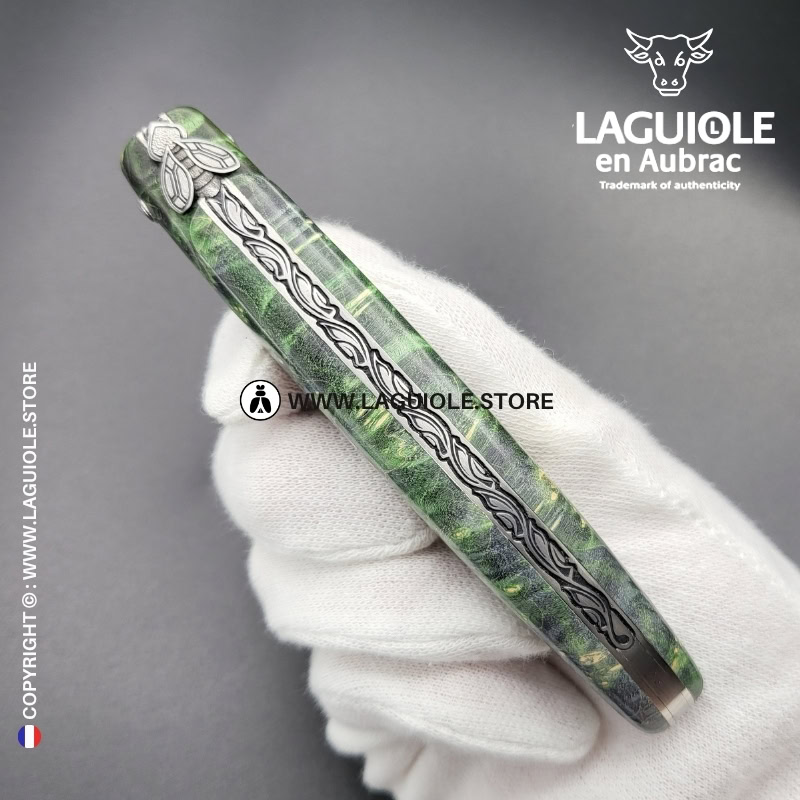
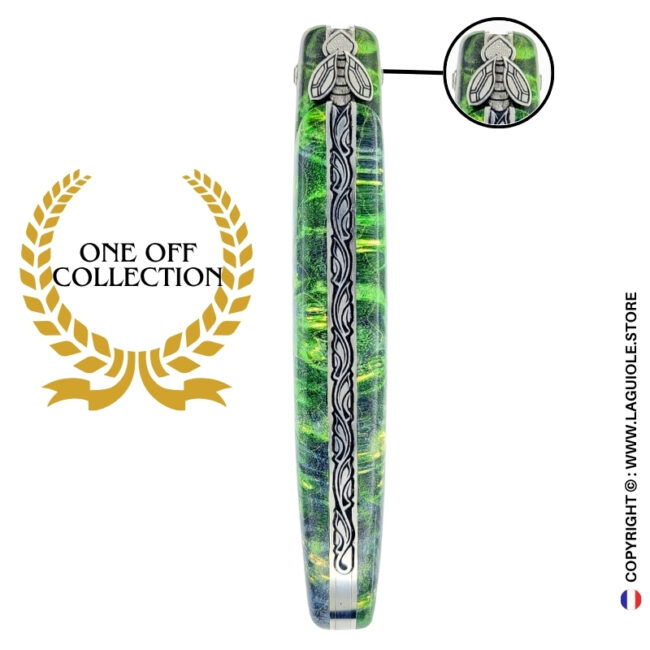
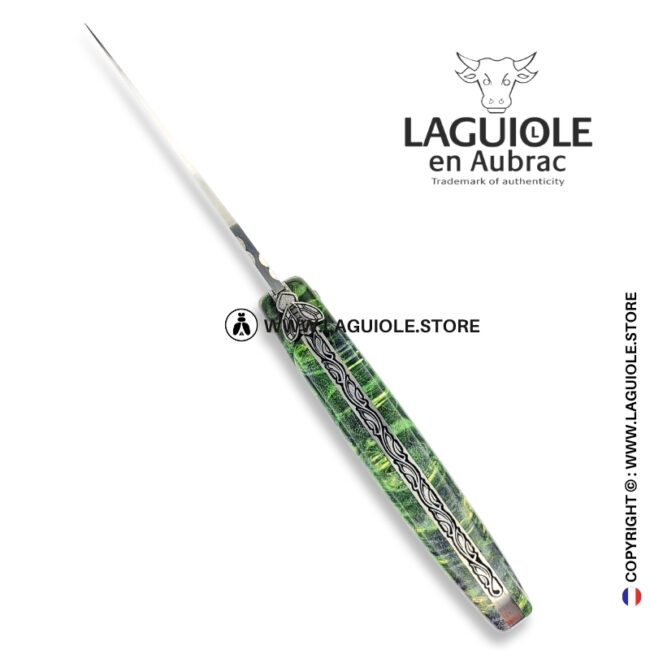
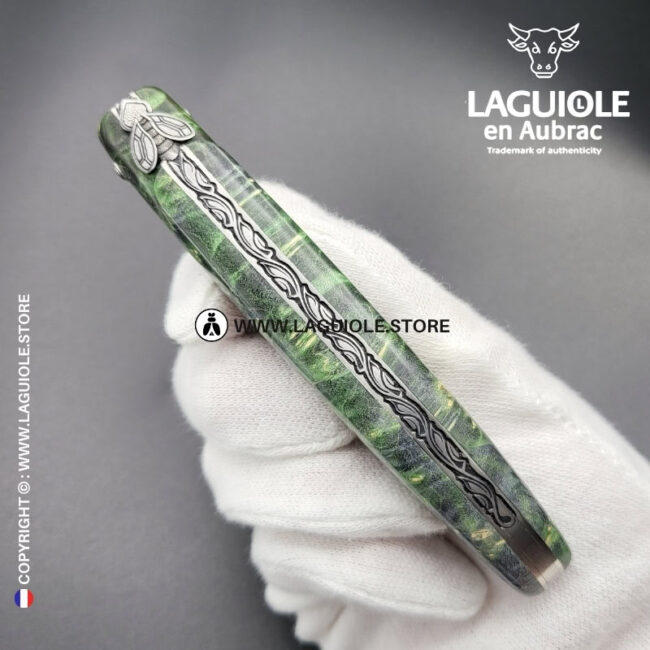
Along the spring runs a continuous frieze of leaf-like flames, chiseled in polished relief against a dark, deepened ground. Every tip rises, bends over, and fits into the next one without ever curling shut into a scroll, which keeps the motif traveling forward along the entire back. Picture grasses in a lazy current, laid flat and lifted again by water that never pauses and has no destination.
Keeping that movement going demands painstaking chiseling. Each flame is outlined individually and then brought up in relief, on a strip a few millimeters wide, over the whole back, with no possibility of retouching anything. At the top, the bee stands guard over the current. Its broad wings, split into panels by raised veins over a finely matted ground, and its body, ringed with regular ribs, sit under a stippled shield that crowns it like a coat of arms. It closes the composition with the calm authority of a sentinel posted at the water’s edge.
“Undine Green” is for Laguiole enthusiasts who answer the call of deep colors and want a piece with a story to tell. Water-green elder burl with golden glints just under its surface, the leafy flames on the spring, and the shield-crowned bee form one consistent design, conceived to delight the eye and the hand together.