Handcrafted in Aveyron, the historic home of the Laguiole knife
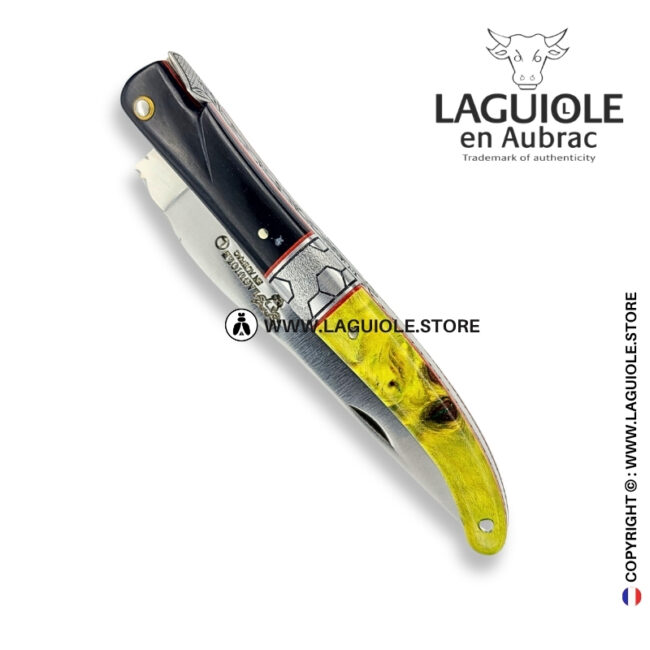
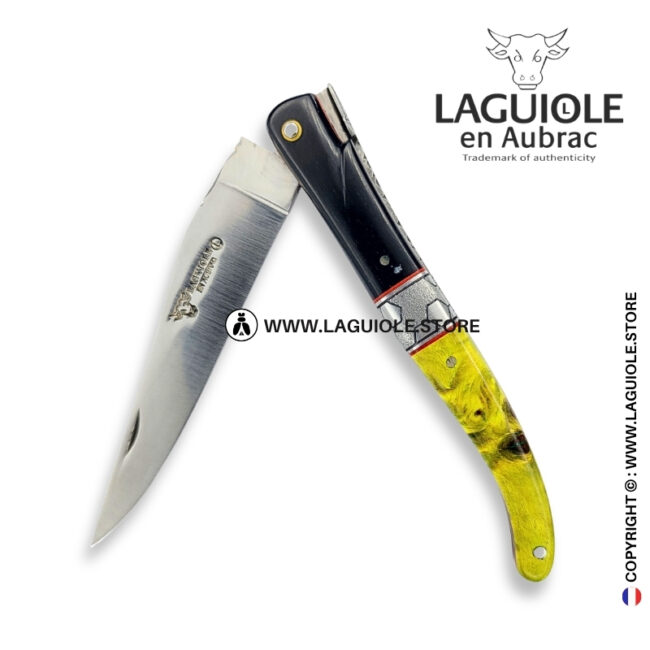
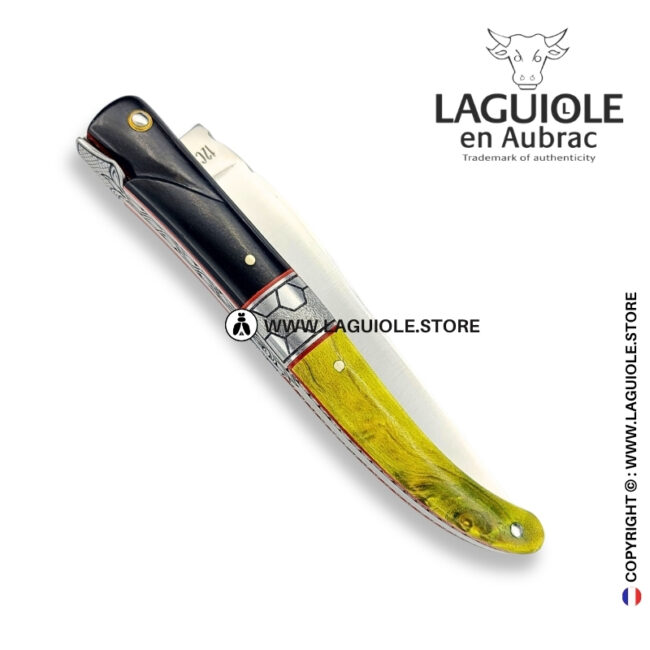
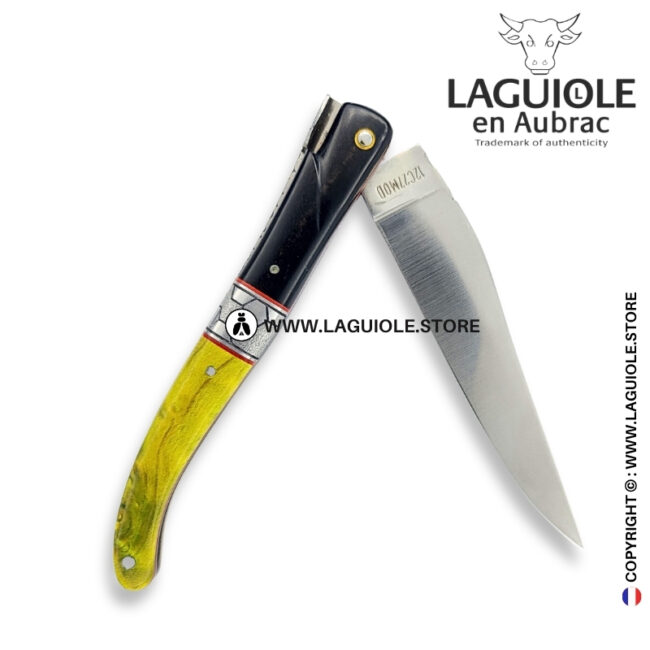
Undergrowth Hive: Laguiole Knife in Ebony and Stabilized Poplar Burl – Sculpted Bee – Chiseled Spring and Central Bolster
1459€
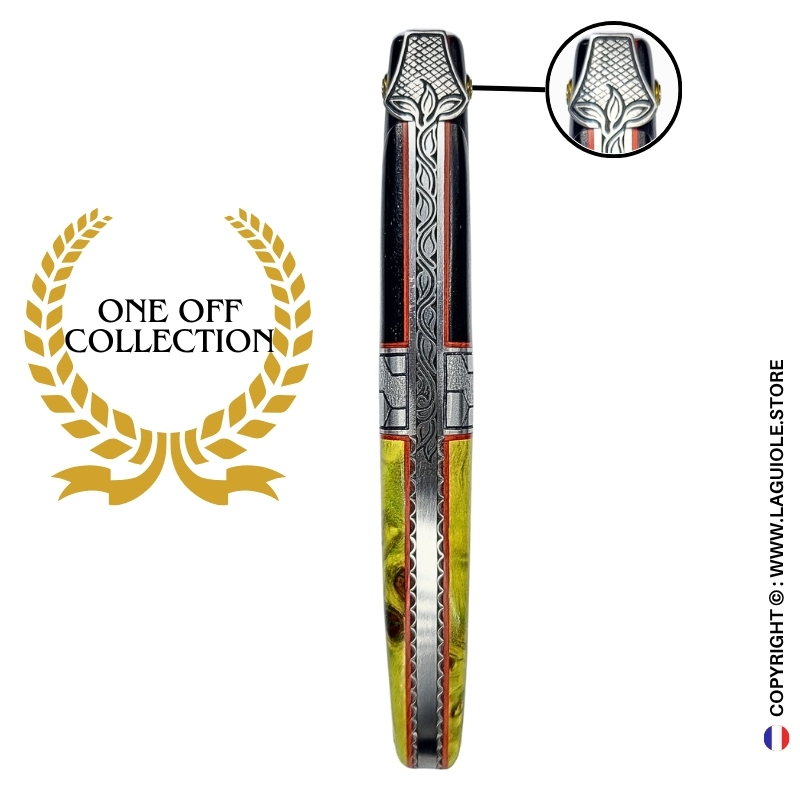
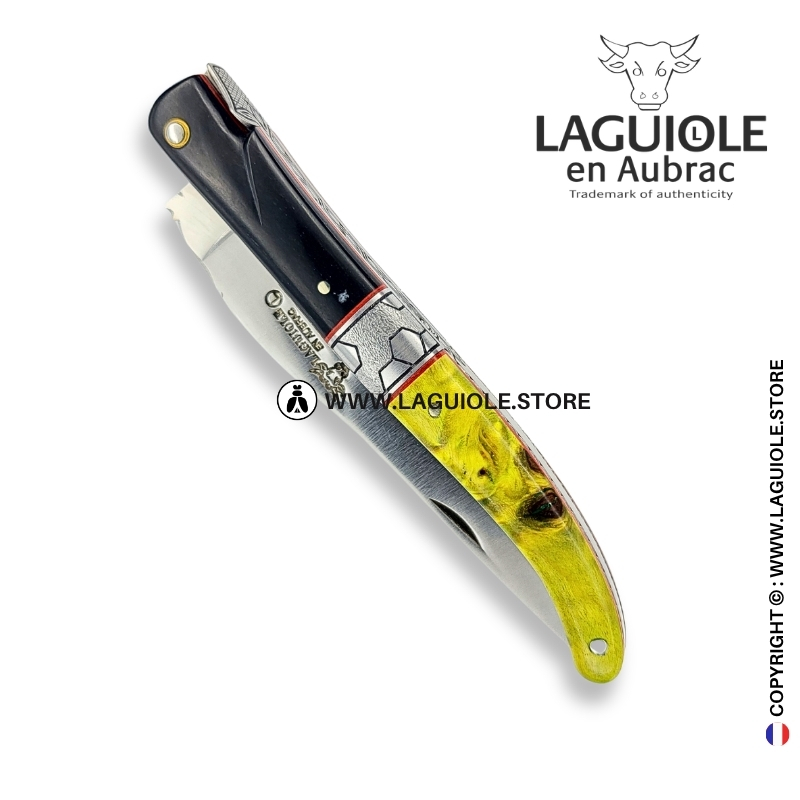
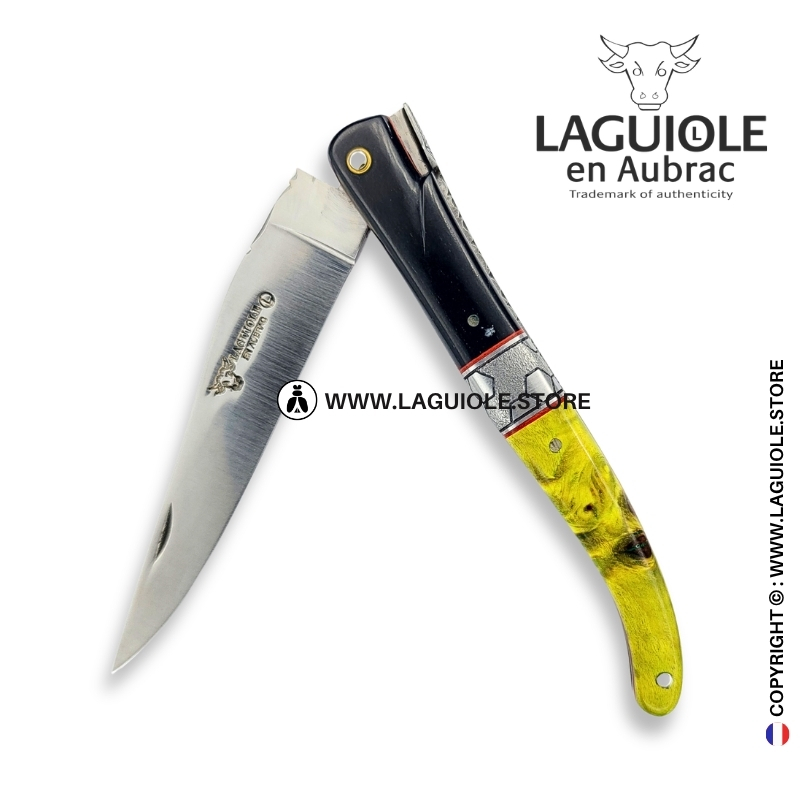
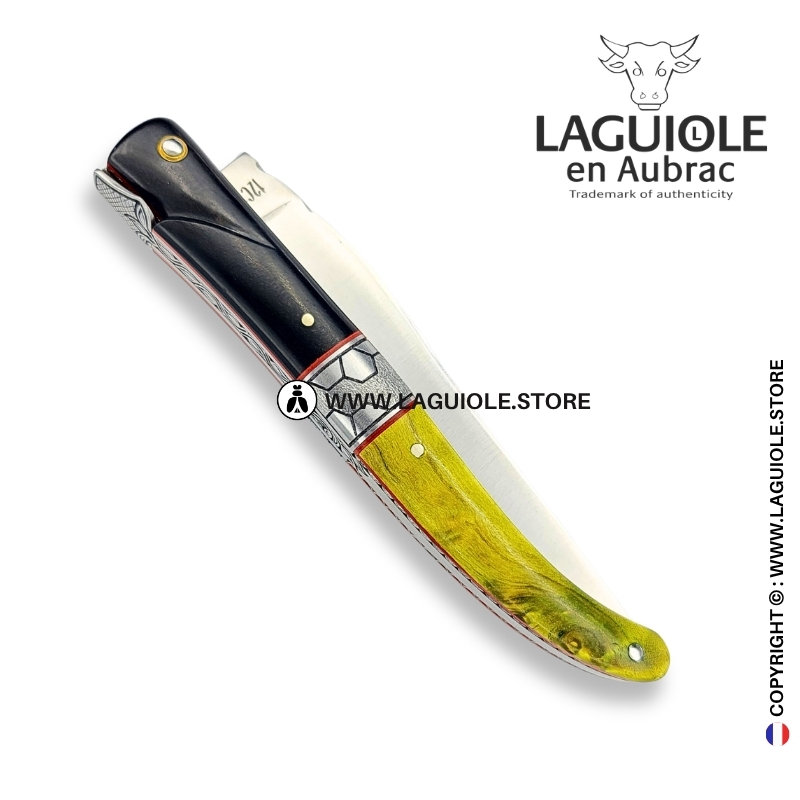
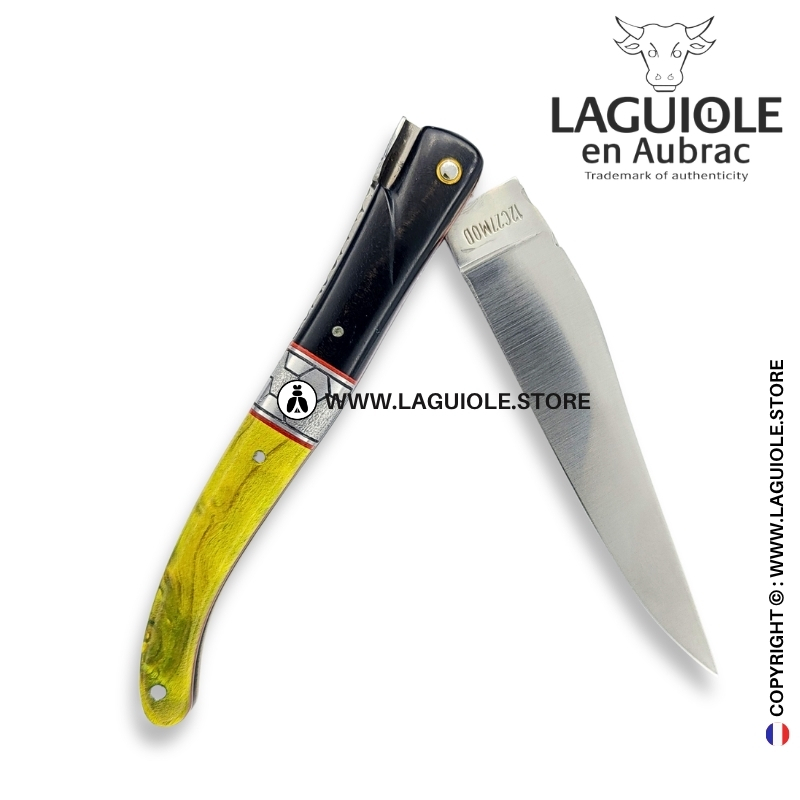
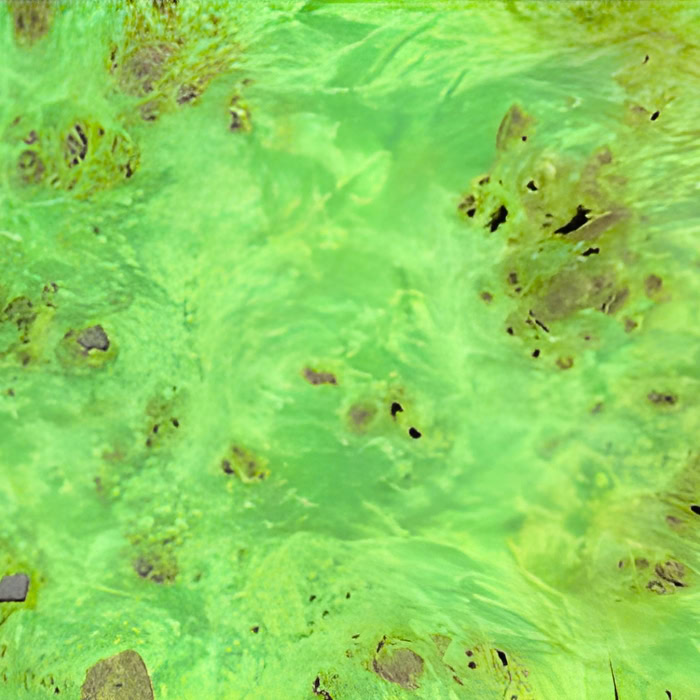
“Undergrowth Hive” is a Laguiole knife made once and only once, entirely by hand, by the most seasoned cutlers in the Laguiole en Aubrac workshops. Two materials share its handle. Ebony brings a deep black buffed to a mirror shine, and poplar burl brings a luminous green with bronze glints, a color produced by the resin stabilization, as this burl is naturally cream to light beige. Red spacers run between them for the whole length of the handle, a bright, tight thread that sharpens every line of the piece from heel to head.
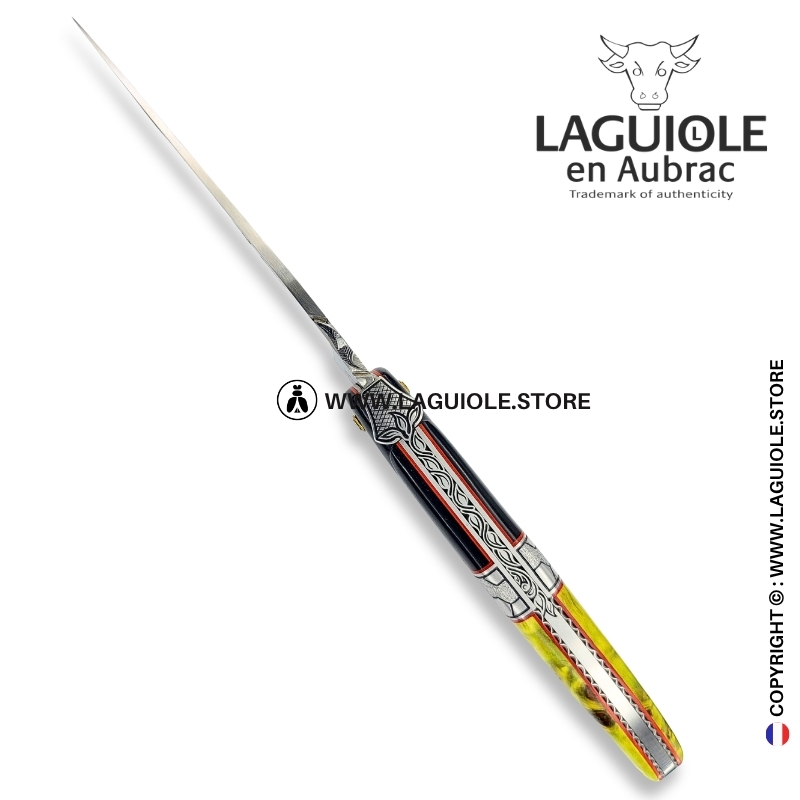
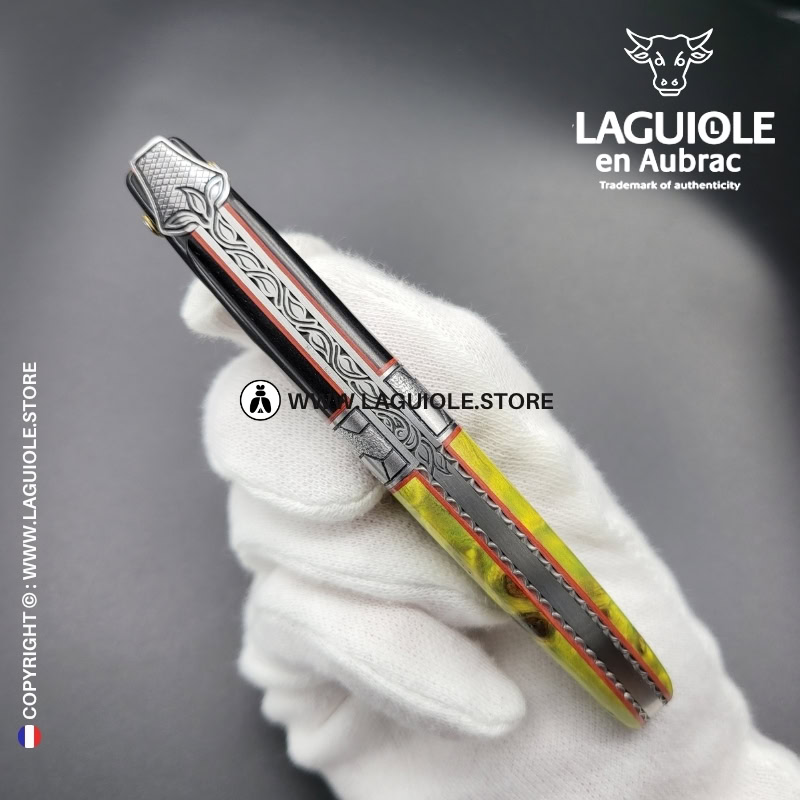
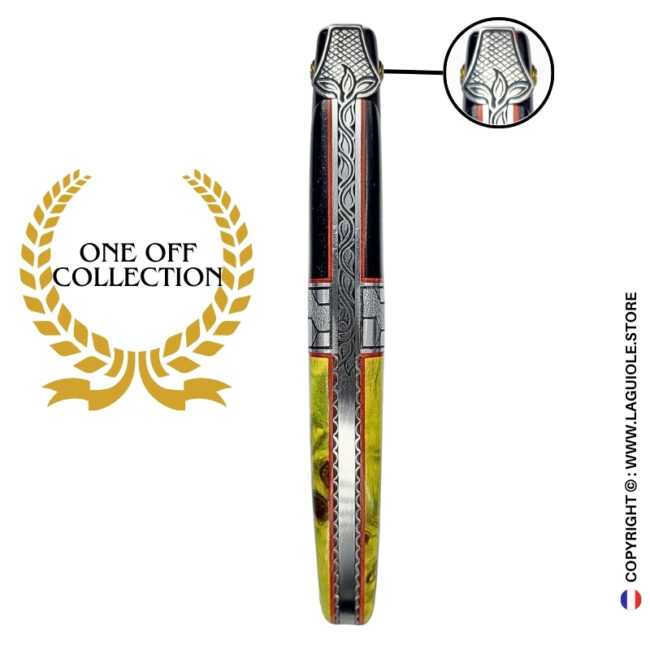
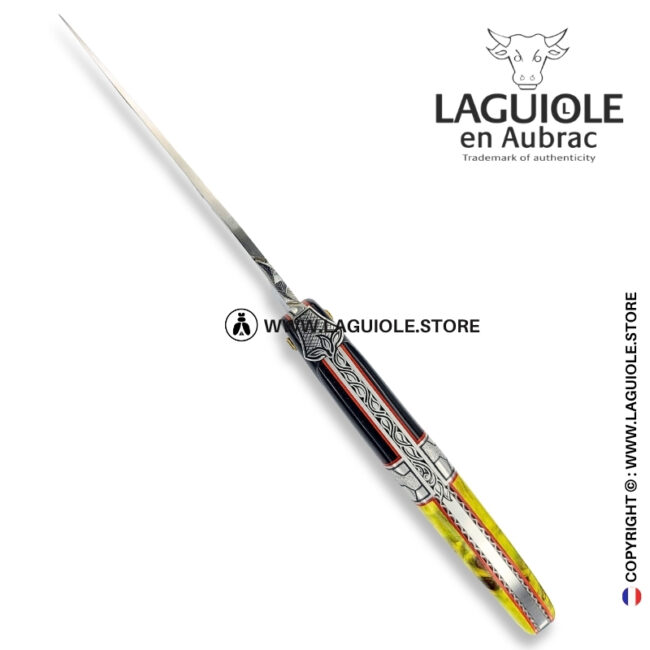
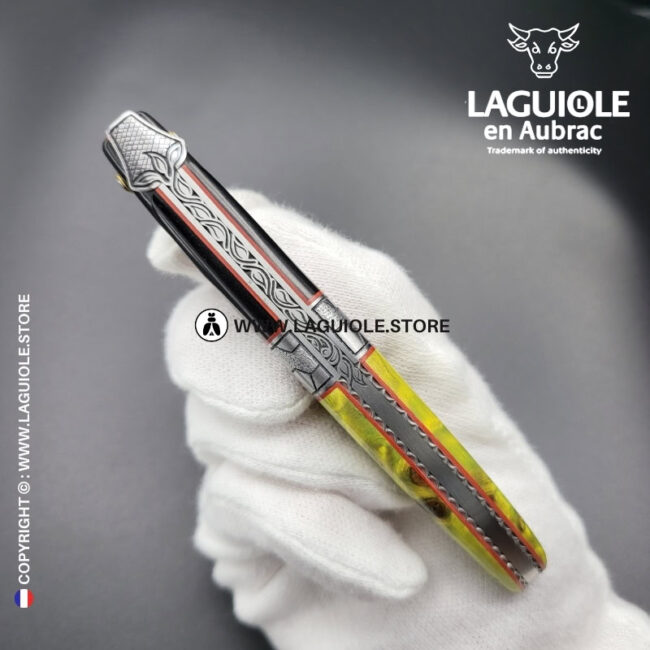
This bee leaves realism behind altogether. Its wings are engraved with an even crosshatch that sparkles like a checkerboard, and its body grows straight out of the stem on the spring: the uppermost tuft of a young shoot whose leaves are just parting. The plant literally becomes the bee, and the delicacy of the chiseling turns that transformation into the signature of the piece, a choice cutlers rarely make.
The leafy stem chiseled on the spring climbs its entire length from heel to head, unfolding leaf after leaf in a steady upward motion. Midway, it passes over the central bolster, worked on both faces with hexagonal cells on a carefully grained ground that sets each one apart, then resumes its rise toward the bee. Liners guilloché with fine ripples frame the climb, and on both sides the red edge of the spacers doubles that frame along the steel.
“Undergrowth Hive” belongs with Laguiole enthusiasts who have a feel for botanical pieces. Shadowy ebony set against bright green burl, a chiseled stem that grows until it flowers as a bee, a hive engraved at the center: each element feeds the next, in a lively, coherent knife that rewards a long look and daily use alike.