Handcrafted in Aveyron, the historic home of the Laguiole knife
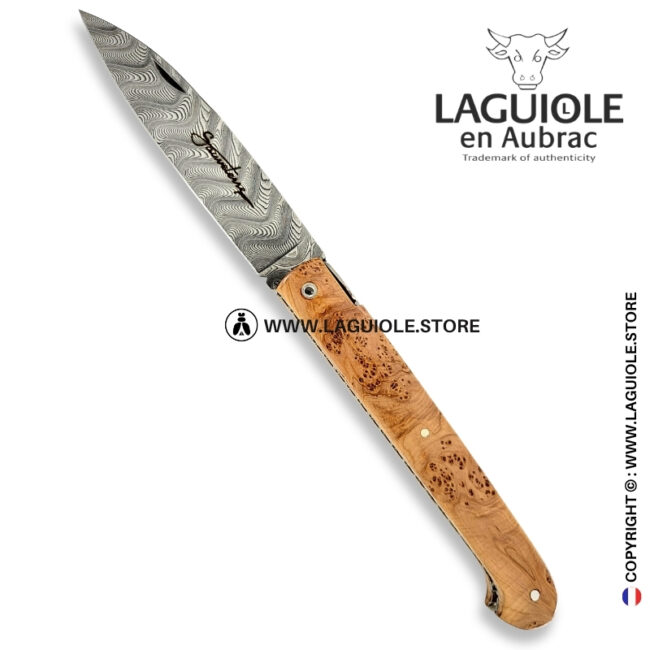
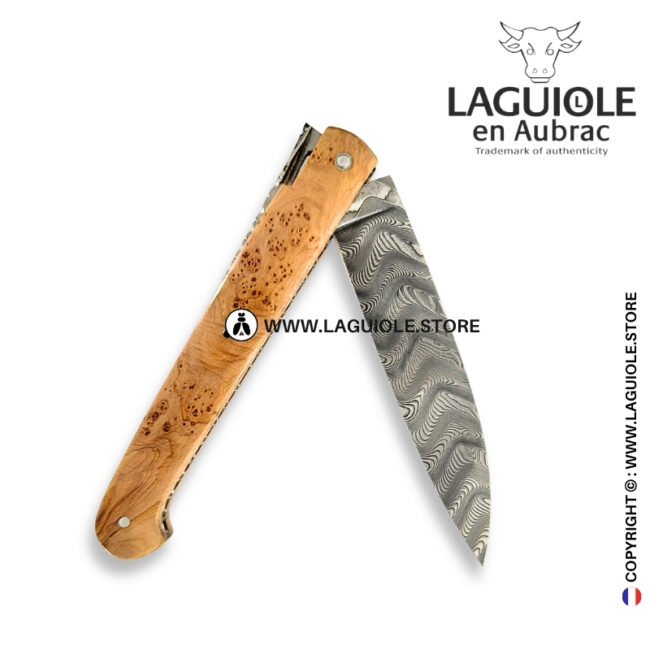
Sauveterre Knife with Full Juniper Handle – Damascus Blade – Guilloché Liners and Spring
689€
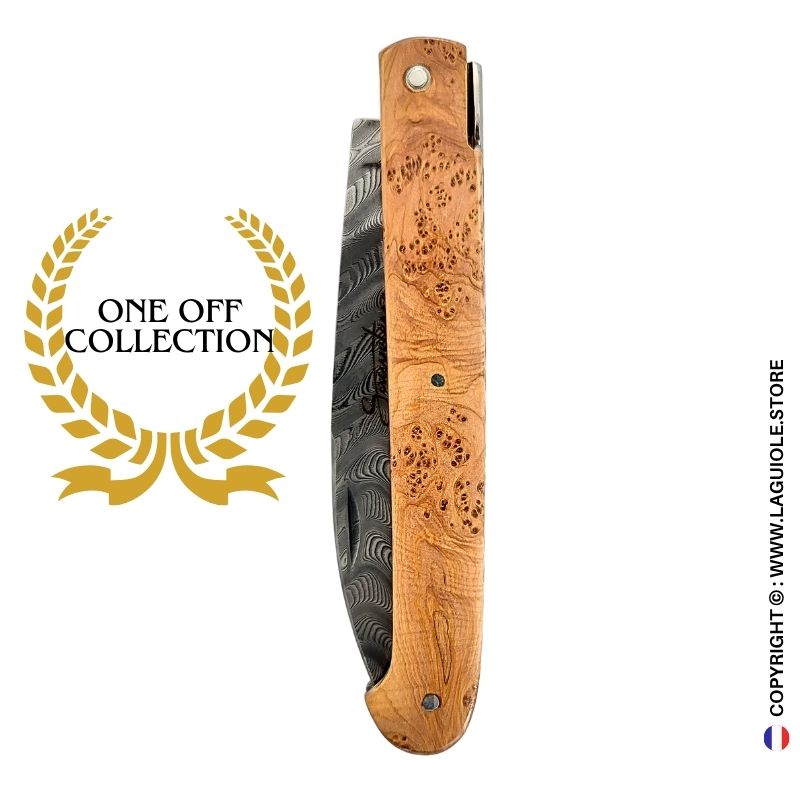
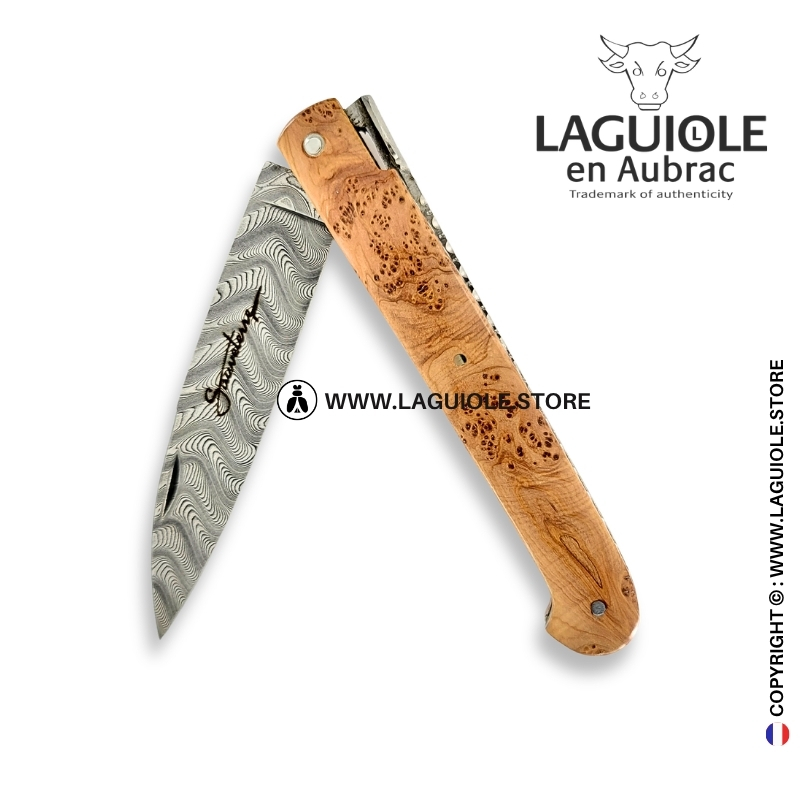
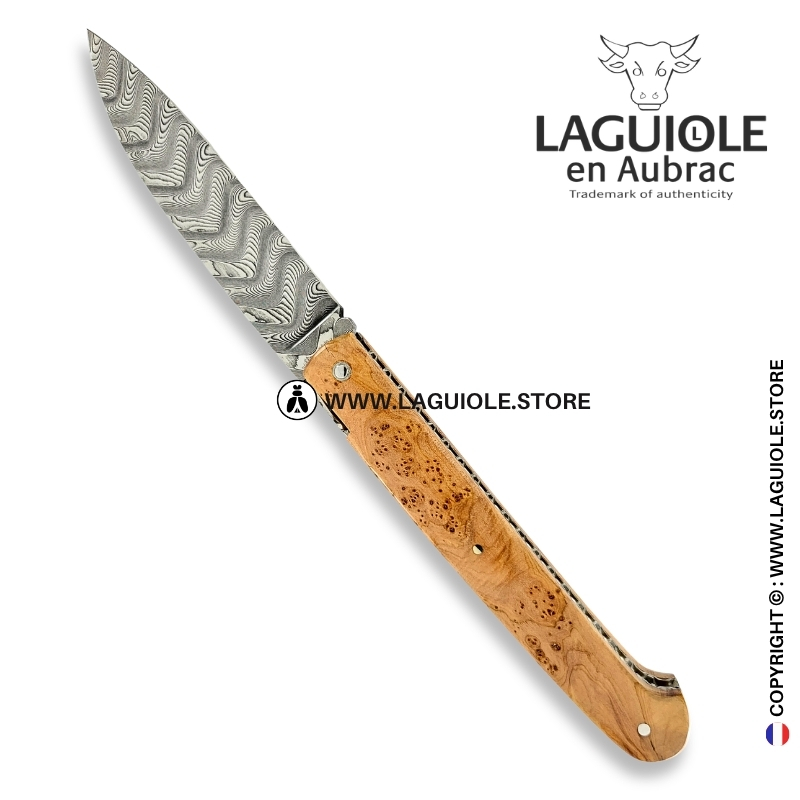
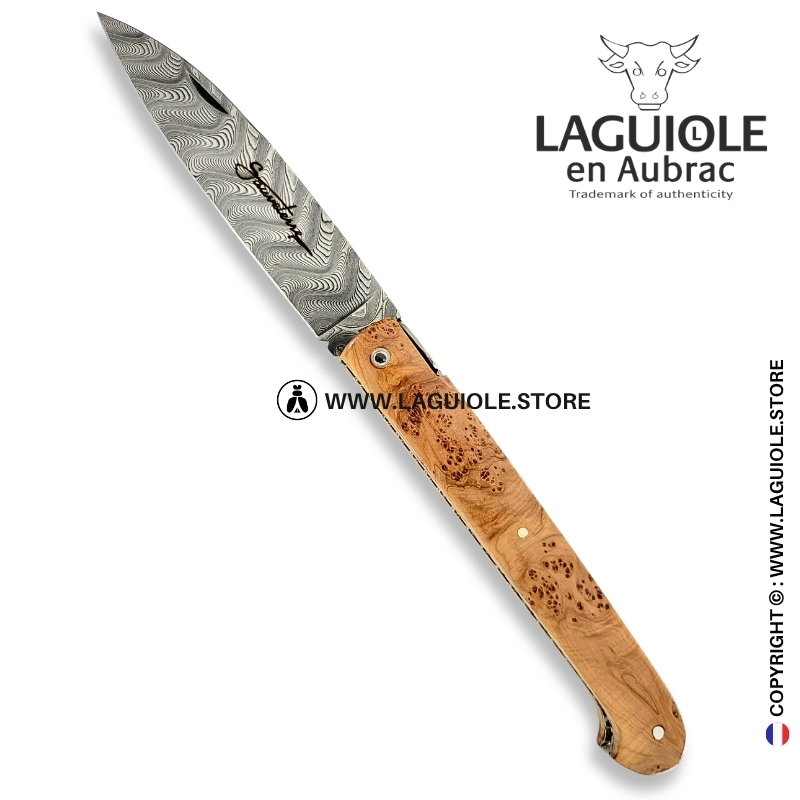
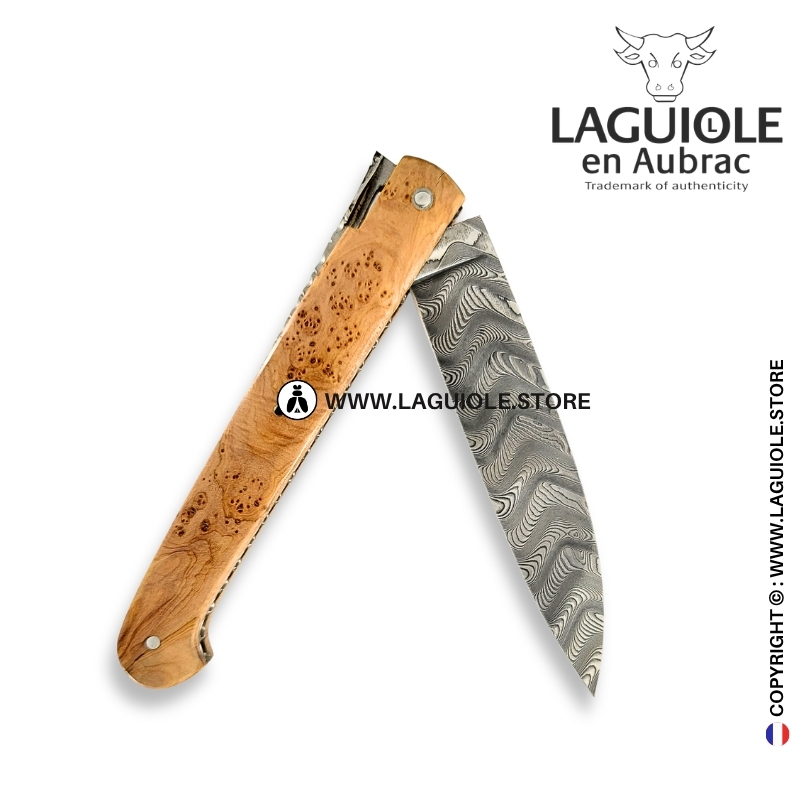
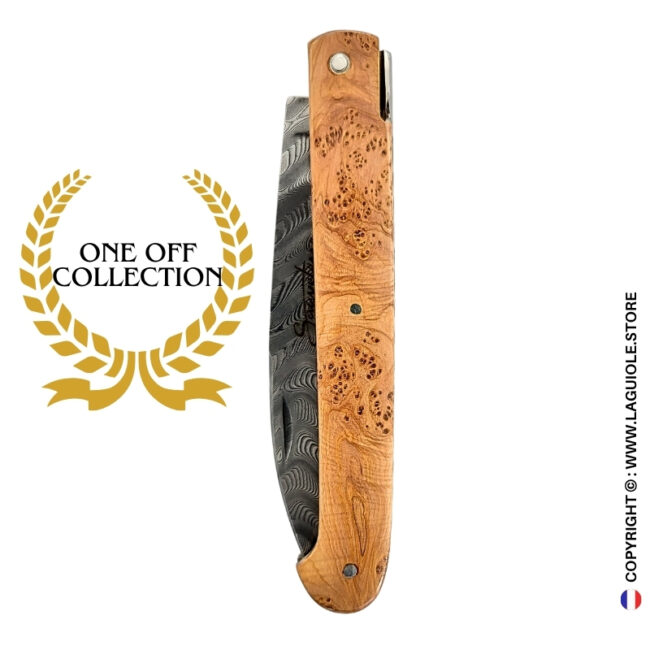
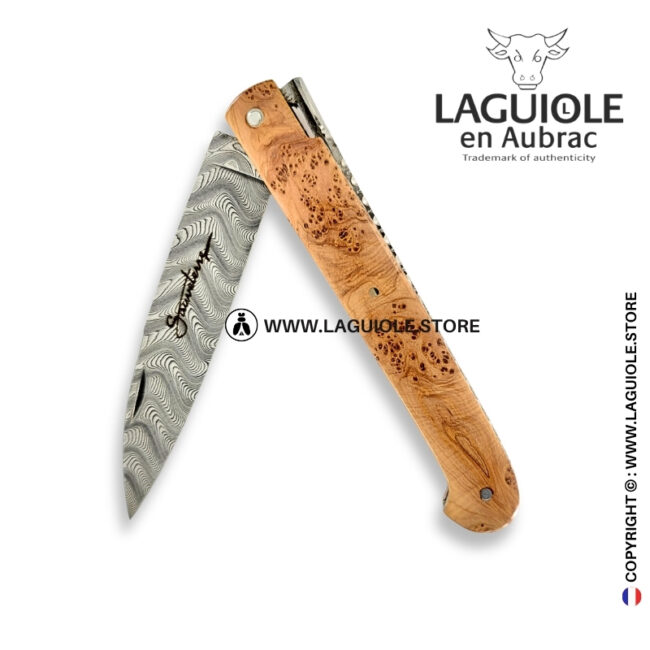
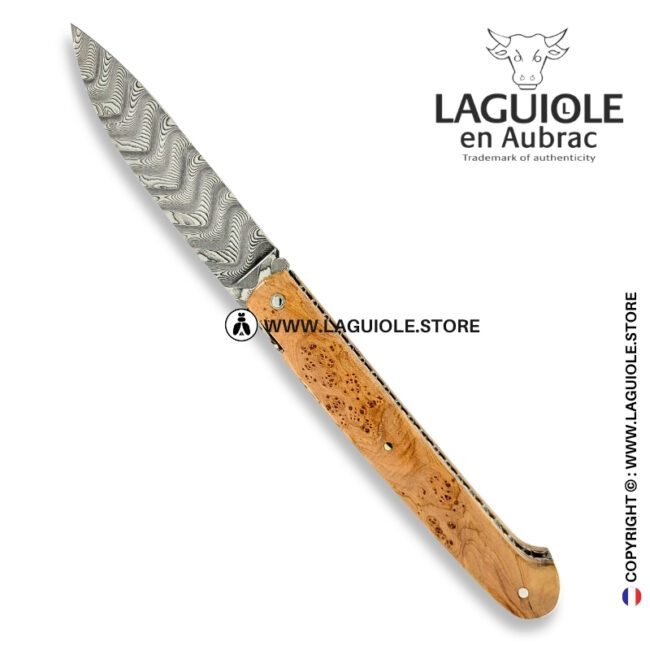
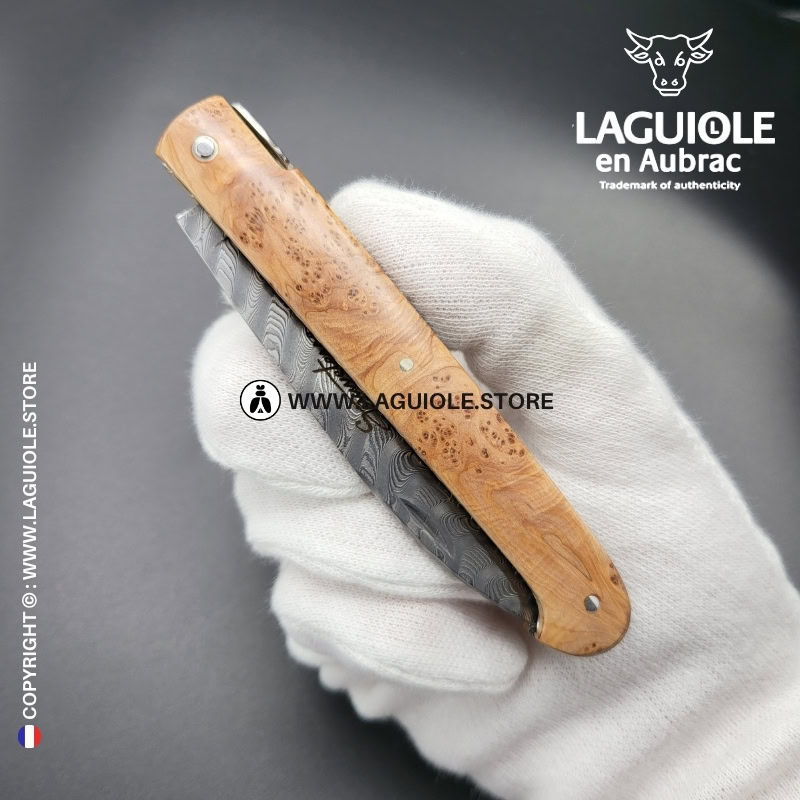
This Sauveterre is a one-off knife, made completely by hand in the Rouergue knifemaking tradition. Its 4.3″ (11 cm) full handle is juniper, a warm golden blond freckled all over with tiny brown burl eyes that fall across the surface like a fine drizzle. The grain is close, the scent discreet, and both come only from this tree of arid land. Under its deep polish, the handle follows the slim, taut profile it inherits from the straight laguiole of the 1800s, a model whose elegance the Sauveterre carries on: one clean line without a bolster, where nothing competes with the wood.
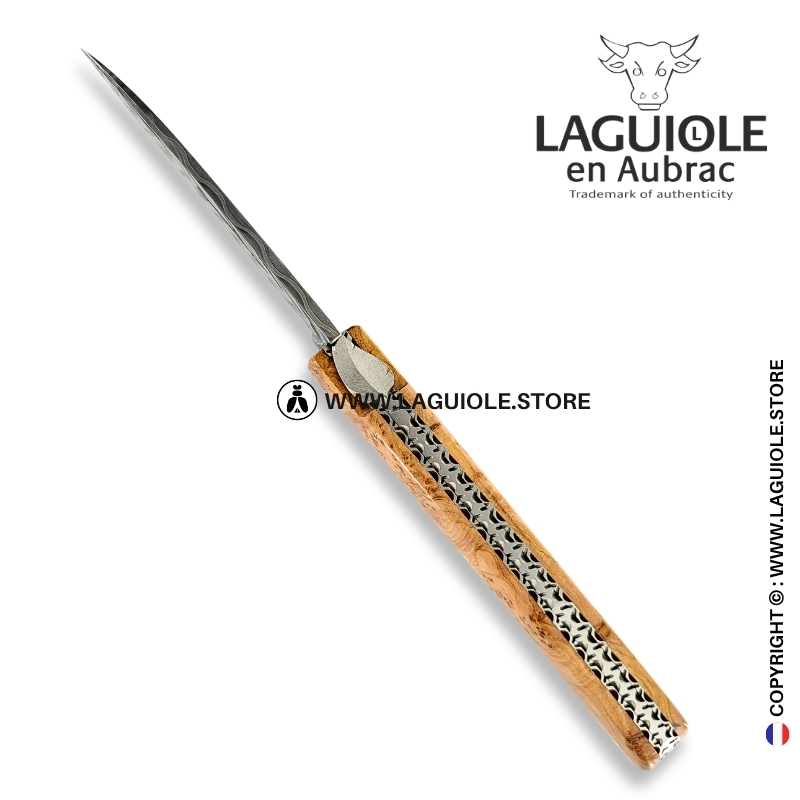
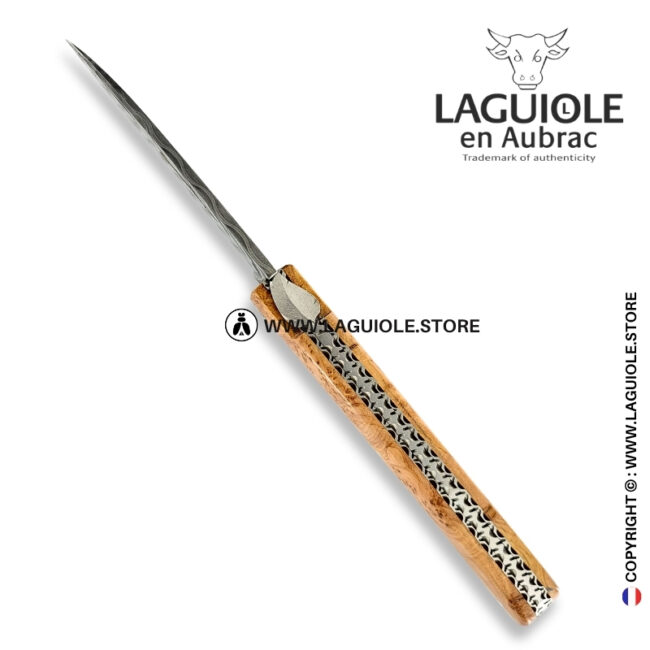
Where a Laguiole would carry its bee, at the top of the spring, this knife bears the emblem of its home village: a sage leaf shaped at the forge and sculpted in relief, its veins finely worked. Sauveterre-de-Rouergue has sage on its coat of arms, and every knife made there carries the leaf as its signature. The leaf identifies a Sauveterre as surely as the bee identifies a Laguiole, and this one ranks among the most finely executed.
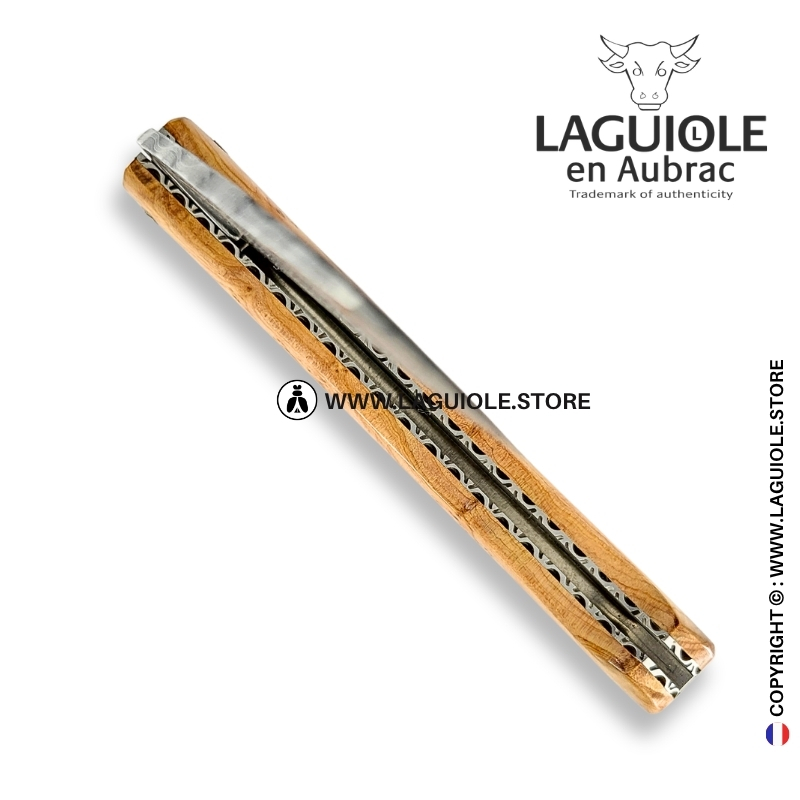
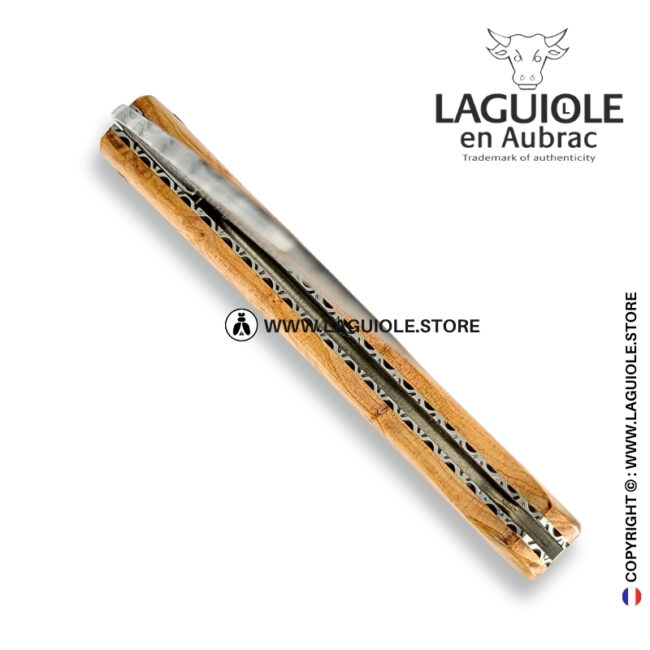
Guilloché does not get more complete than this. Liners and spring are worked from end to end without a single gap, in a dense double row of crescents that follows the full length of the handle. Not a sliver of visible steel is left bare. The file work is of rare scope, hours of it, and it reveals itself little by little as you turn the knife slowly between your fingers. Its continuity, topped by the sage leaf, is where the precious feel of the piece comes from.
This Sauveterre will appeal to anyone who loves true regional knives as much as exceptional pieces. It brings fragrant juniper from the causses, a one-of-a-kind Damascus pattern, guilloché over every inch and the forged emblem of a village whose knifemaking goes back to the Middle Ages. Six centuries of knifemaking stand behind this single piece, and it will not be reproduced, here or anywhere else.