Handcrafted in Aveyron, the historic home of the Laguiole knife
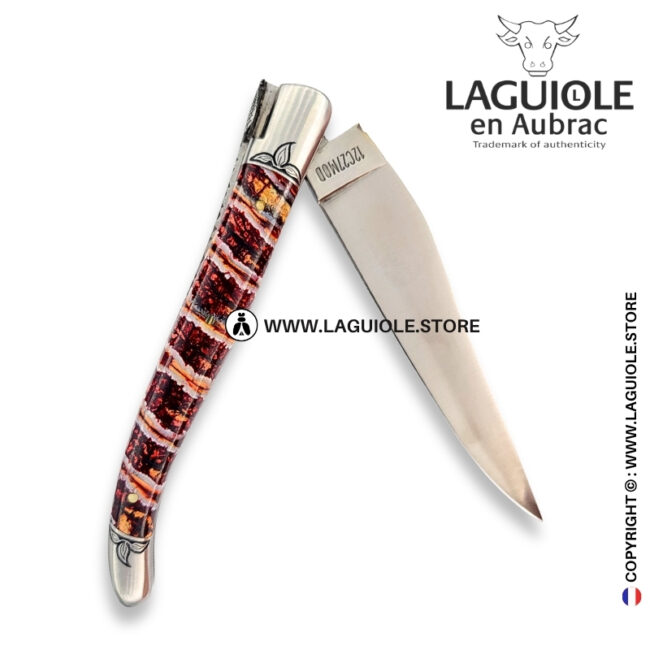
Red Rapture: Laguiole Knife in Red Mammoth Molar – Sculpted Bee – Chiseled Spring and Bolsters
1659€
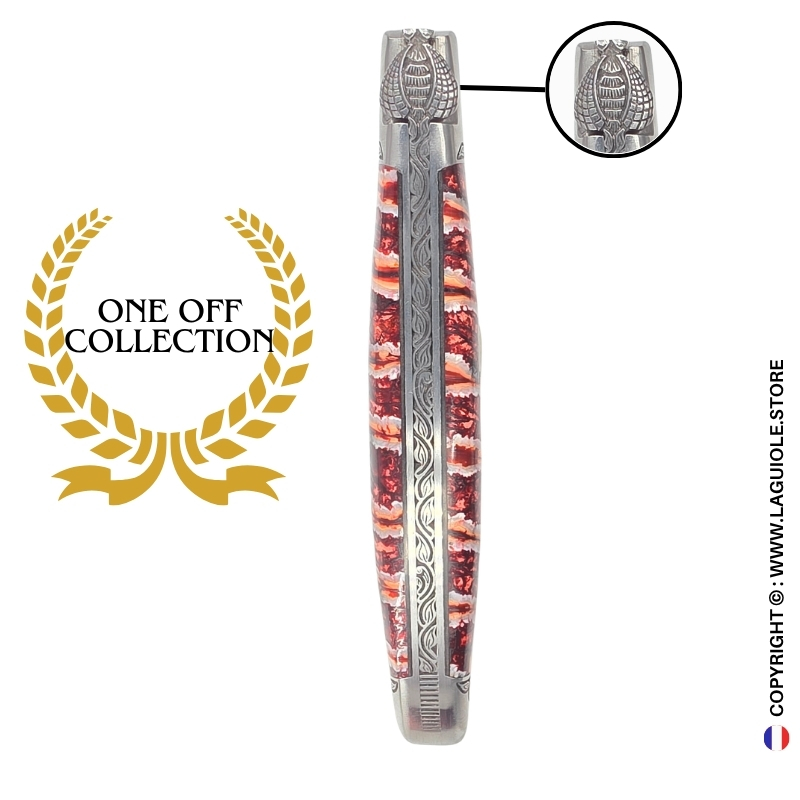
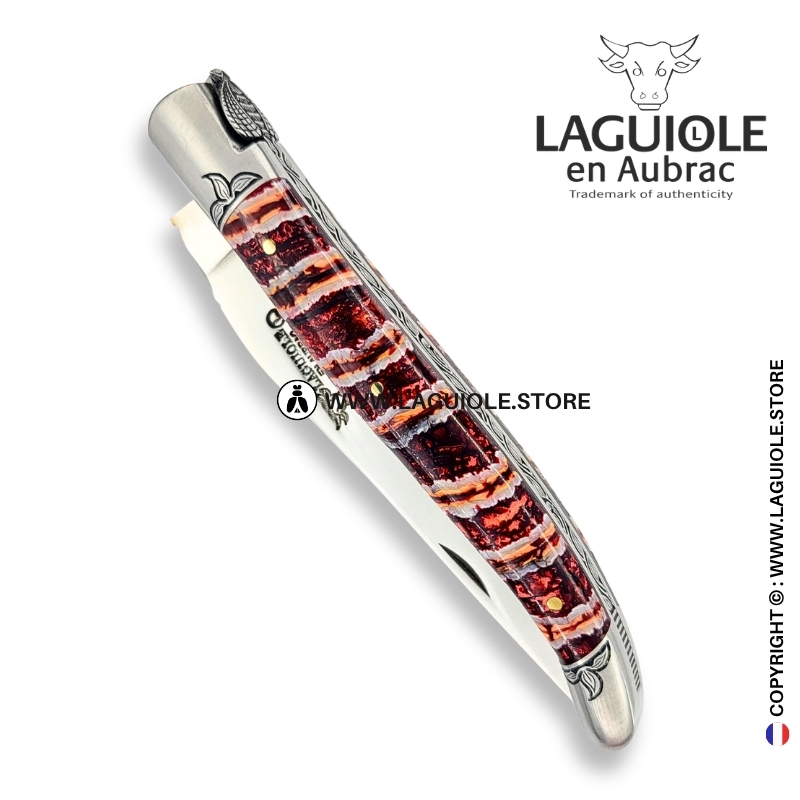
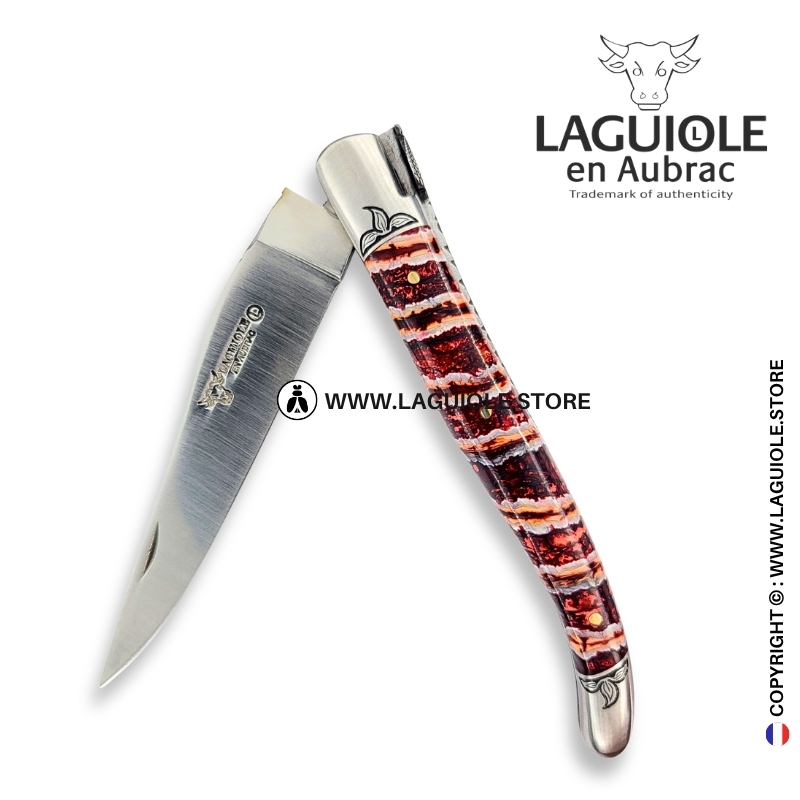
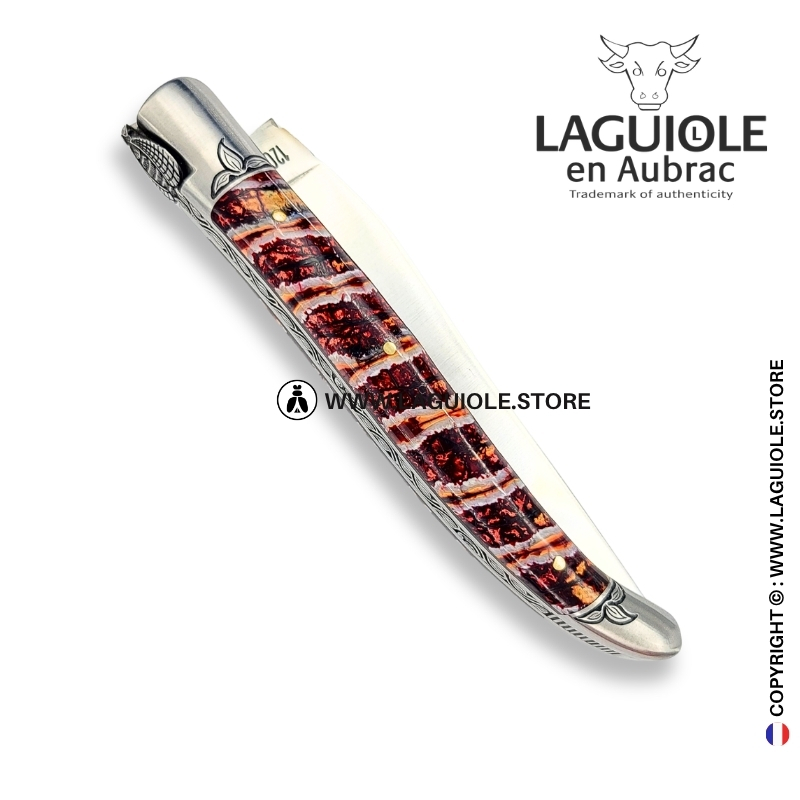
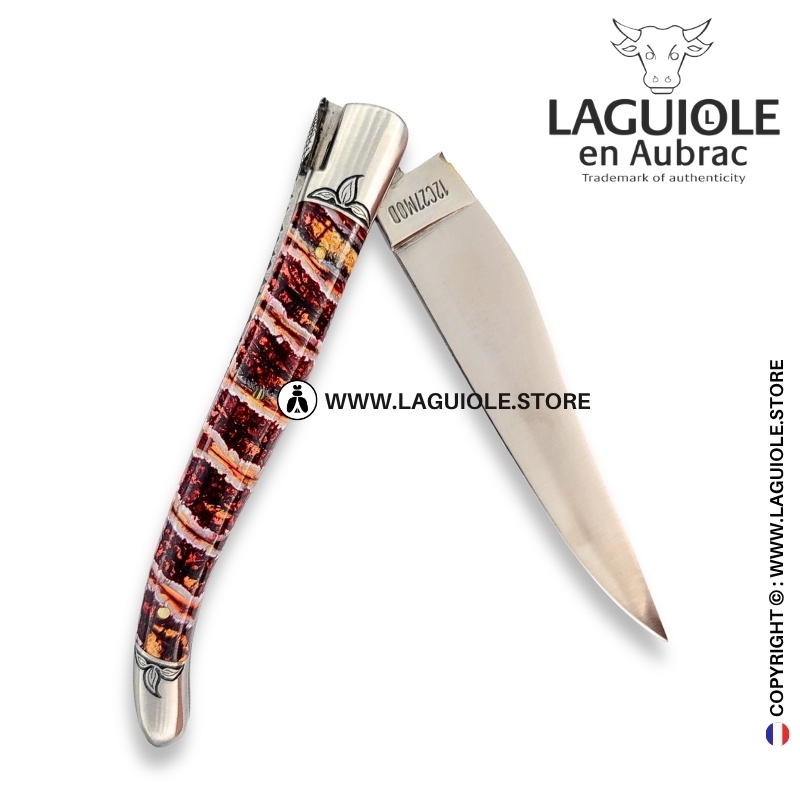
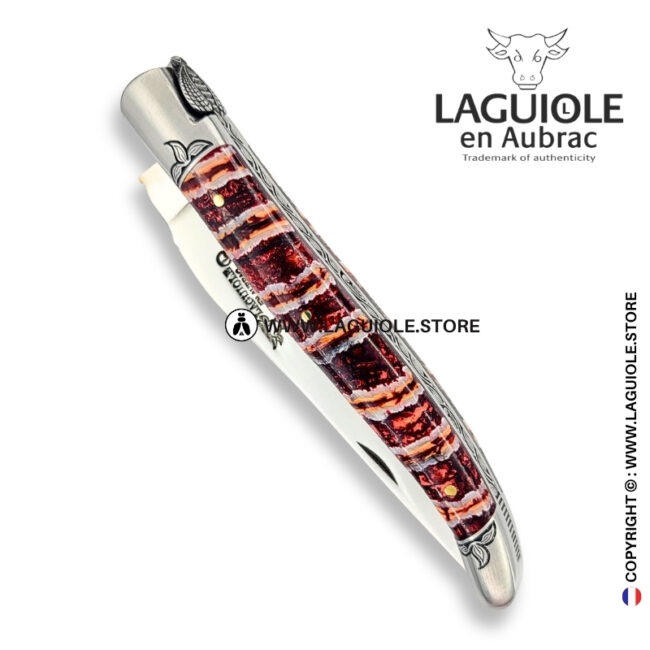
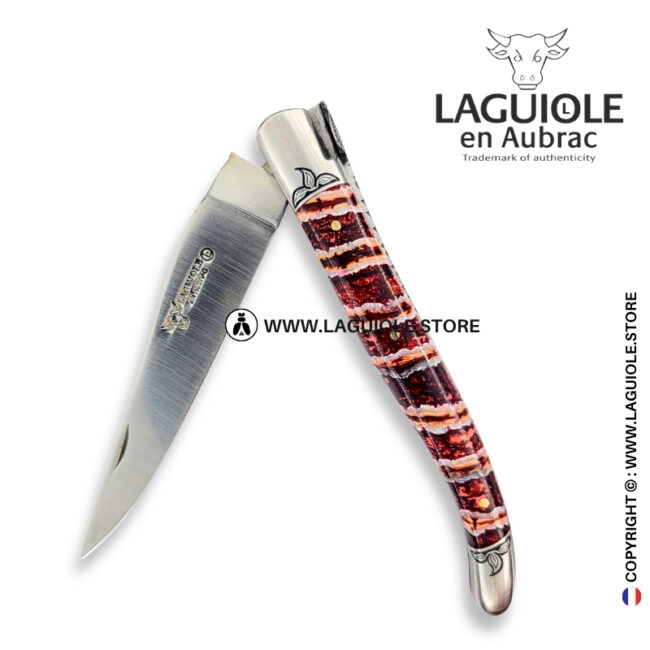
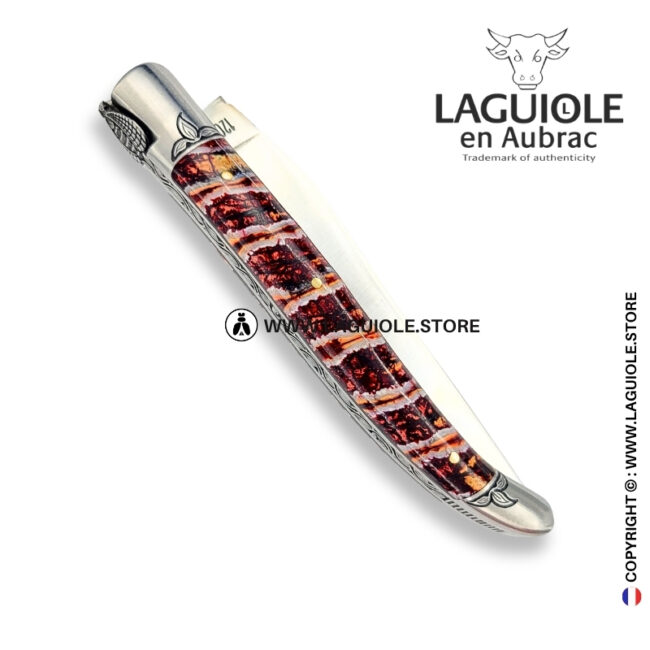
Layer after layer of red, piled on with no thought of holding back: that profusion is what “Red Rapture” is named for, and the handle looks like a layered torte cut straight through. Every stage, from the first cut to the last pass of polish, was carried out by hand by one Laguiole en Aubrac cutler working alone, and it has no twin. The red mammoth molar alternates deep raspberry, close to garnet, with creamy white and thin apricot veins, stacked all the way down to the end. A crisp black spacer sets the fossil off from the stainless steel liners and gives all that abundance a frame.
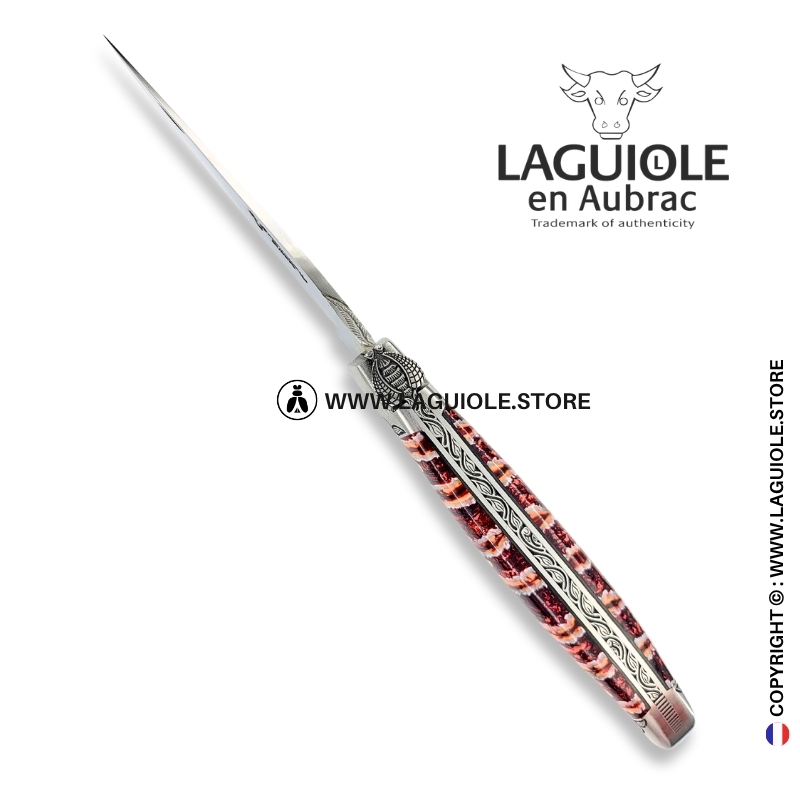
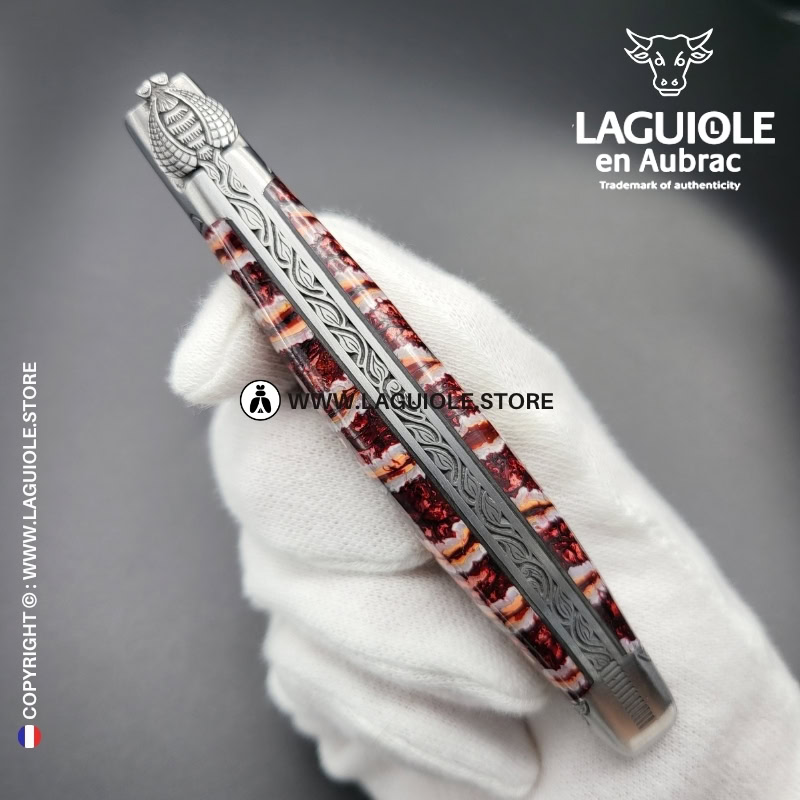
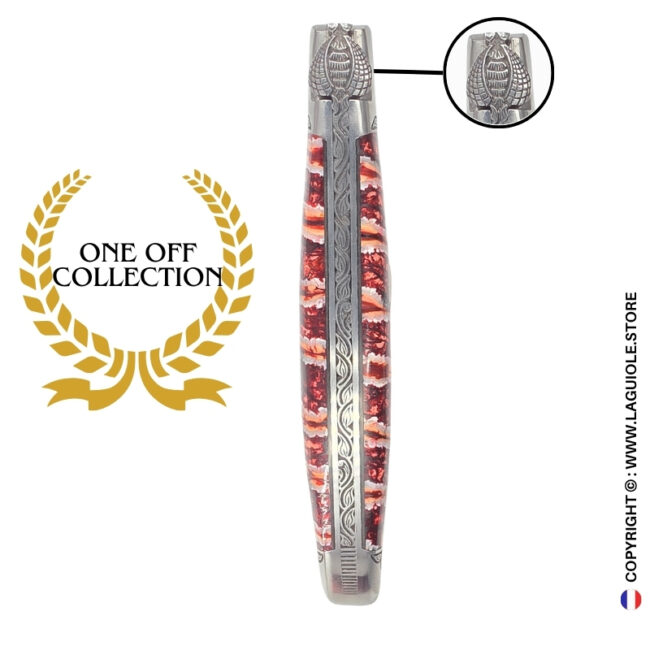
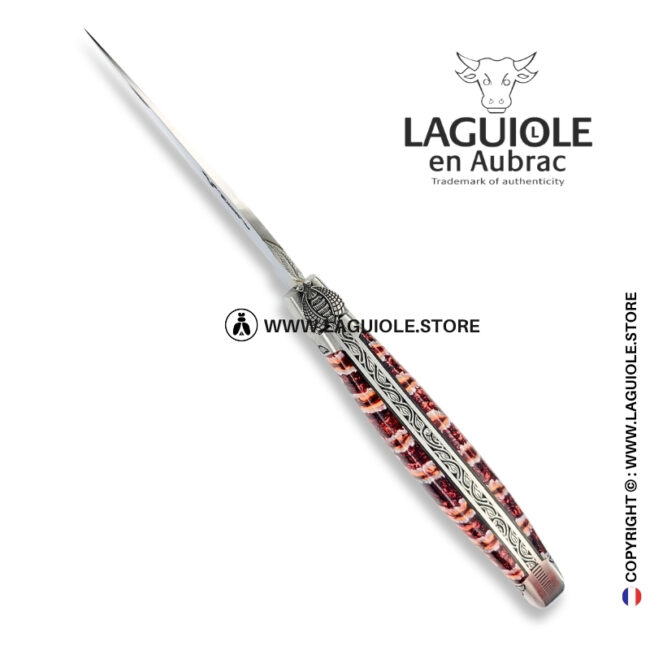
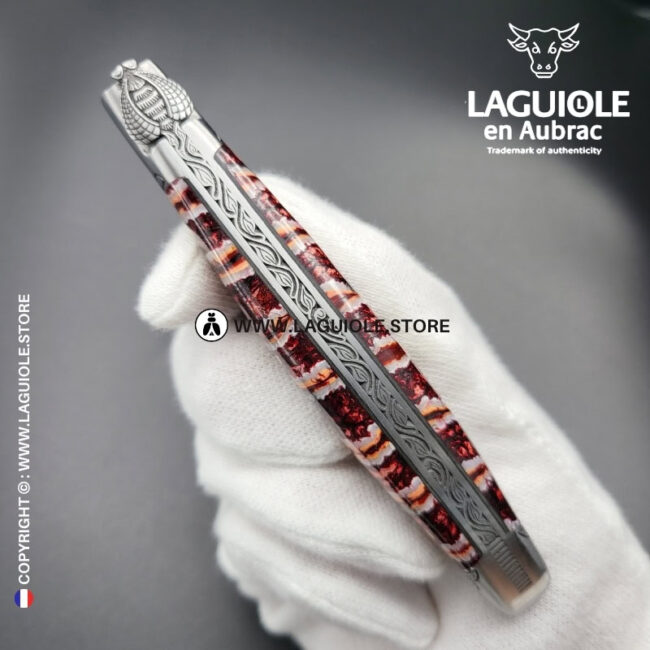
The spring answers with a chiseled cord that never breaks off along its entire length. Plant-like flames wind through it in polished relief, supple, doubling back and setting out again with the steady beat of an ornamental carver. Each scroll was outlined with a deep stroke, then worked individually within a width of a few millimeters, where every slip is permanent, so the evenness of the cord comes from the hand alone.
The bolsters carry the cord on in chiseled leaves and close-set bars, and they close off the piece at both ends without a bare gap. Up top, the bee is the crowning figure the eye has been waiting for. Her wings open in two broad, veined fans, her ringed body tapers between them row by row into a cone, and a small chiseled flower sits on her head. She stands there like a statue on the roofline of a building: everything climbs to her from the end of the handle, and she closes the composition.
Collectors who like a generous piece, one that keeps nothing in reserve, will feel at home with “Red Rapture.” Layered red molar, black spacer and steel liners, a flower-crowned bee, sculpted bolsters, and a chiseled cord down the spring make for a richly worked whole, a joy to look at and a pleasure to use.