Handcrafted in Aveyron, the historic home of the Laguiole knife
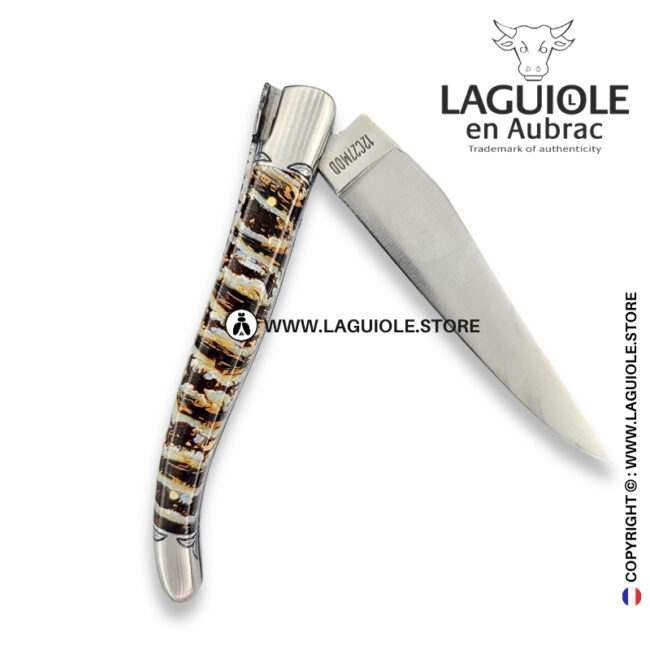
Quivering Leaves: Laguiole Knife in Brown Mammoth Molar – Sculpted Bee – Chiseled Spring and Bolsters
1659€
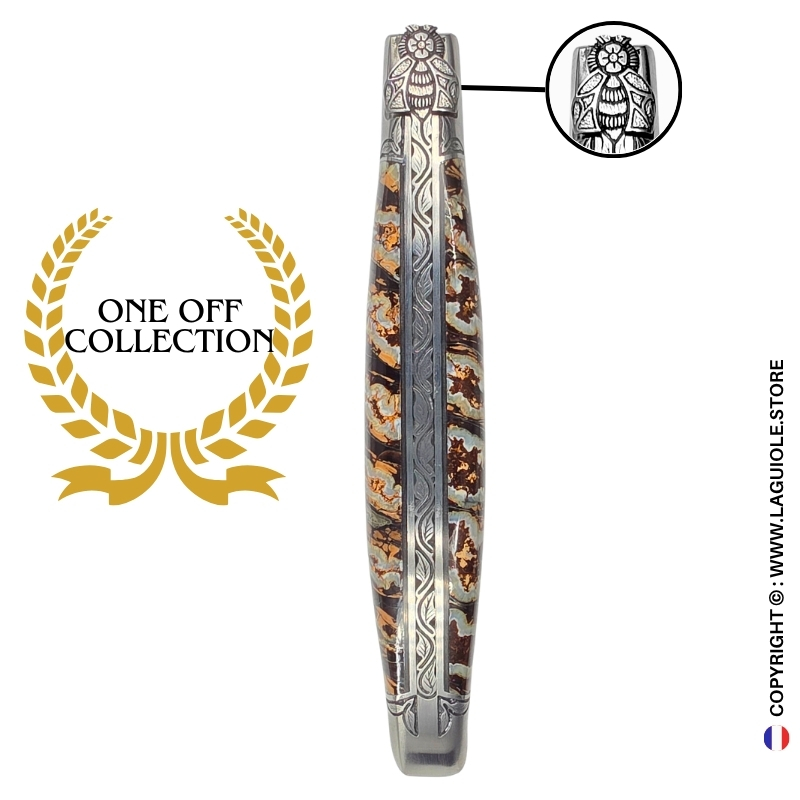
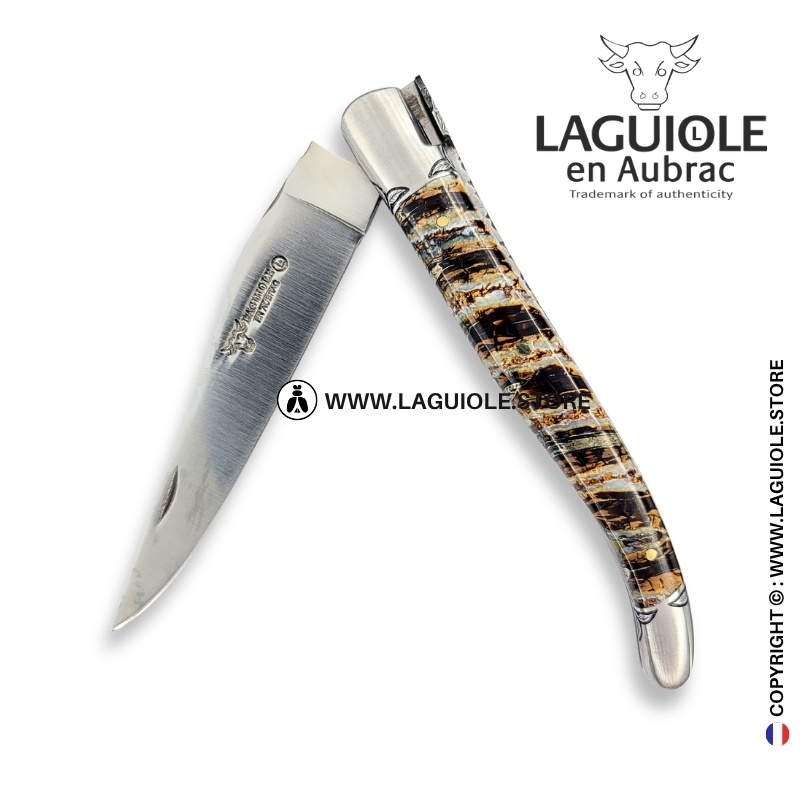
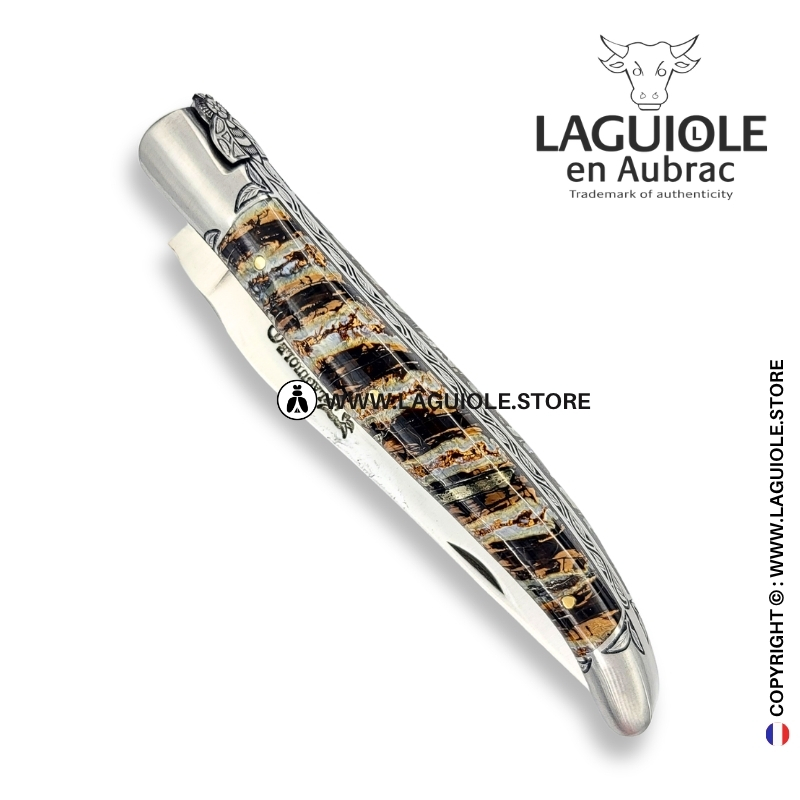
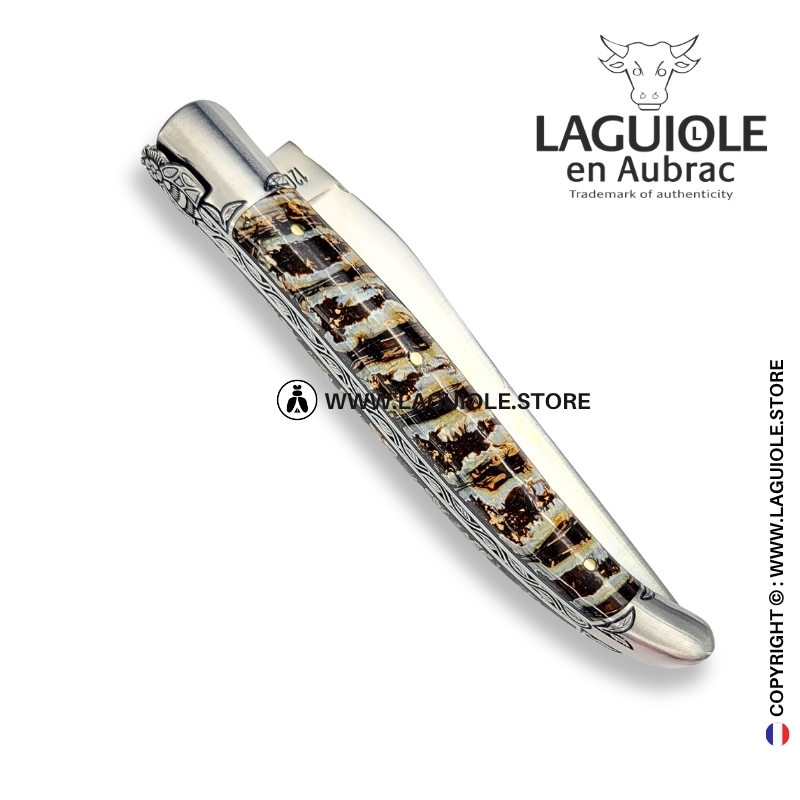
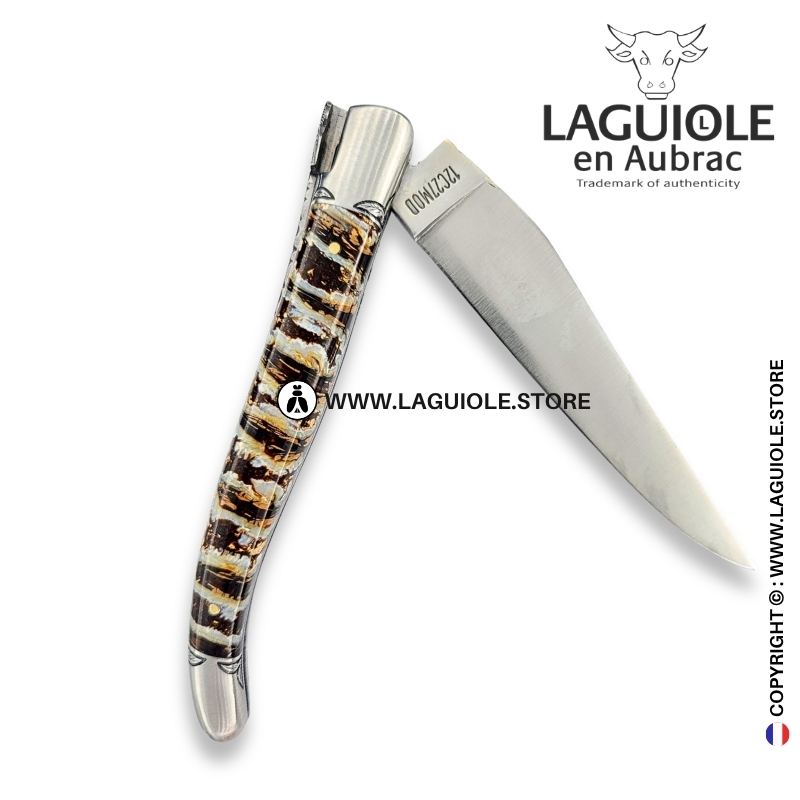
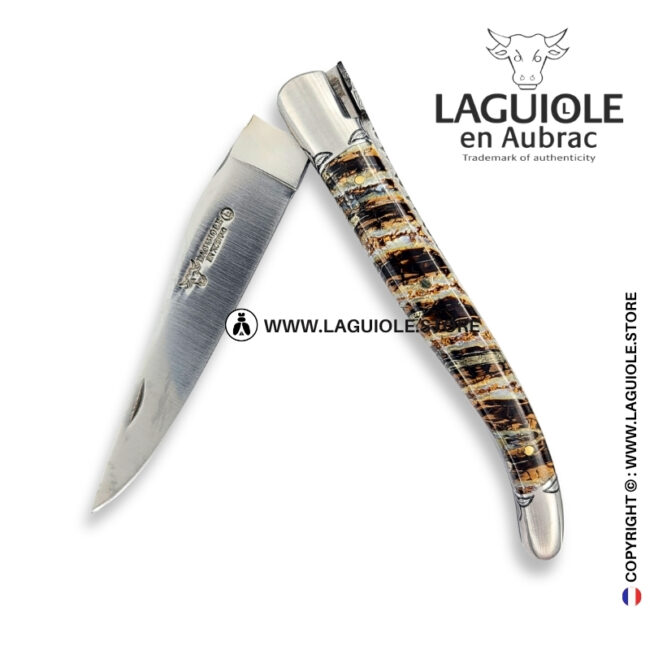
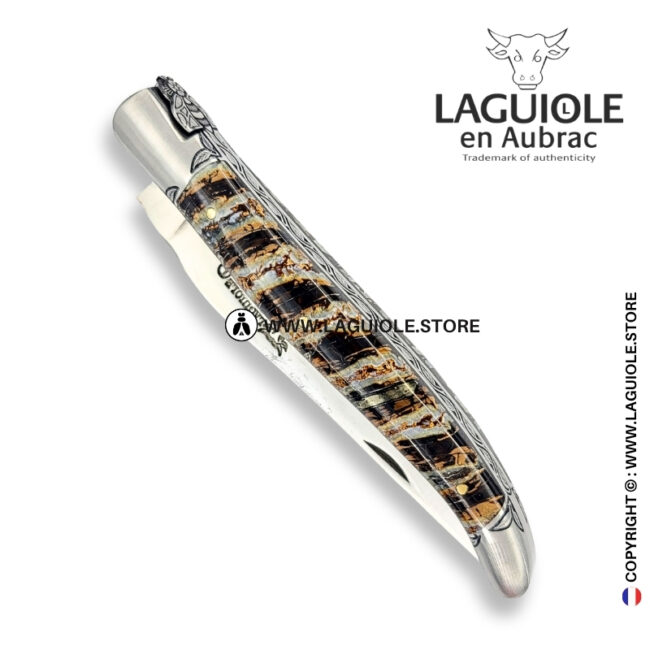
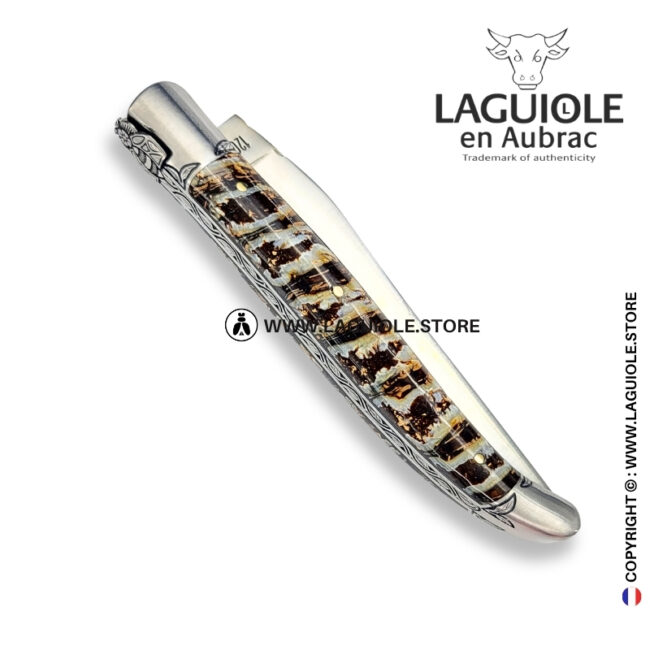
The stem running along the spring explains the name “Quivering Leaves”: it is loaded with leaves that look ready to tremble at the next breath of air. This is a unique piece, crafted entirely by hand by a lone cutler of the Laguiole en Aubrac manufacture. Its handle is brown mammoth molar, and the cut exposes fine, tightly packed plates lined up in close rows of dark brown, ivory-white, copper, and pearl gray, with a pearly gleam wherever the saw caught them at an angle. A black spacer runs like a sharp seam between fossil and stainless liners.
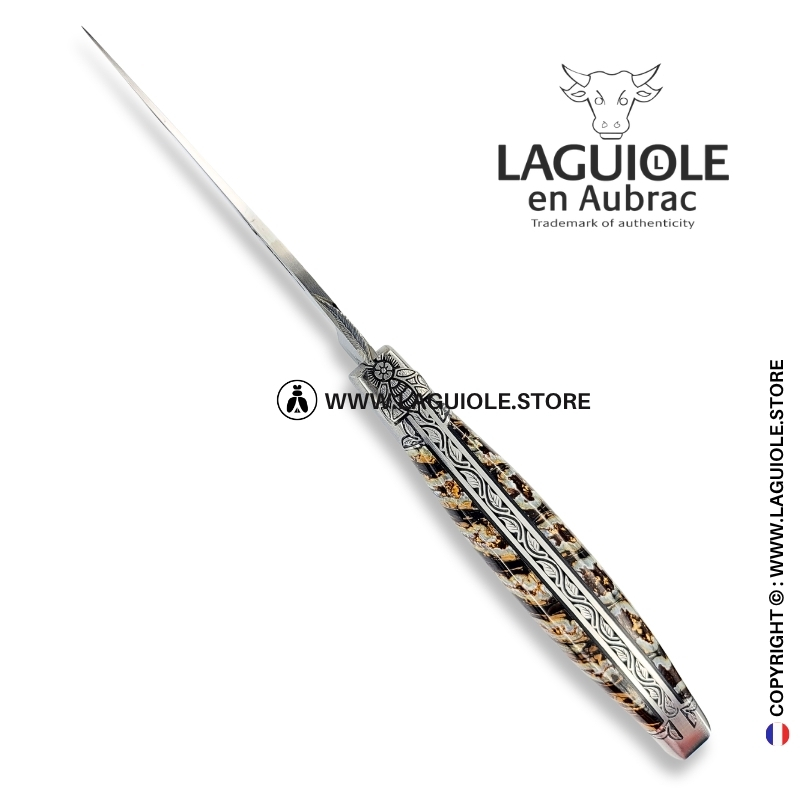
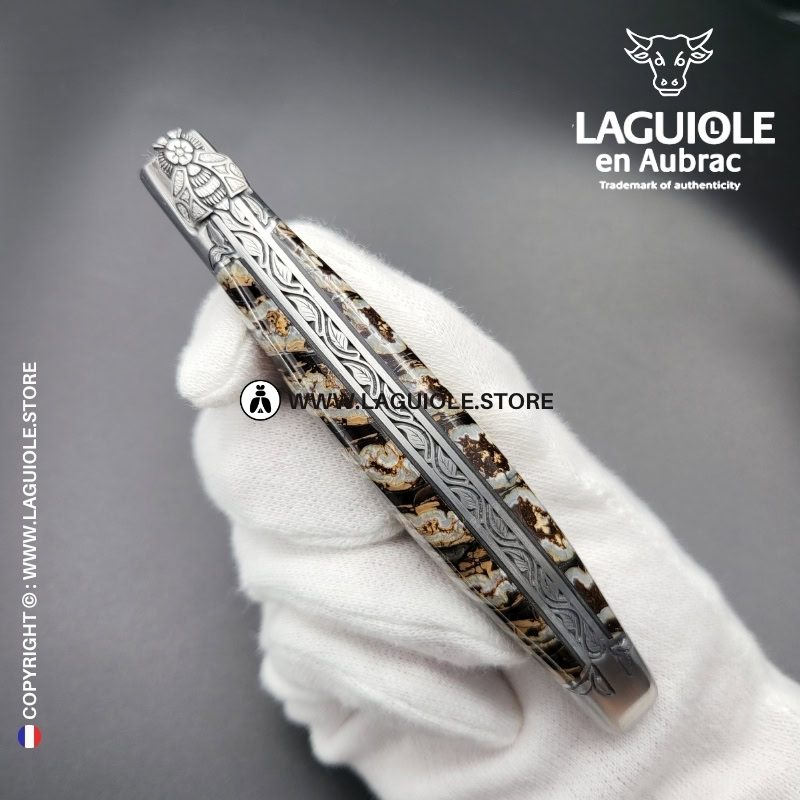
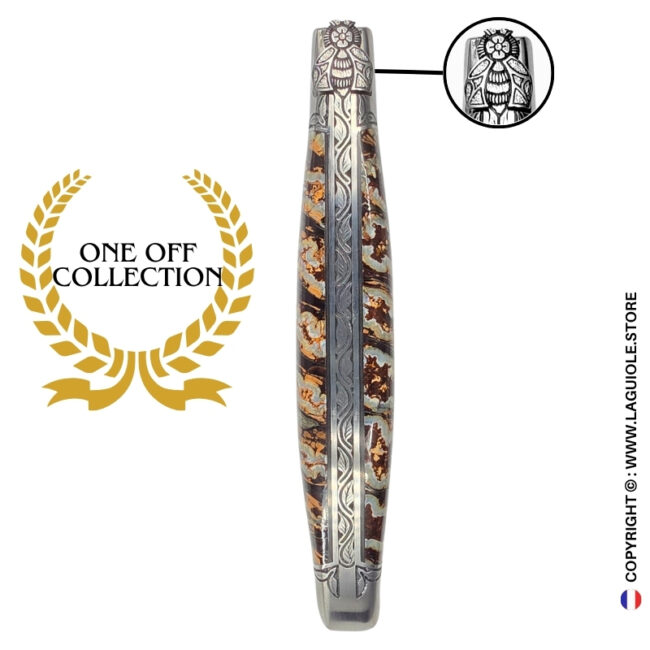
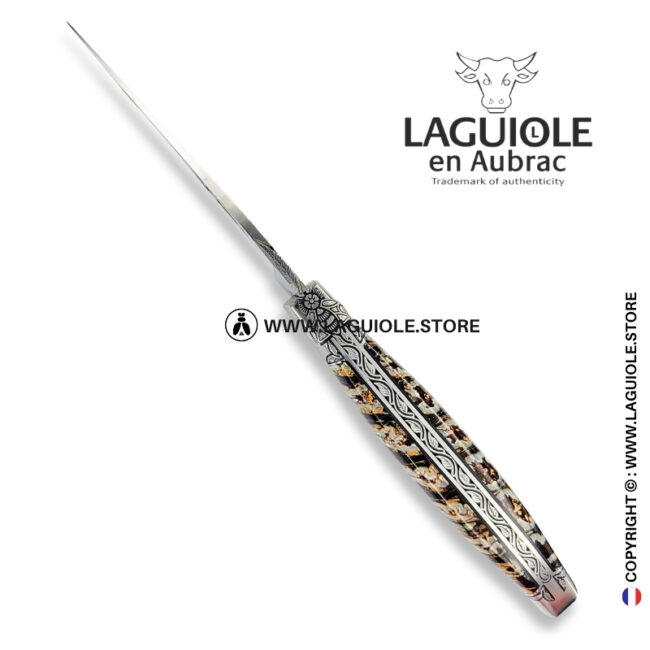
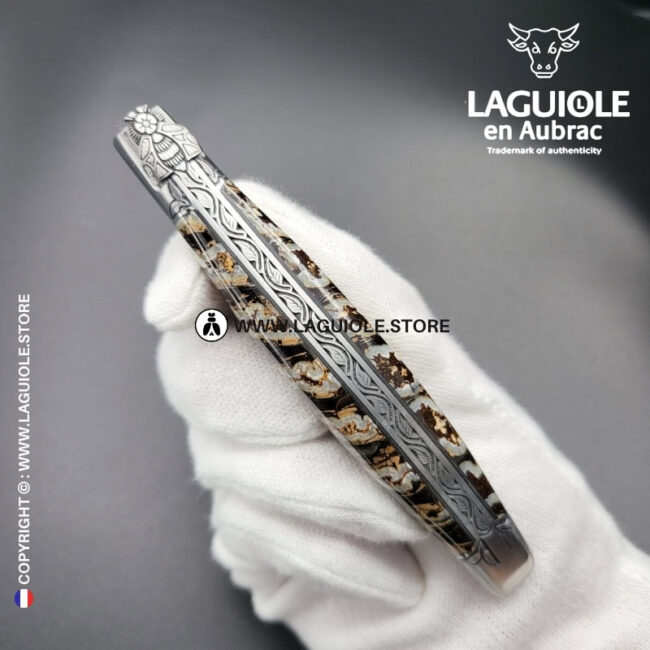
The heart of the decoration lives on the spring. A wavy stem travels it end to end, carrying alternate leaves on either side, each one cut around with a deep line, then hollowed out with a central vein and finer veins branching off it. No leaf copies its neighbor exactly, and as the hand tilts they appear to lift, drop back, and shiver. All of it is cut into a strip of steel barely a few millimeters across, and no line can be taken back.
The foliage spills past the spring. Both bolsters carry chiseled leaves of their own, sprouting from the metal top and bottom and pushing the stem out to both ends of the knife, with no break anywhere in the ornament. At the summit, the bee lands where the climb ends: a ringed body, wings like stippled almonds edged with a polished border, and above all a large four-petaled flower set on its head inside a ring of fine rays. The branch is in bloom, and the bee has timed its arrival perfectly.
“Quivering Leaves” appeals to collectors who love lively pieces, where the ornament still looks to be in motion. Close-set brown molar framed in black and steel, foliage chiseled from bolster to bolster, a bee sheltering under its blossom: together they make a spirited whole, as satisfying in use as on display.