Handcrafted in Aveyron, the historic home of the Laguiole knife
Memory of the Strata: Laguiole Knife in Brown Mammoth Molar – Sculpted Bee – Chiseled Spring and Bolsters
1659€
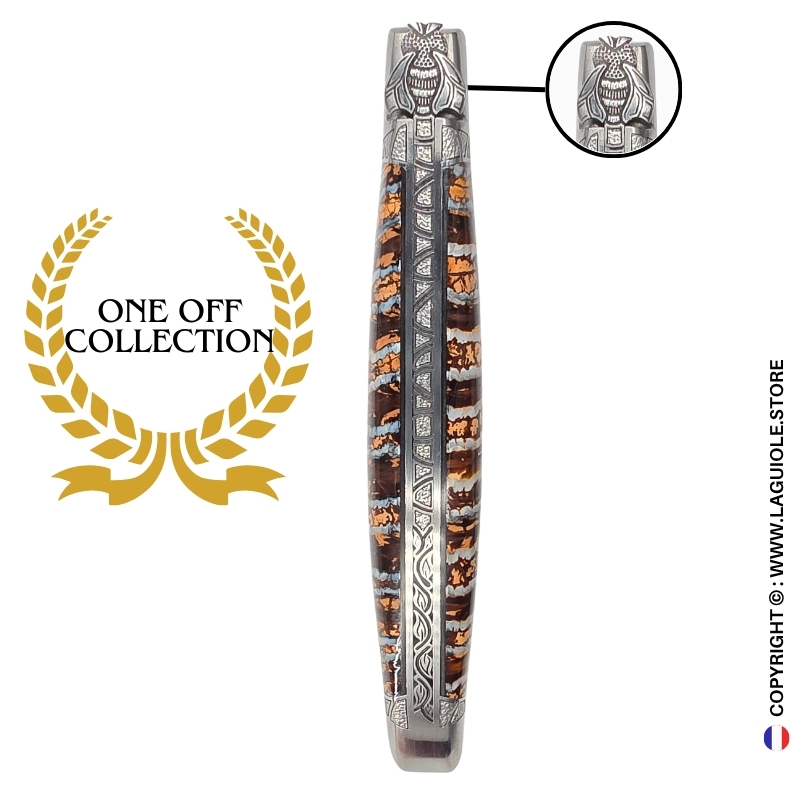
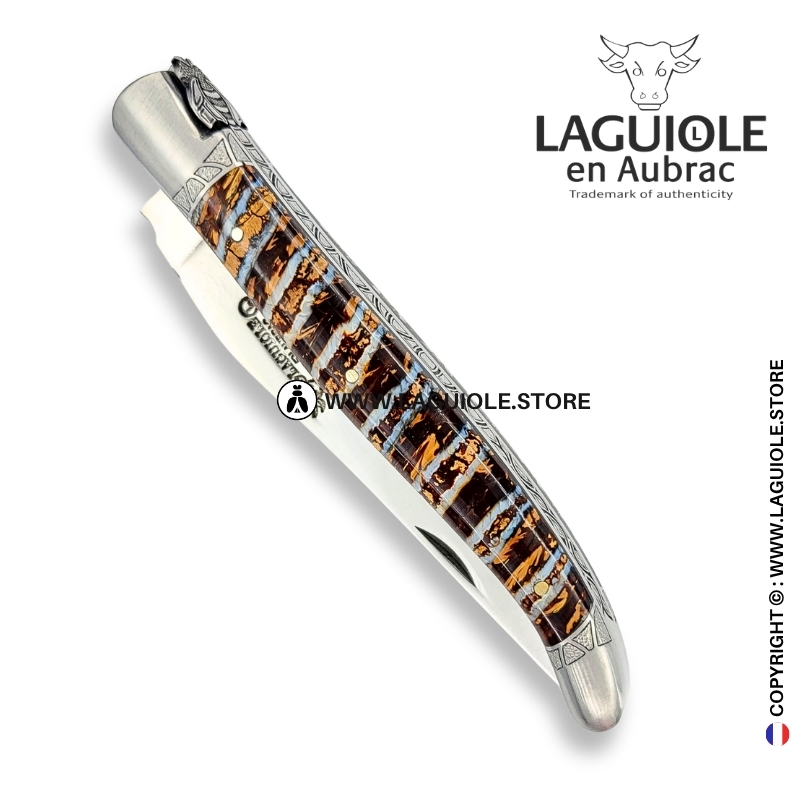
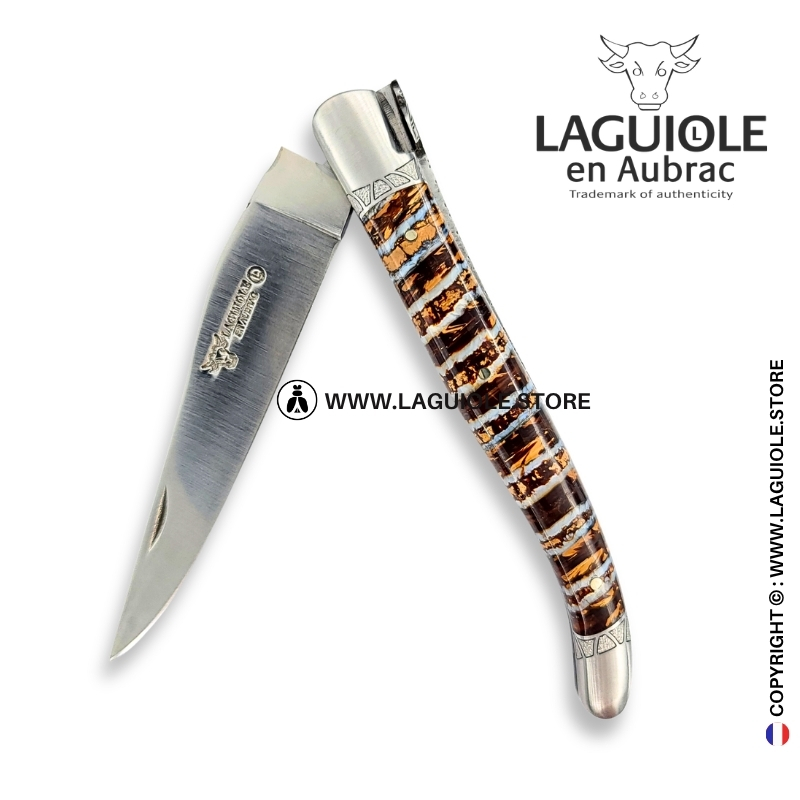
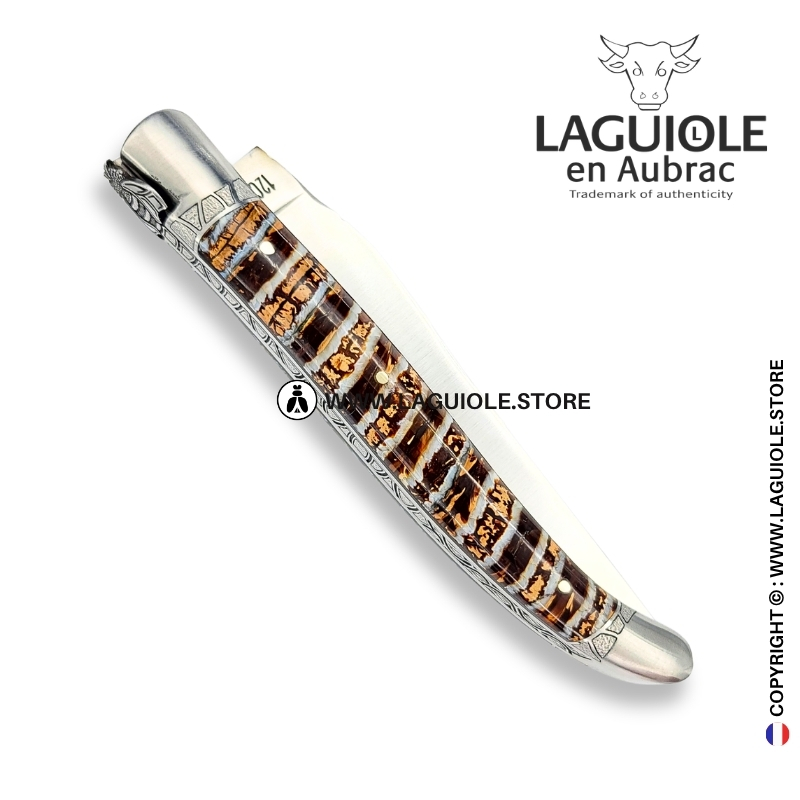
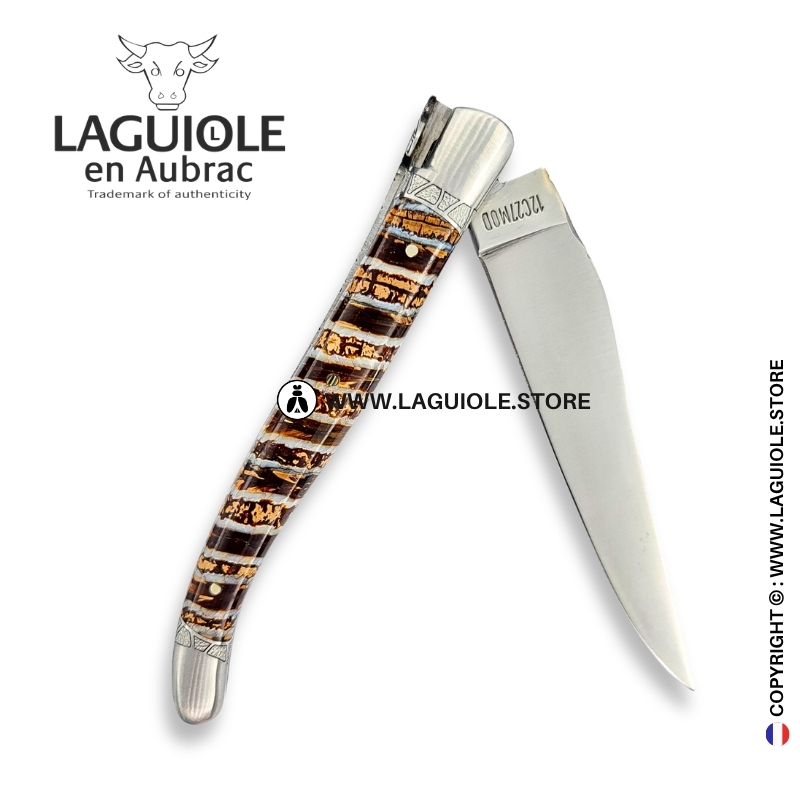
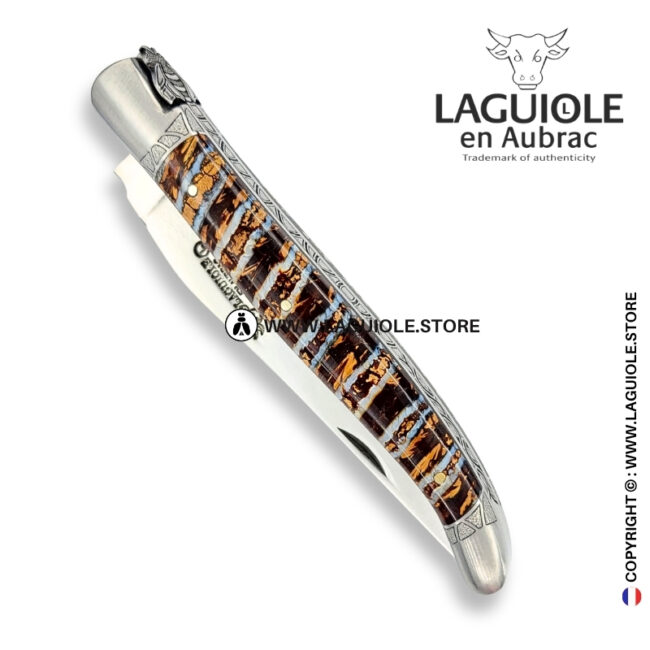
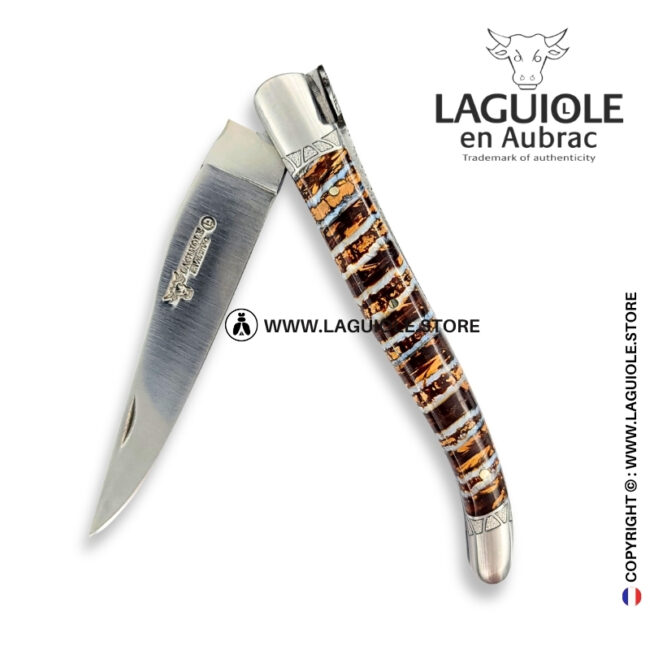
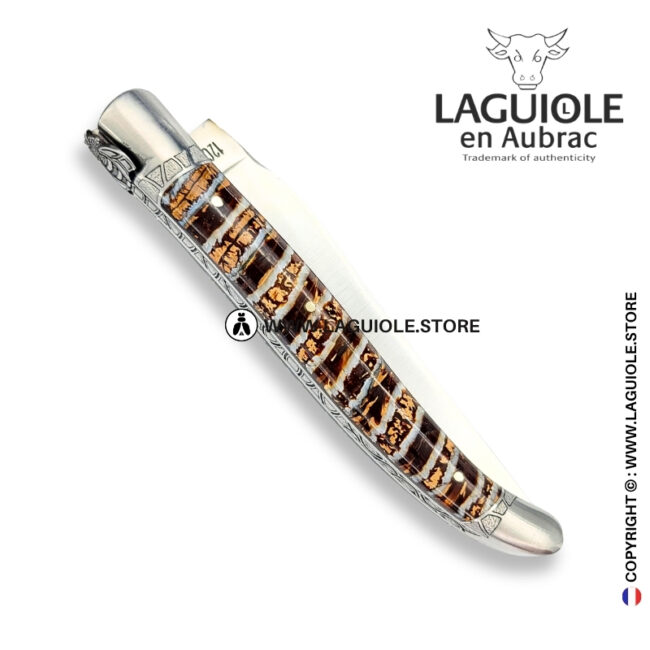
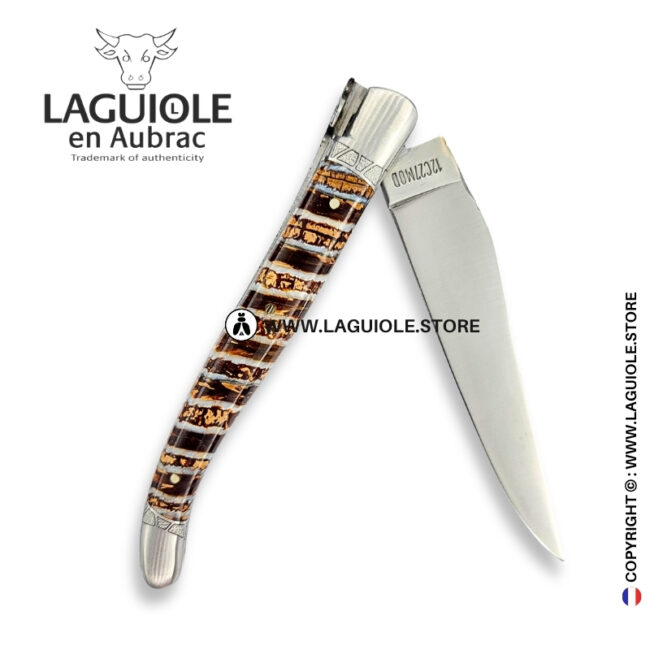
Cut a canyon wall down to pocket size and you get the handle of “Memory of the Strata”: layer stacked on layer, laid open by the saw, and the reason for its name. Every step of its making was done by hand, by a single cutler among the most skilled at Laguiole en Aubrac, and there will never be a second. The brown mammoth molar of the handle shows wide plates of chocolate brown, pale ocher bands with a craquelure of fine lines, and slim veins of bluish white running between them, each layer settled on the last like successive deposits of soil. A black spacer borders the fossil and separates it from the stainless steel liners.
At each end, a bolster supports the material and never competes with it. Both are stippled in fan-shaped compartments, trapezoids and triangles drawn with a crisp outline, from which long ridges sweep down toward the handle and follow its curve. The texture of the steel picks up the texture of the molar, and together the two bolsters anchor the piece end to end like a pair of plinths under a building.
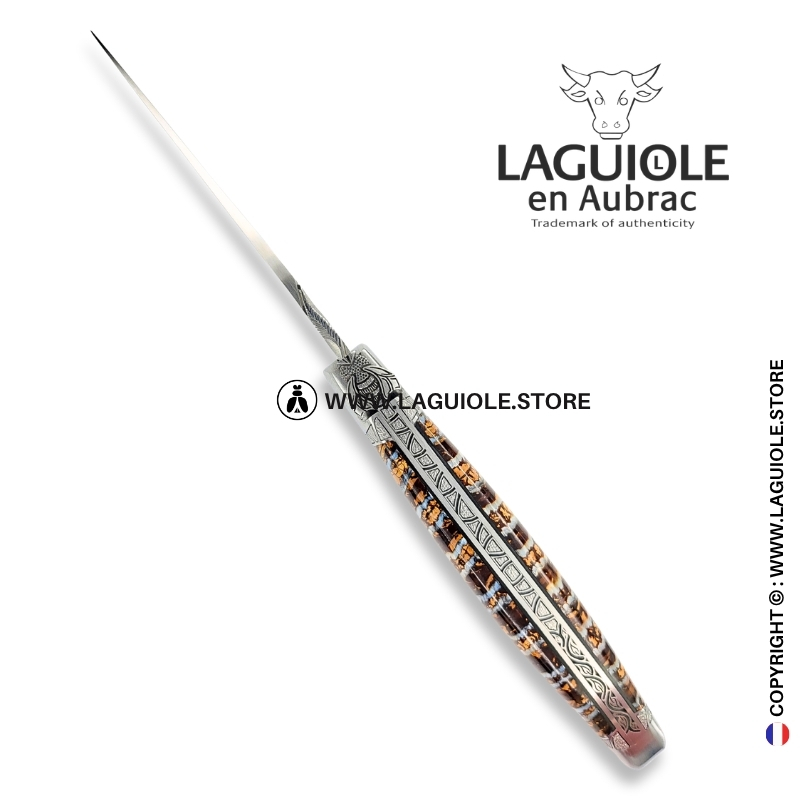
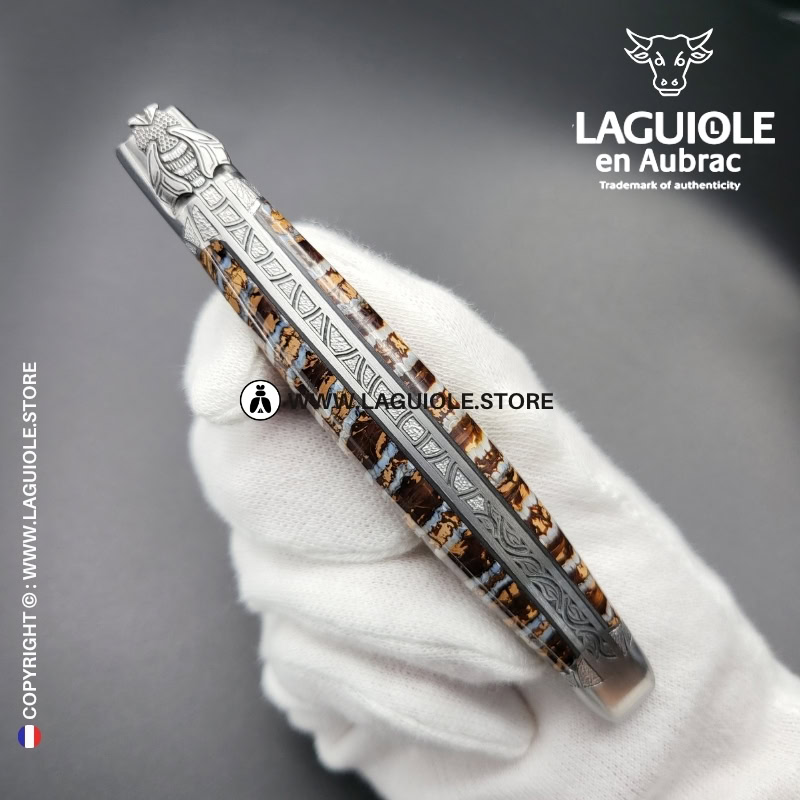
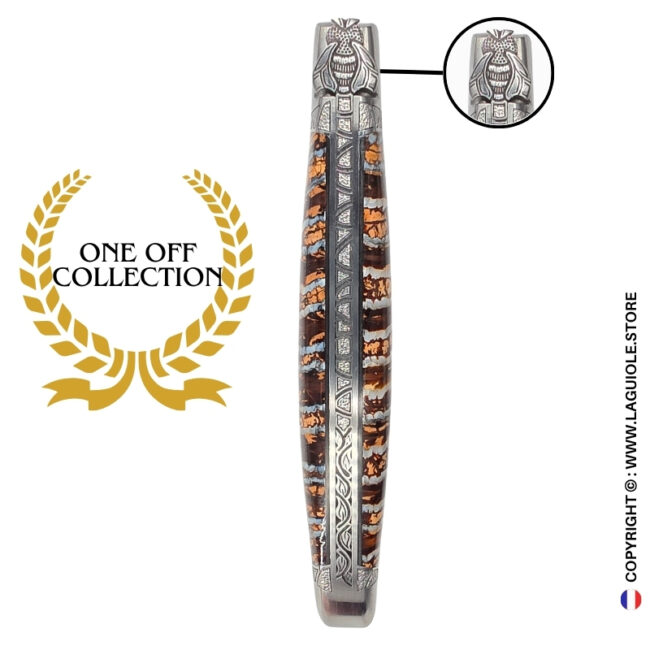
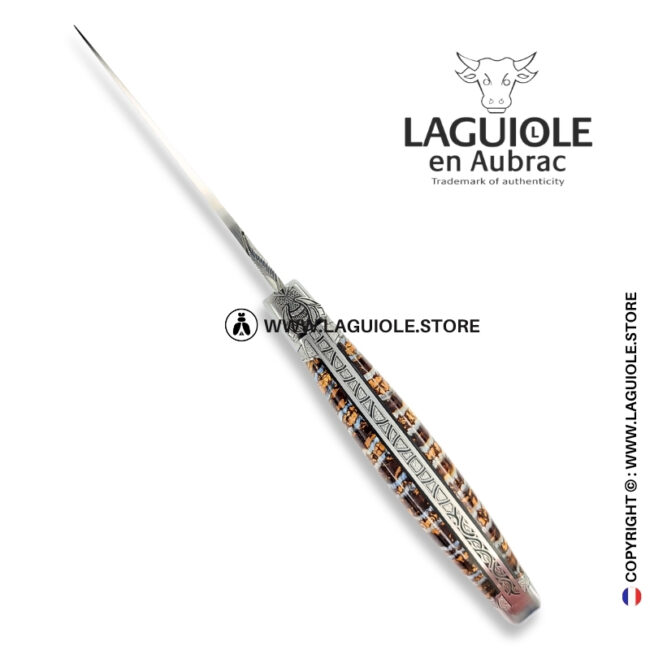
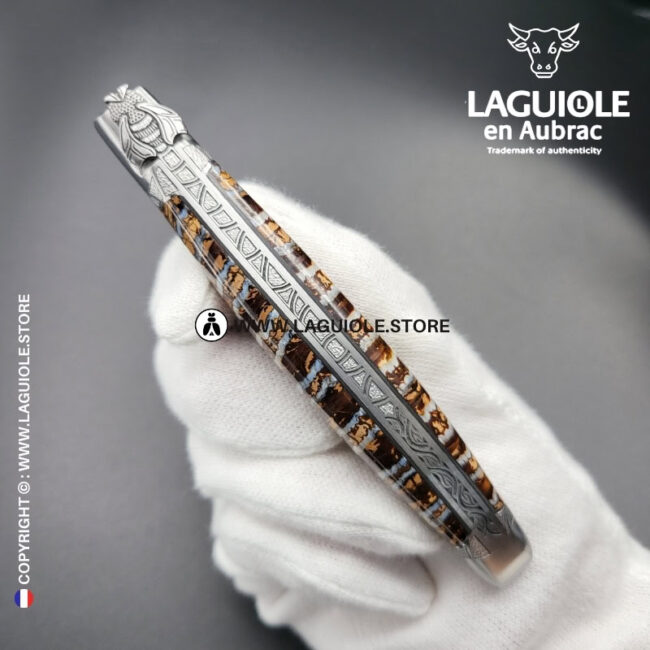
The spring’s decoration changes character partway along. Its upper section carries a frieze of stippled compartments with mineral rigor, evenly spaced and closed, every cell edged by a deep line. Lower down, things loosen: plant-like flames, chiseled in polished relief, coil and nest into one another, as though the stone had started to sprout. Shifting from geometry to foliage within a few millimeters of width, where a cut cannot be redone, is the real accomplishment here: two separate decorative vocabularies, one after the other, on the same strip of steel.
Collectors who want the passing of time made visible, and readable, in the things they own will understand this piece. Layered brown molar edged in black over steel liners, bolsters stippled in fans, a spring moving from mineral to plant, and the bee at the top: every element agrees with the others, in a piece made as much to be looked at as to be used.