Handcrafted in Aveyron, the historic home of the Laguiole knife
Glowing Abstraction: Laguiole Knife in Red Mammoth Molar – Sculpted Bee – Chiseled Spring and Bolsters
1659€
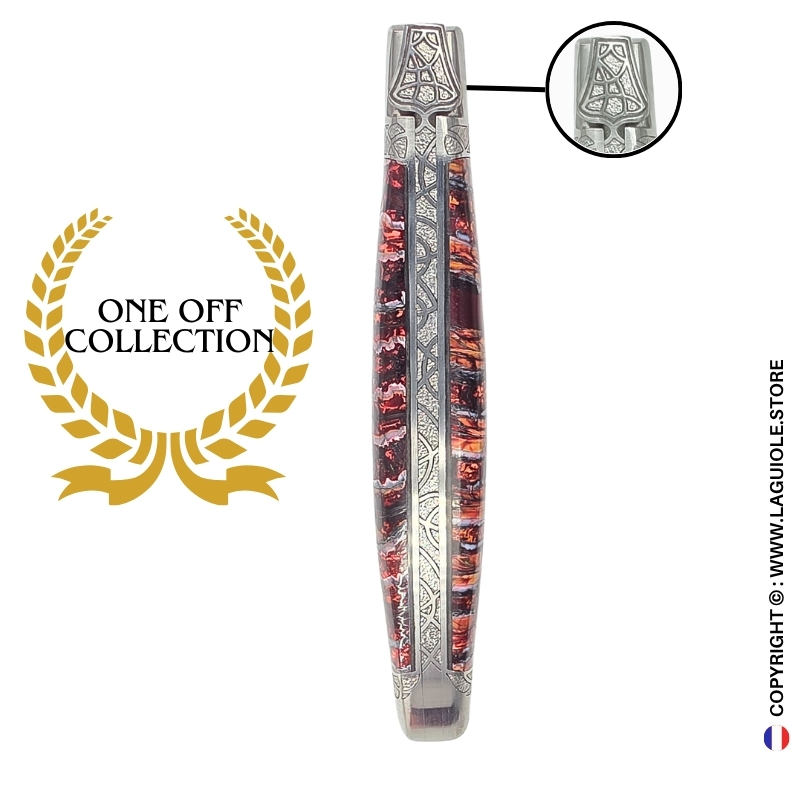
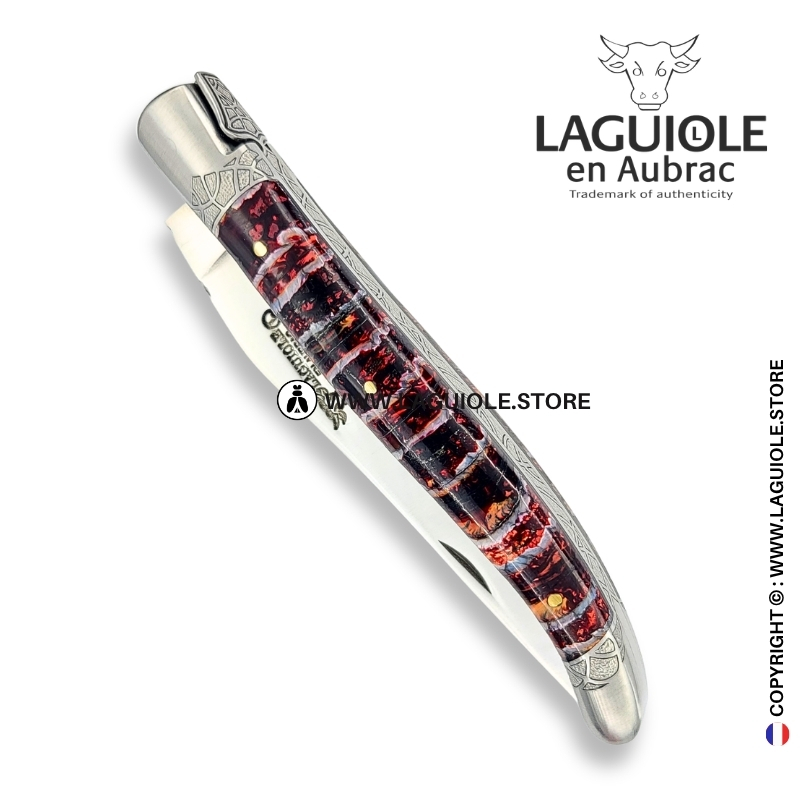
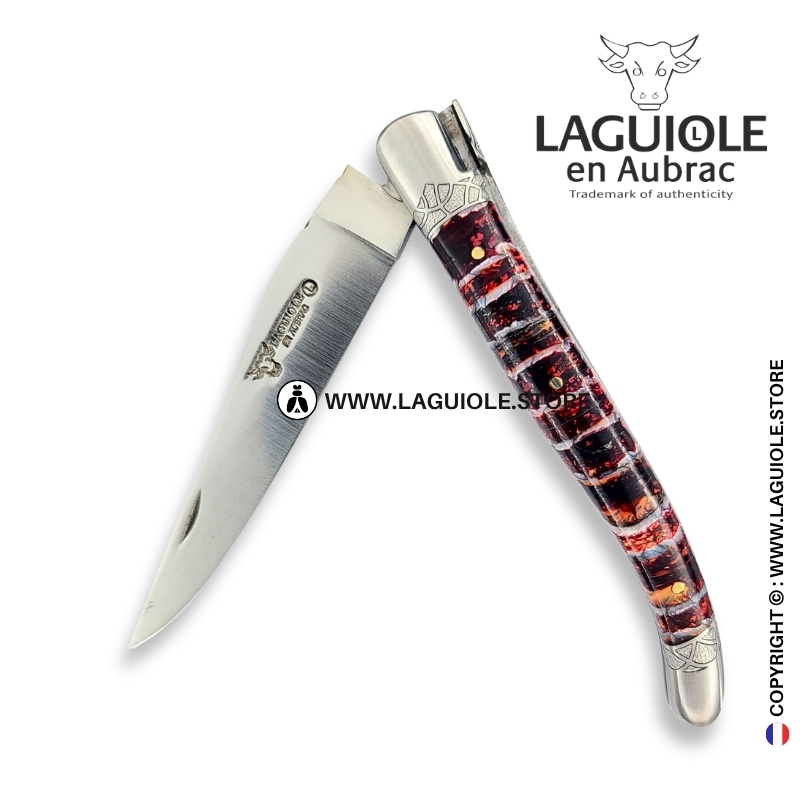
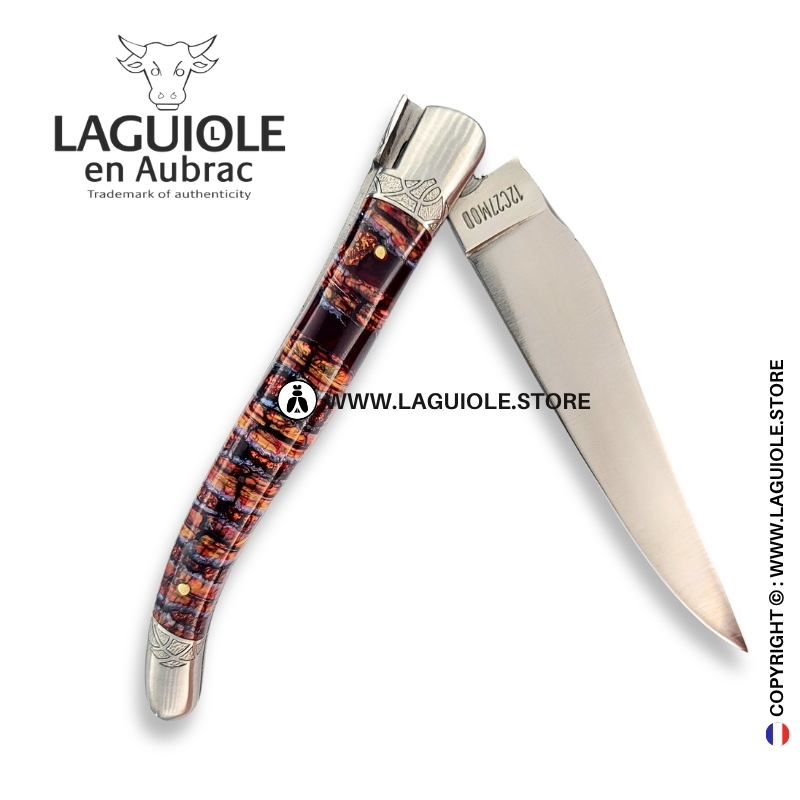
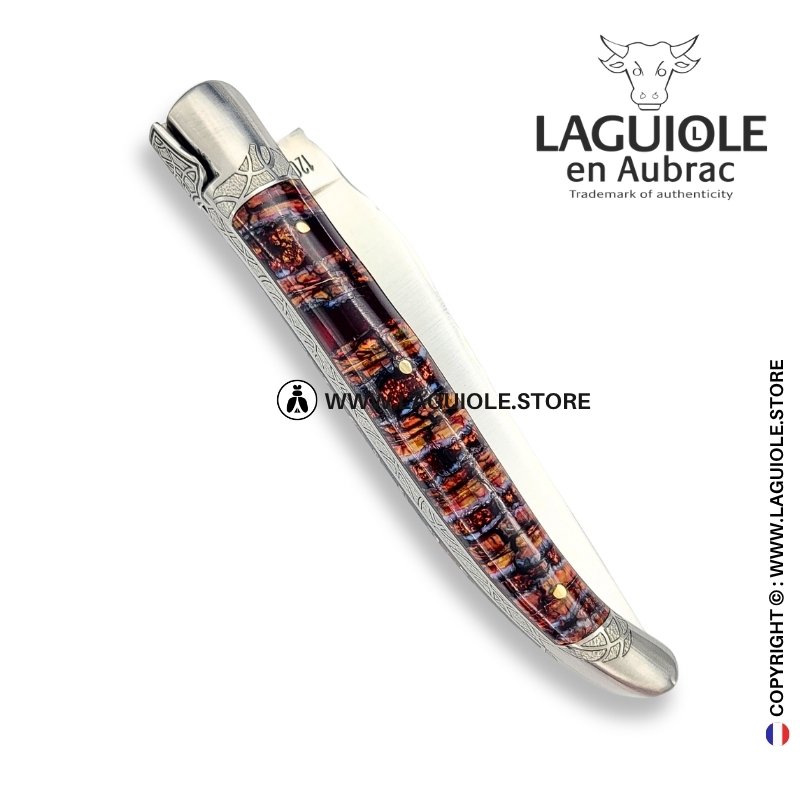
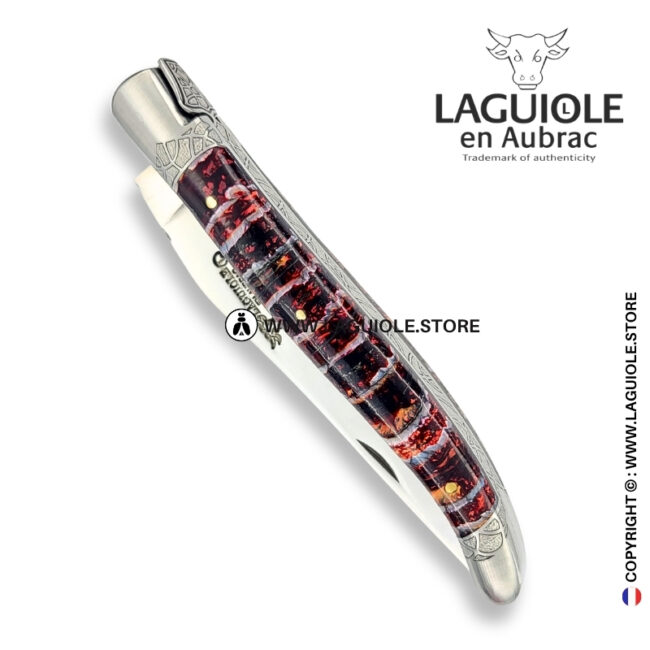
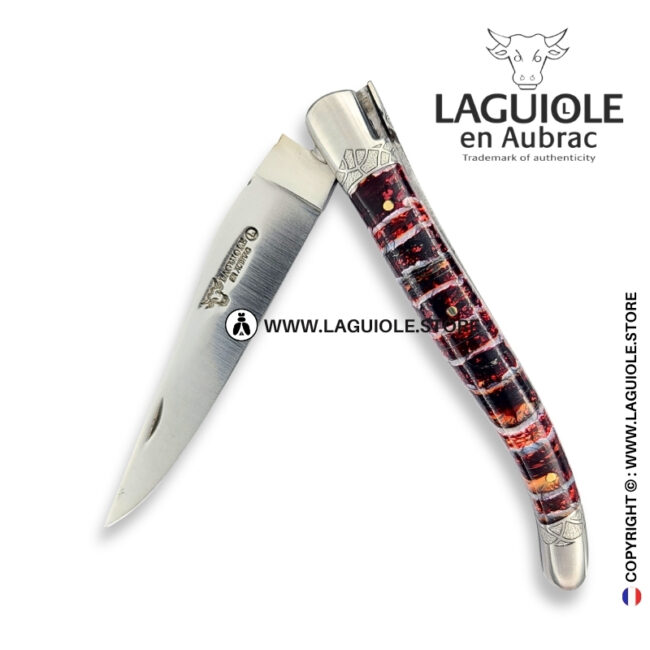
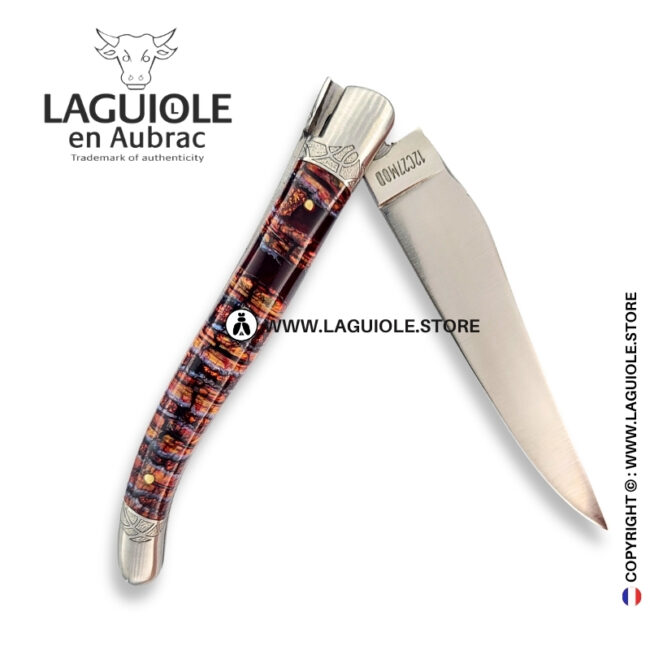
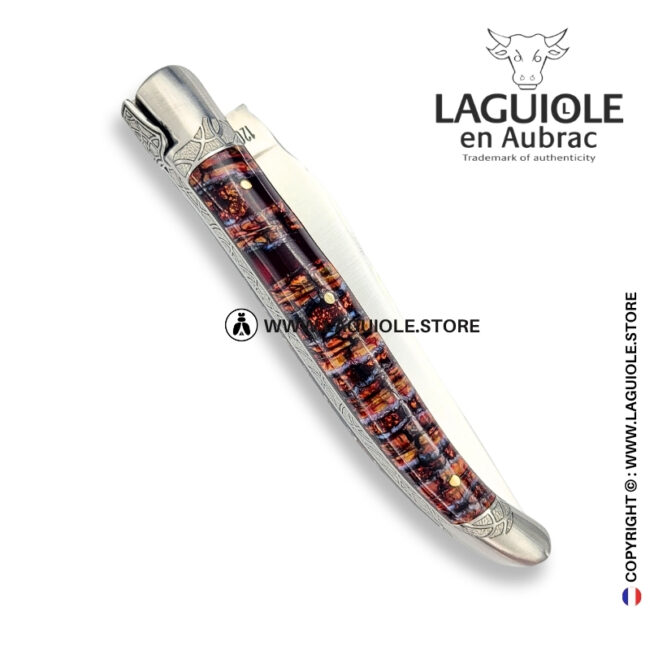
A bee with every literal feature stripped away, resting on a handle the color of embers: that pairing gave “Glowing Abstraction” its name, and it is what makes the piece unique. Its maker, a single cutler at Laguiole en Aubrac, did every step by hand to produce one unrepeatable piece. In the red mammoth molar, the color goes so dark it nearly turns black, peppered with vermilion flecks that burn through like live coals, while amber and honey light up one face and the other stays in the dark. A black spacer outlines the fossil and keeps it apart from the stainless liners.
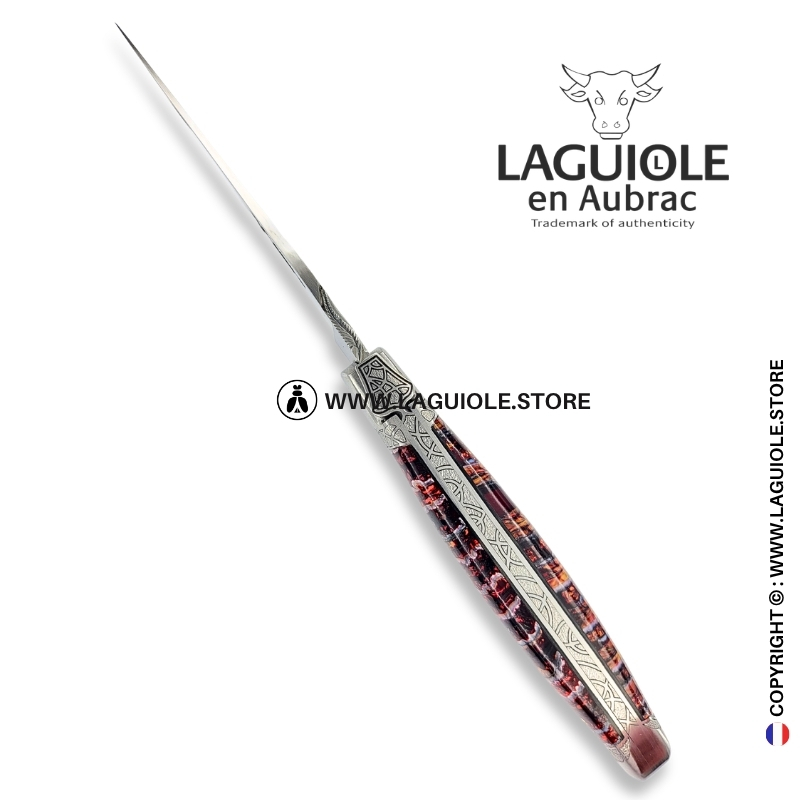
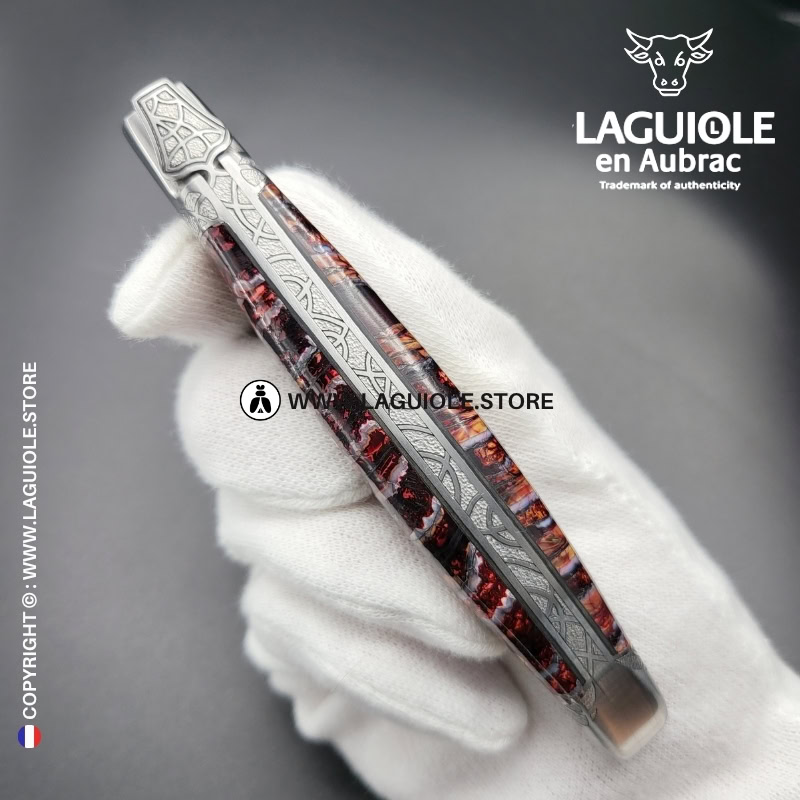
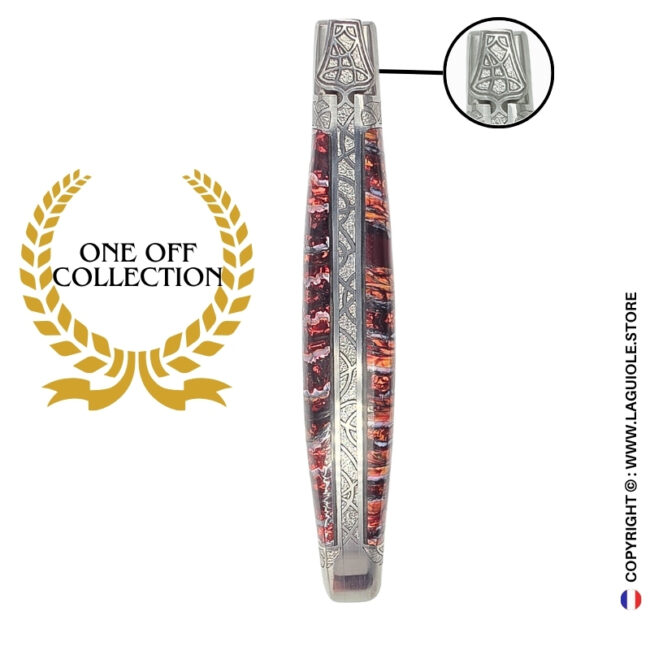
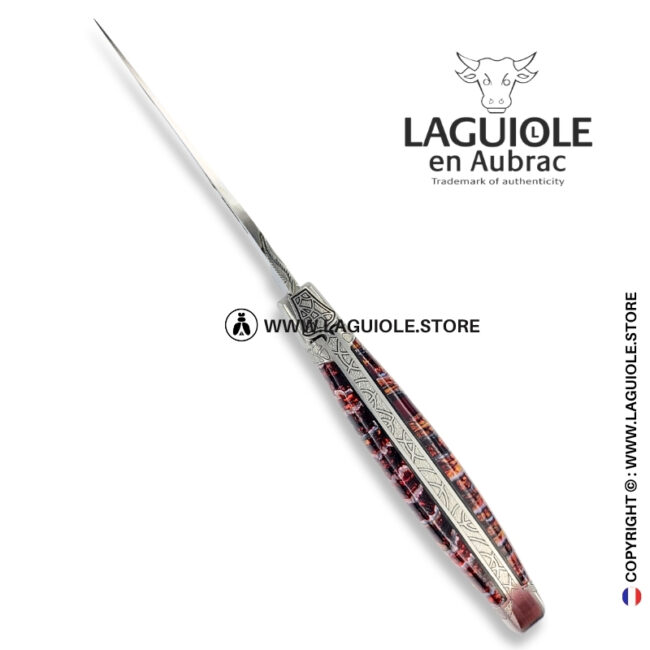
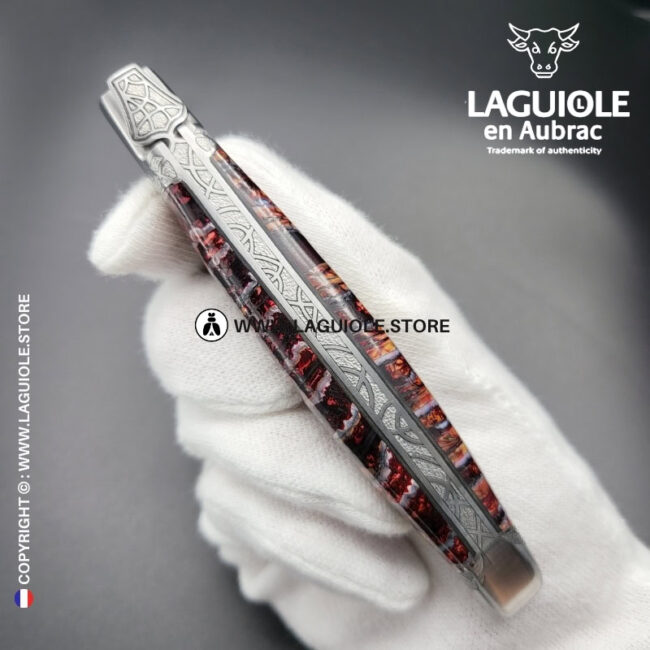
The bee at the top has stopped looking like an insect. Only her outline survives, a bell that widens toward the bottom, and nothing figurative remains: the separate wings, the ringed body, and the head have all disappeared. A network of stippled compartments bounded by polished ribs fills the entire shape and serves as her body. Stripped to her framework, she keeps just enough of her original form to be recognized.
From her, the same network flows down onto the spring, runs its length with no interruption at all, spreads across the two bolsters, and climbs back to the head, so there is no telling where the bee stops and the ornament starts. Each compartment was ringed with a deep cut and stippled at the bottom, within a few millimeters of width and with no way to fix a mistake. Body and spring become one continuous surface, and that is the singular thing here: nowhere else in the series is the idea taken this far.
“Glowing Abstraction” belongs with collectors who respond to pared-down design as strongly as to a striking material. Ember-flecked red molar edged in black, stainless liners, a bee reduced to her silhouette, and one chiseled network over the spring and both bolsters add up to an unusually unified piece, made to be studied as closely as it is used.