Handcrafted in Aveyron, the historic home of the Laguiole knife
Glacial Mist: Laguiole Knife in Mammoth Ivory Bark – Sculpted Bee – Chiseled Spring and Guilloché Liners
1609€
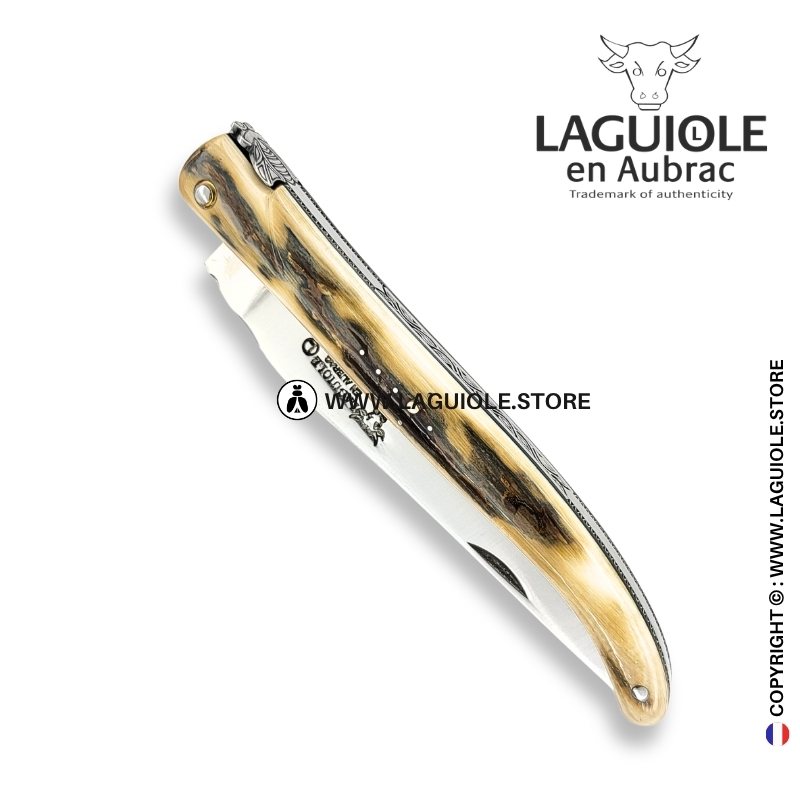
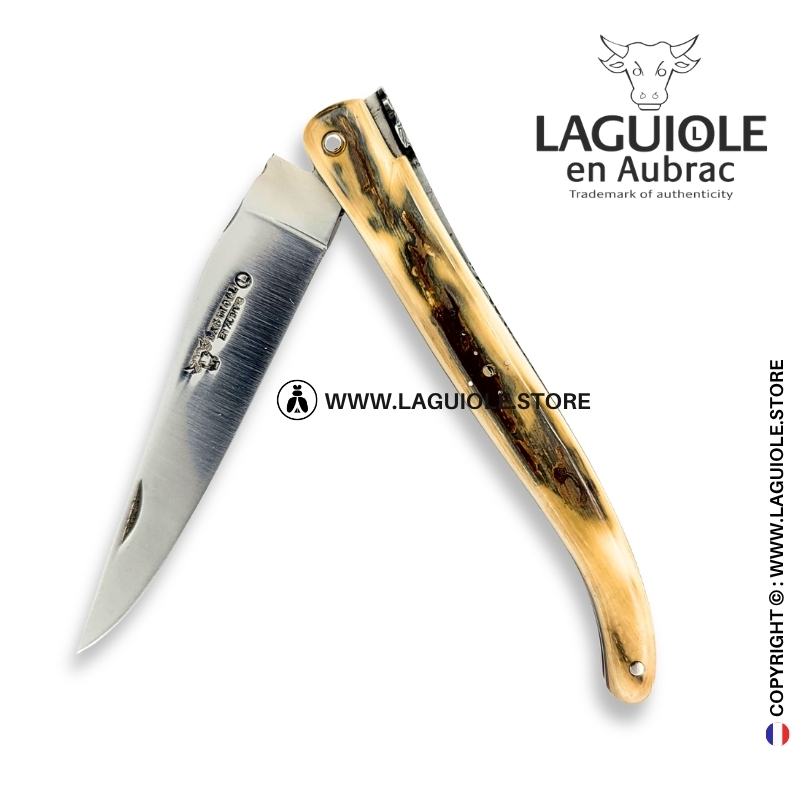
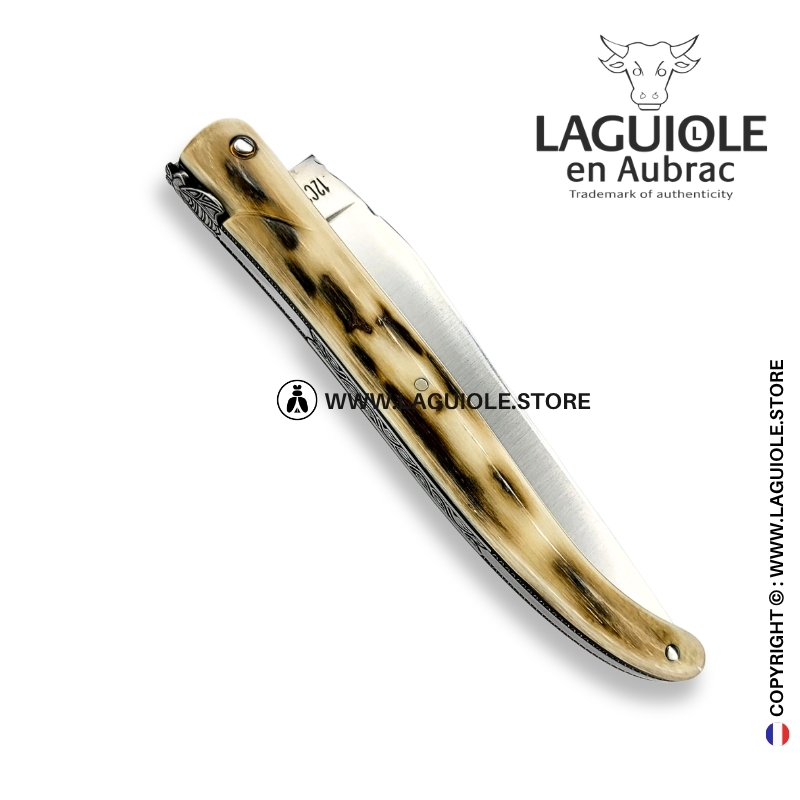
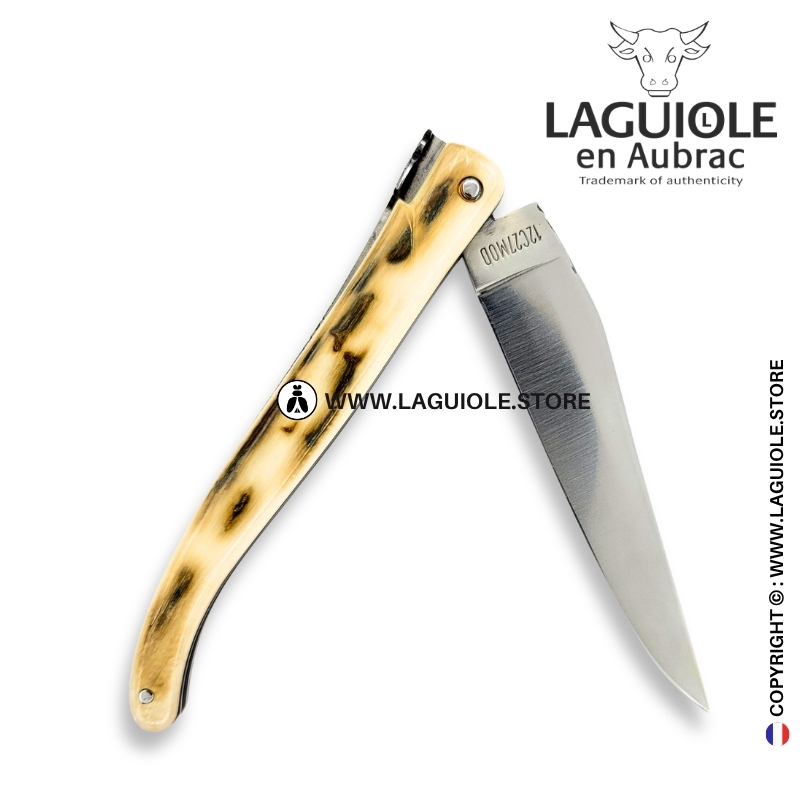
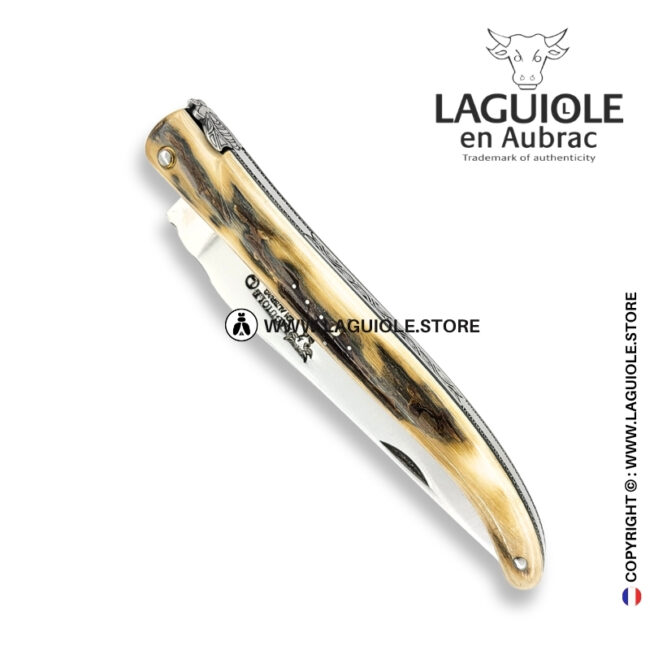
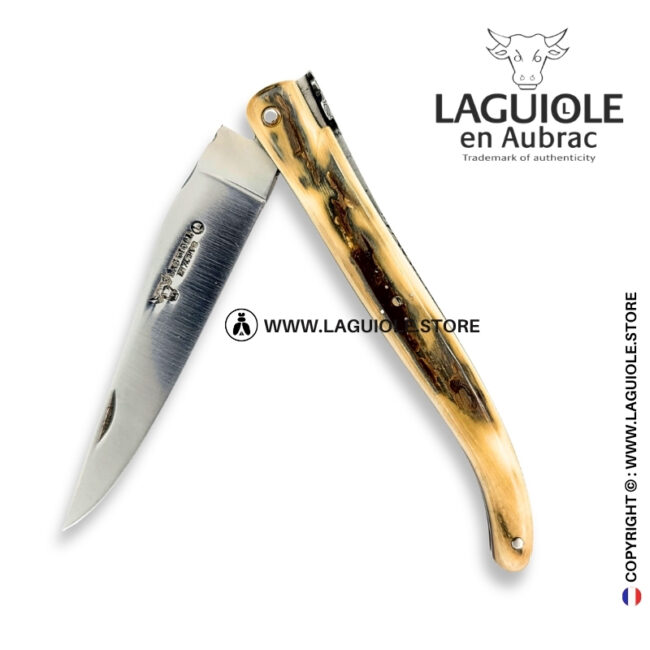
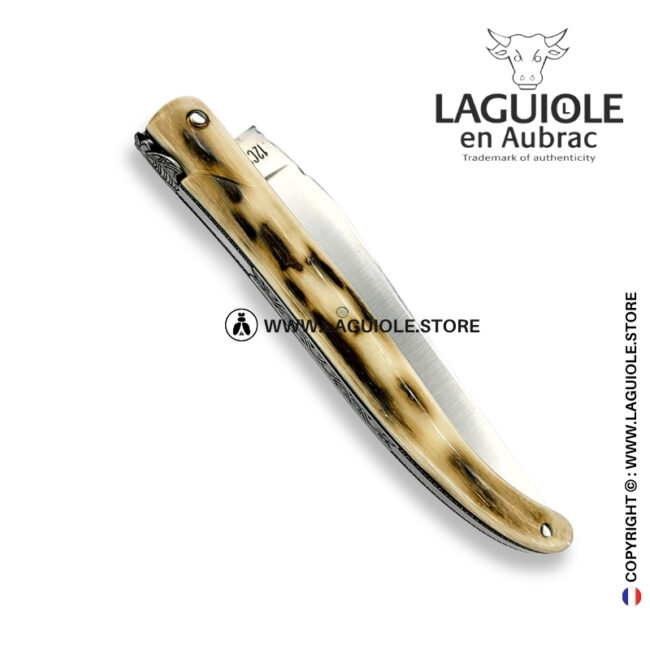
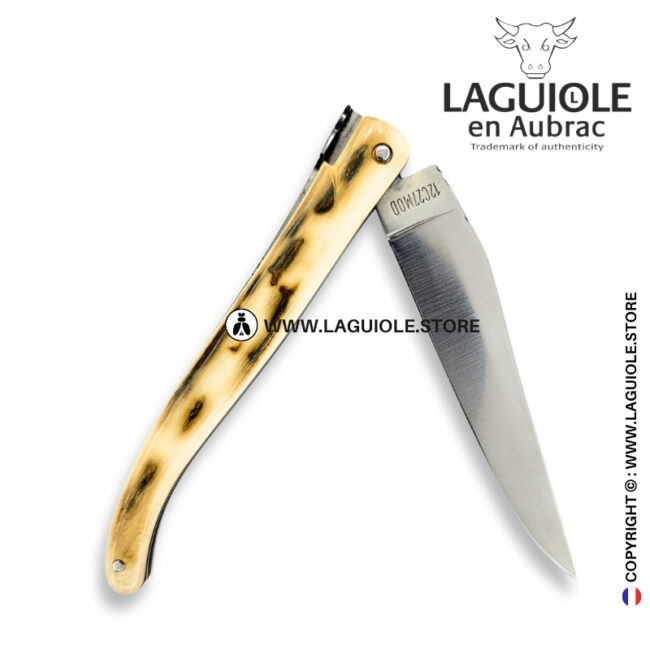
“Glacial Mist” is a Laguiole knife that will never have a twin, crafted entirely by hand by top cutlers at Laguiole en Aubrac. The full mammoth ivory bark handle carries an exceptional palette: across a cream and blond ground drift broad washes of brown, gray and blue, left over the millennia by microorganisms living in the frozen soil. Along the handle, the shepherd’s rosary sets a row of small round studs into this fossil material as a traditional touch, and black spacers trace a deep line along each liner.
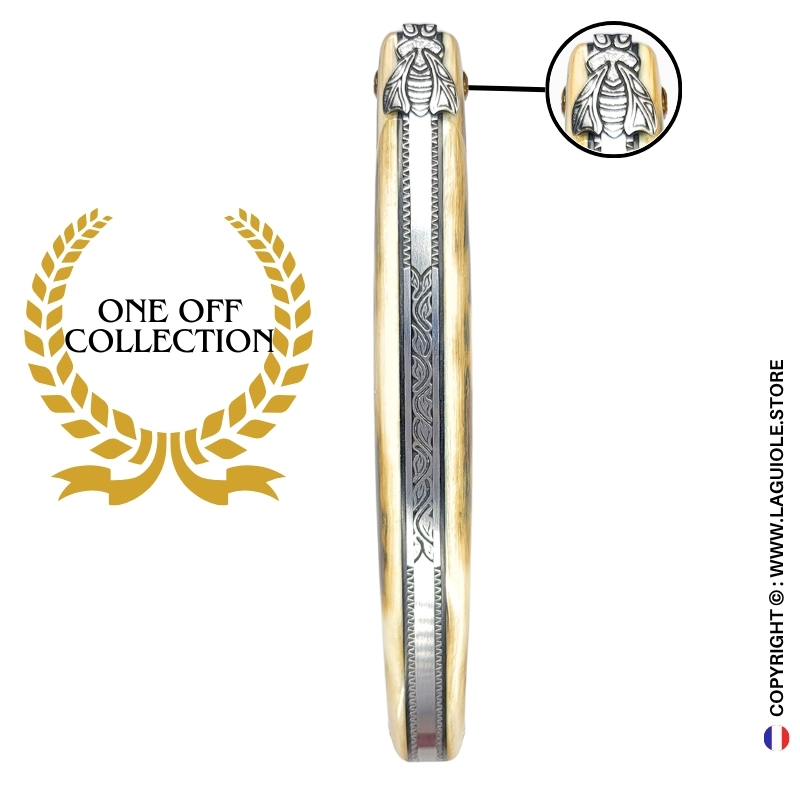
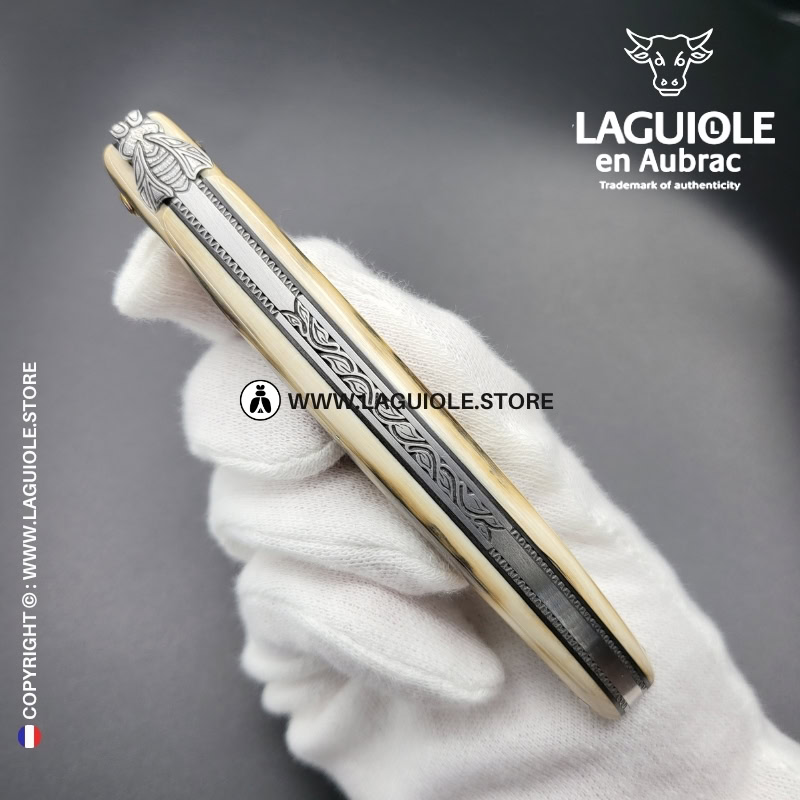
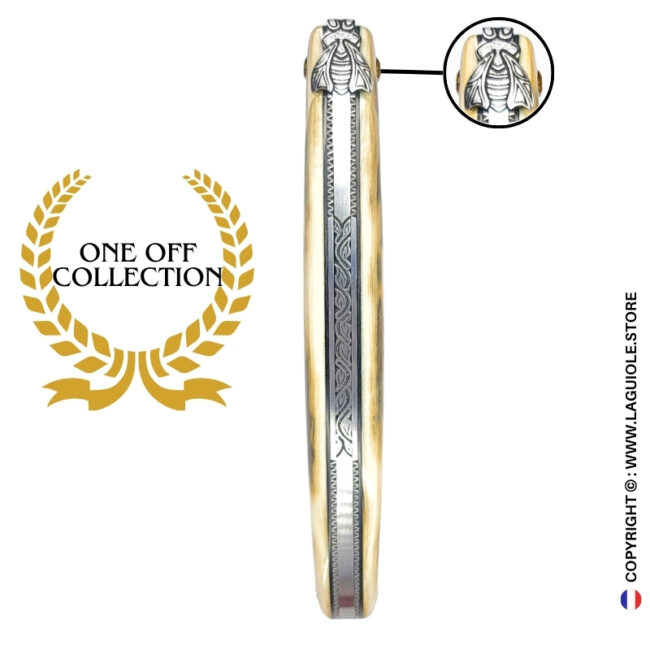
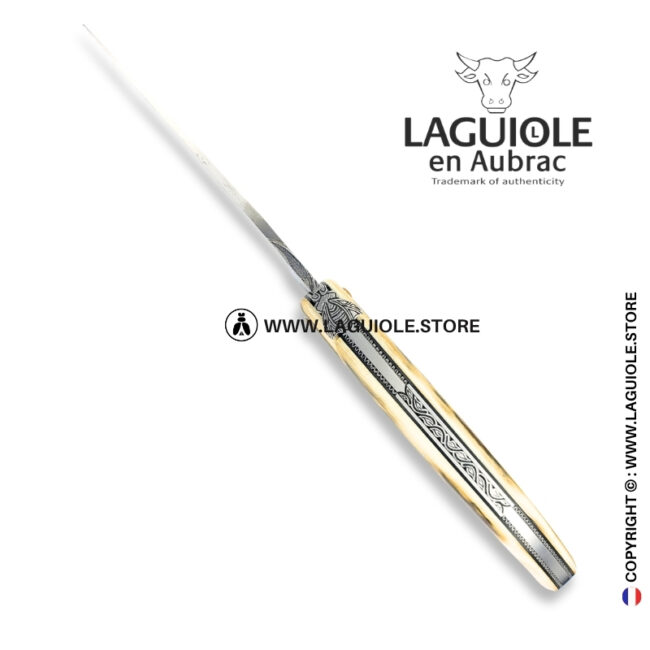
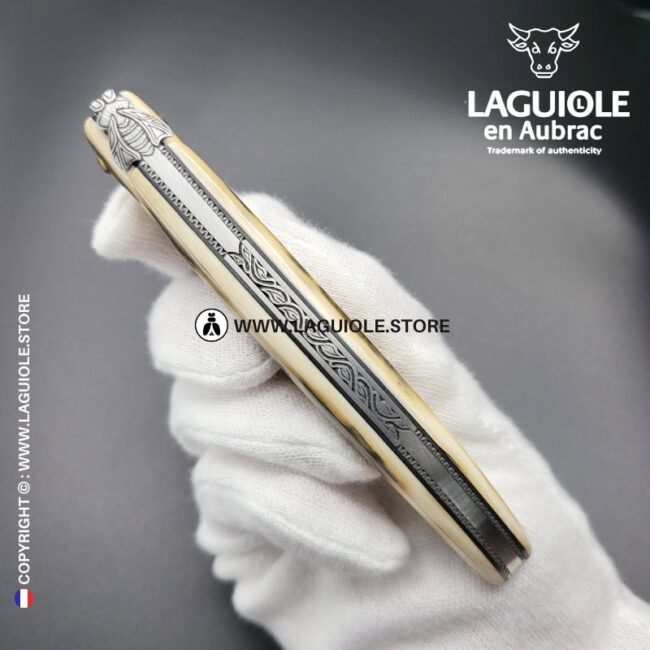
The bee is astonishingly fine, close to an illumination in an old manuscript. Its antennae curl into a double volute above a delicately grained thorax, its wings are divided by veins into panels outlined with a sure stroke, in the spirit of Art Nouveau, and its body lines up even rings. Every detail is chiseled at a minute scale with no loss of sharpness. Set high at the top of the spring, it presides over the handle with rare grace.
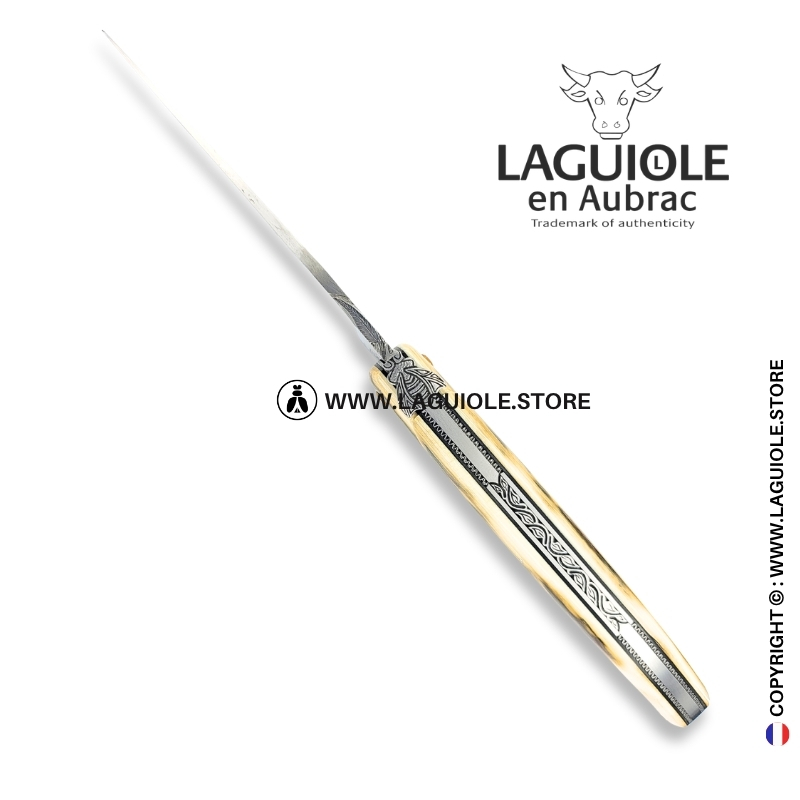
All of the decoration on the spring gathers toward its center. There, an interlace of leaves knotted in continuous volutes, chiseled with great precision, winds through the entire middle section, each leaf flowing into the next without a pause. On either side, the liners are guilloché with a tight, painstaking serration that edges the polished steel with a lively double border and steers the eye toward the heart of the piece. With no bolster and no added ornament, the line of the knife runs unbroken, and it is the chiseling, nothing else, that gives it pace and structure.
“Glacial Mist” is meant for Laguiole collectors looking for a truly exceptional material. Here it is a mammoth ivory bark whose bluish coloring has become extremely rare, joined by a finely chiseled interlace and a bee worked like a piece of goldsmithing. The same restraint runs through every element, in a knife as quiet to look at as it is good to hold, day after day.