Handcrafted in Aveyron, the historic home of the Laguiole knife
Fossil Swell: Laguiole Knife in Brown Mammoth Molar – Sculpted Bee – Chiseled Spring and Bolsters
1659€
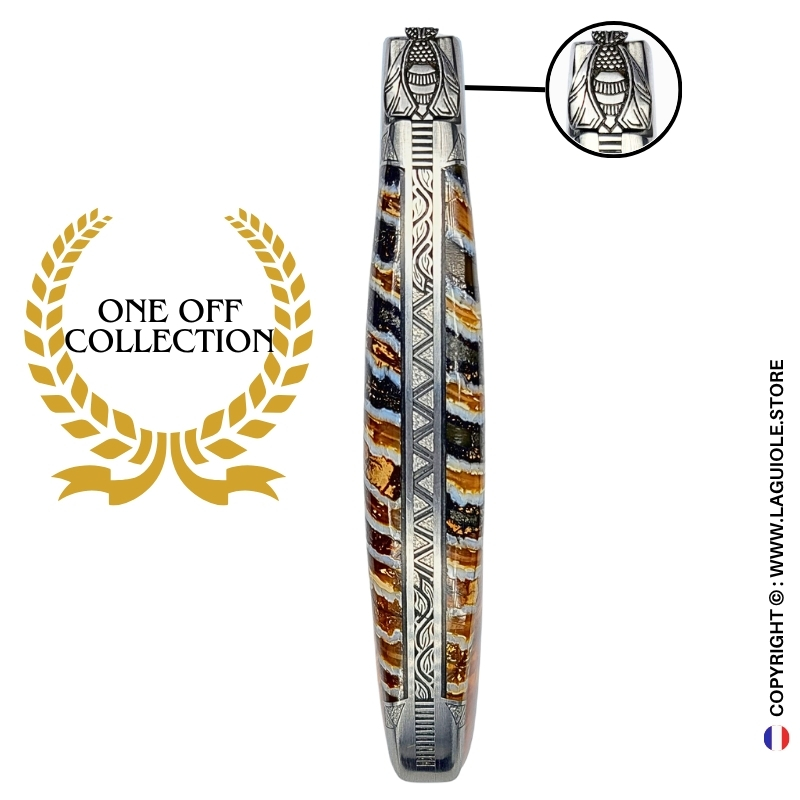
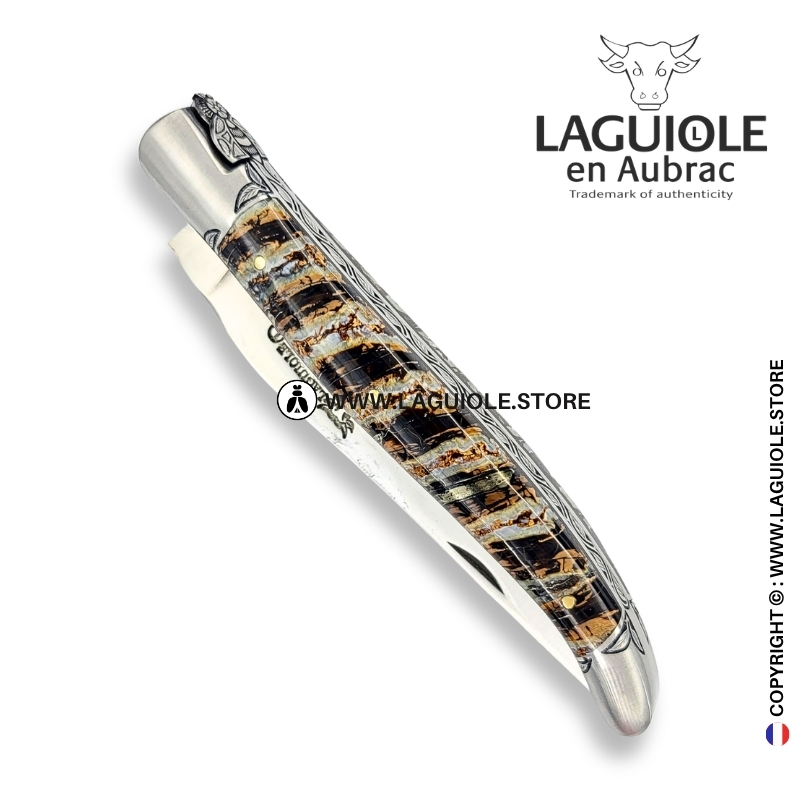
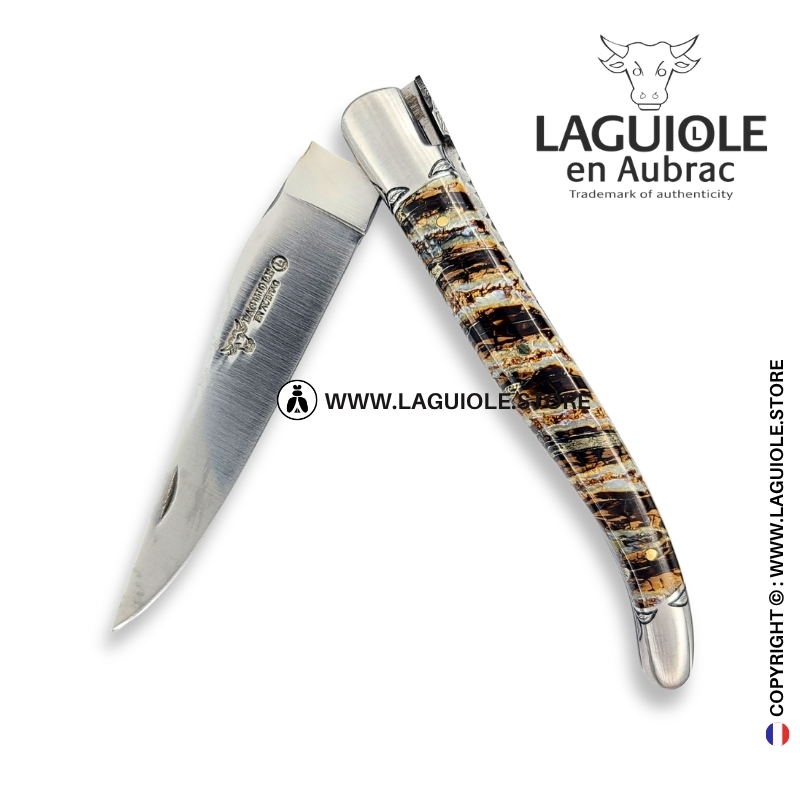
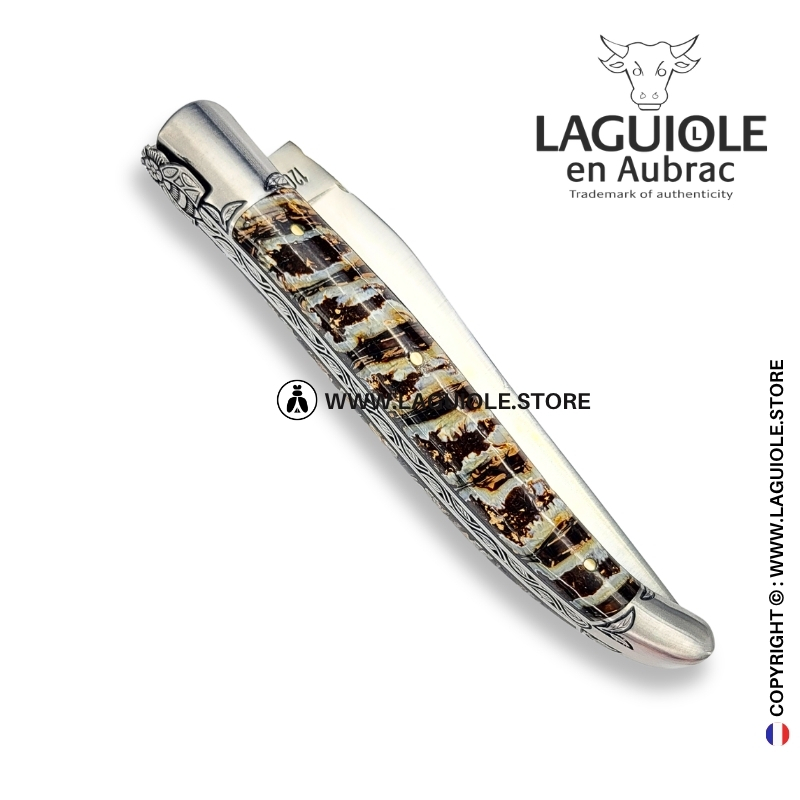
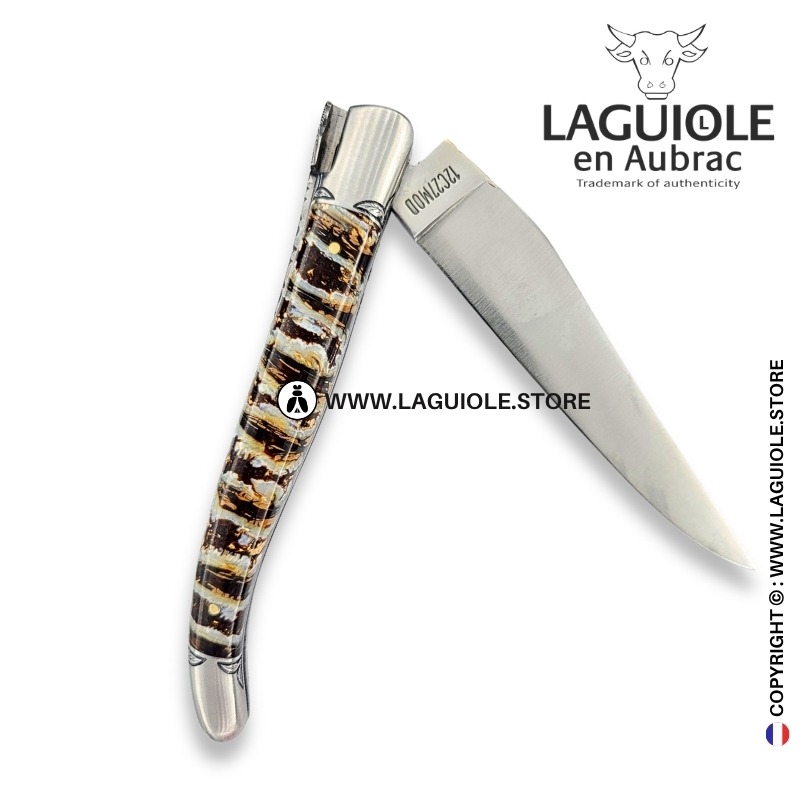
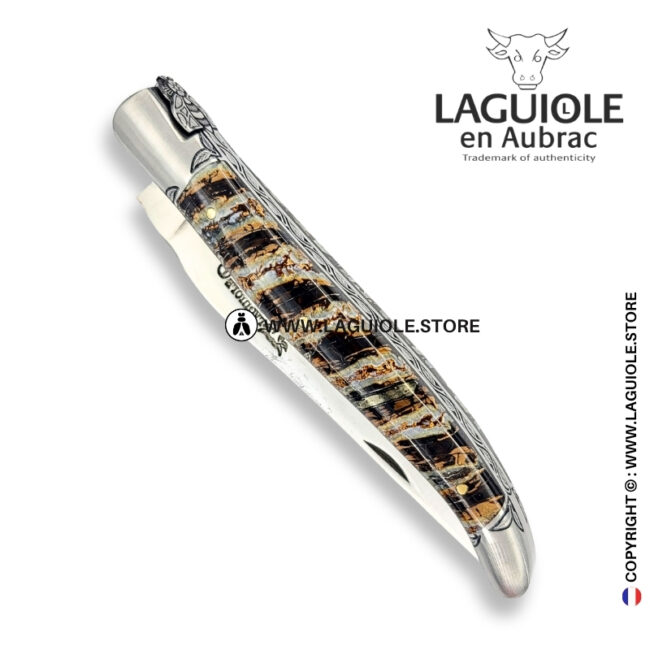
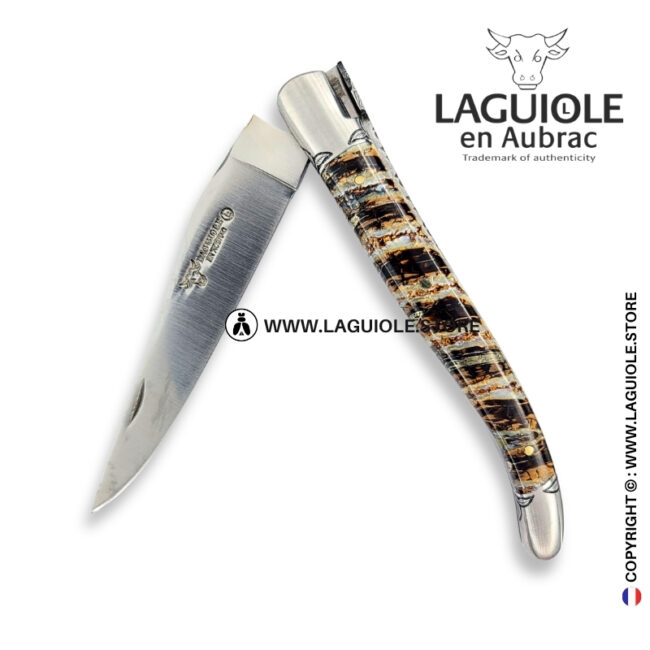
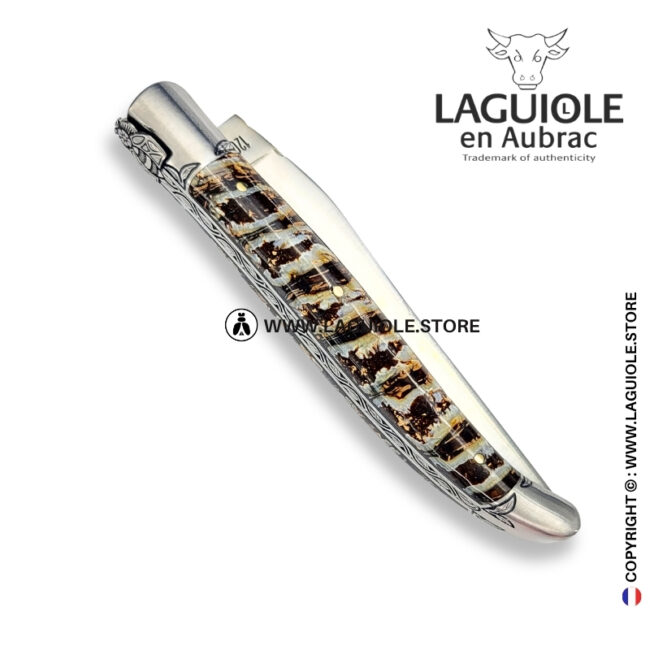
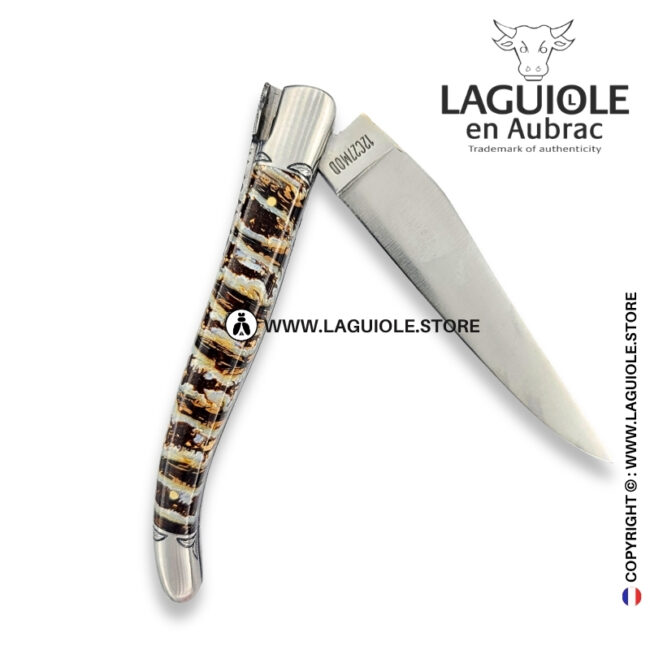
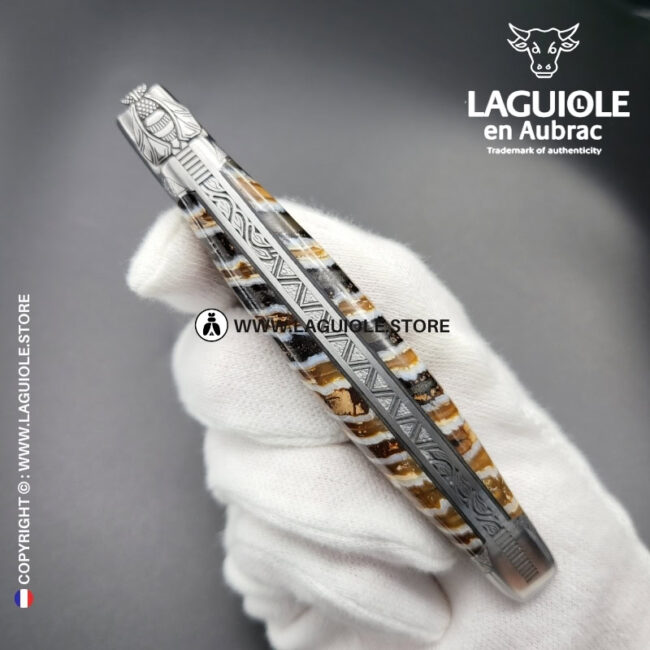
Follow the pale veins in this handle and you’ll see they never run straight. They ripple between the darker bands in steady crests and troughs, the very profile of an ocean swell, which is where “Fossil Swell” gets its name. One Laguiole en Aubrac cutler made it entirely by hand, and it has no duplicate. The brown mammoth molar has been cut to show dark brown and ocher plates divided by thin bluish-white veins that draw tighter and tighter toward the head. Beneath the molar lies a black spacer, then the stainless steel liners.
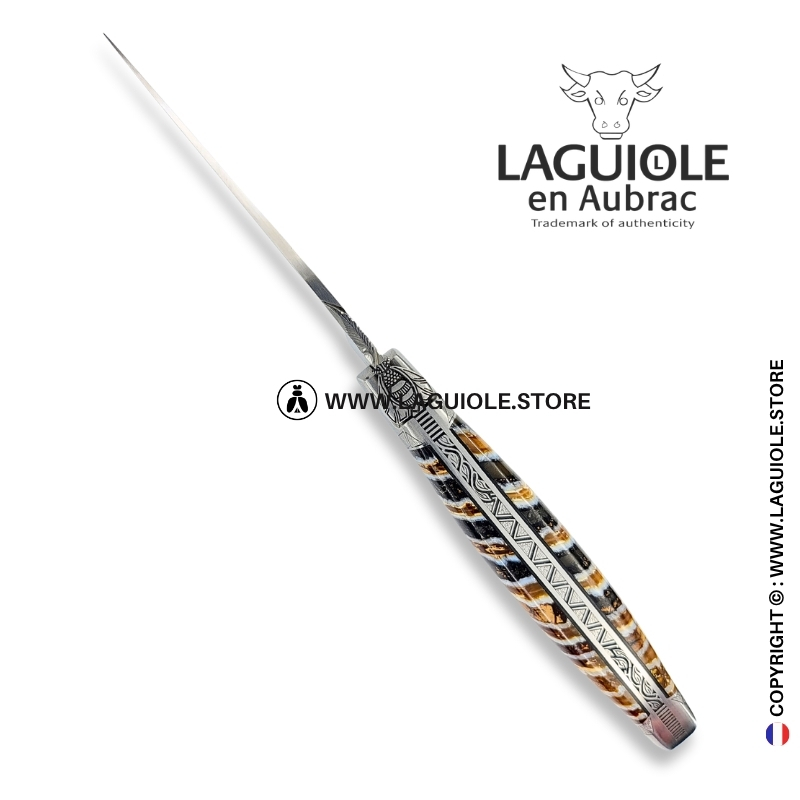
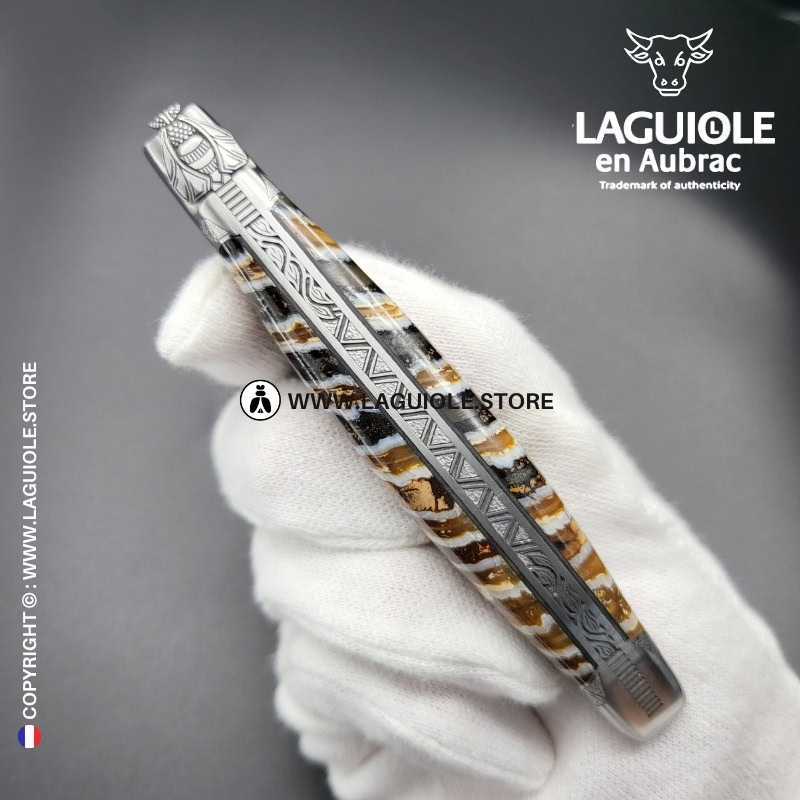
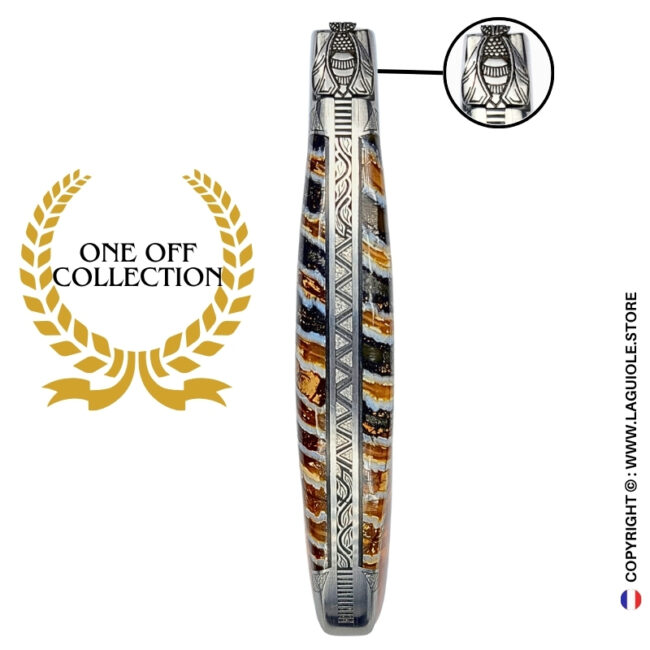
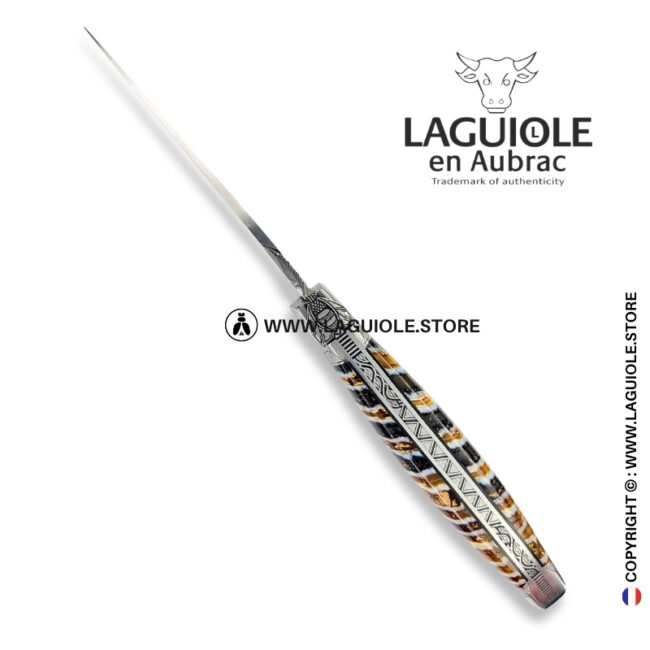
The spring says it again, this time in steel. Along its lower section, plant-like flames chiseled in polished relief curl with the easy give of surf rolling back in. Higher up, the motif draws in and becomes a tight row of even chevrons, the sign ancient alphabets used for water. The swell in the handle is drawn here with a graver, on a strip a few millimeters wide, and there is no second pass.
Both bolsters speak that vocabulary too, finishing the knife at either end in stippled triangles that alternate with close-set bars. The wave rhythm never lets up, and not a stretch of metal is left bare. At the top, the bee appears to rest on the surface. Her almond-shaped body holds a cluster of stippled beads packed close, her wings, rimmed with a polished edge, open just slightly, and her ridged abdomen narrows to a point. She floats more than she lands, like an insect the current has carried there with no effort at all.
“Fossil Swell” speaks to collectors who like pieces where material and decoration say the same thing. Rippling mammoth molar, a black spacer and stainless liners, stippled bolsters, a spring that turns from surf to chevrons, and a bee resting on the surface come together as one coherent whole, made for looking at and for using alike.