Handcrafted in Aveyron, the historic home of the Laguiole knife
Fossil Bloom: Laguiole Knife in Mammoth Molar – Sculpted Bee – Chiseled Spring and Bolsters
1659€
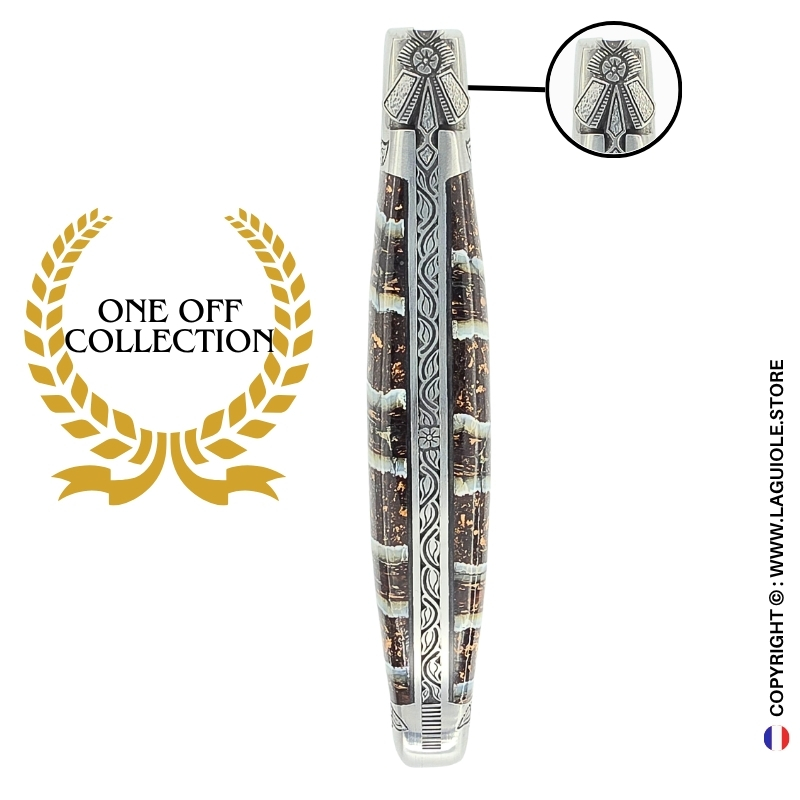
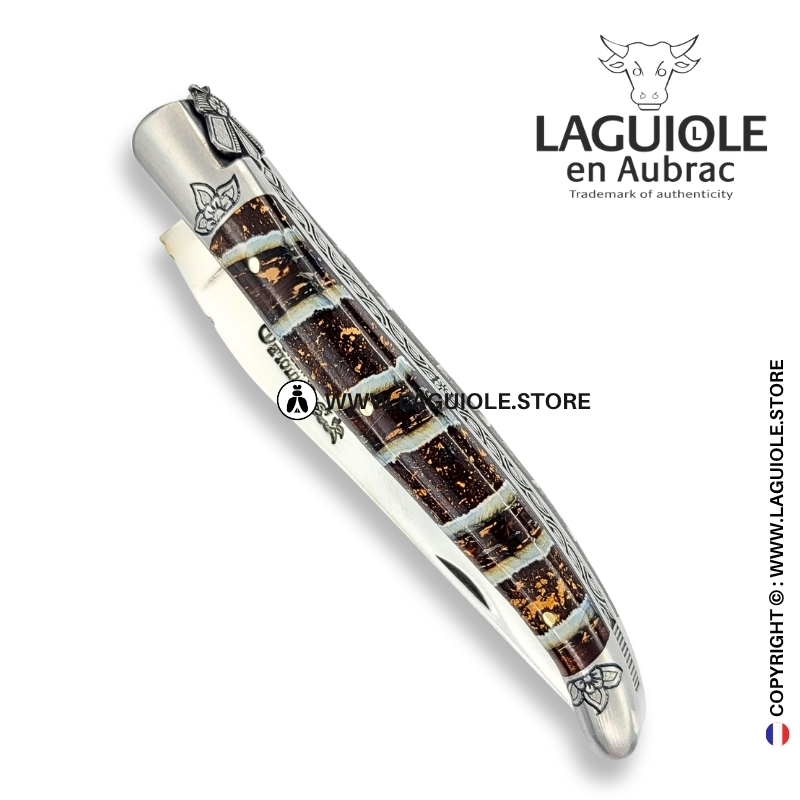
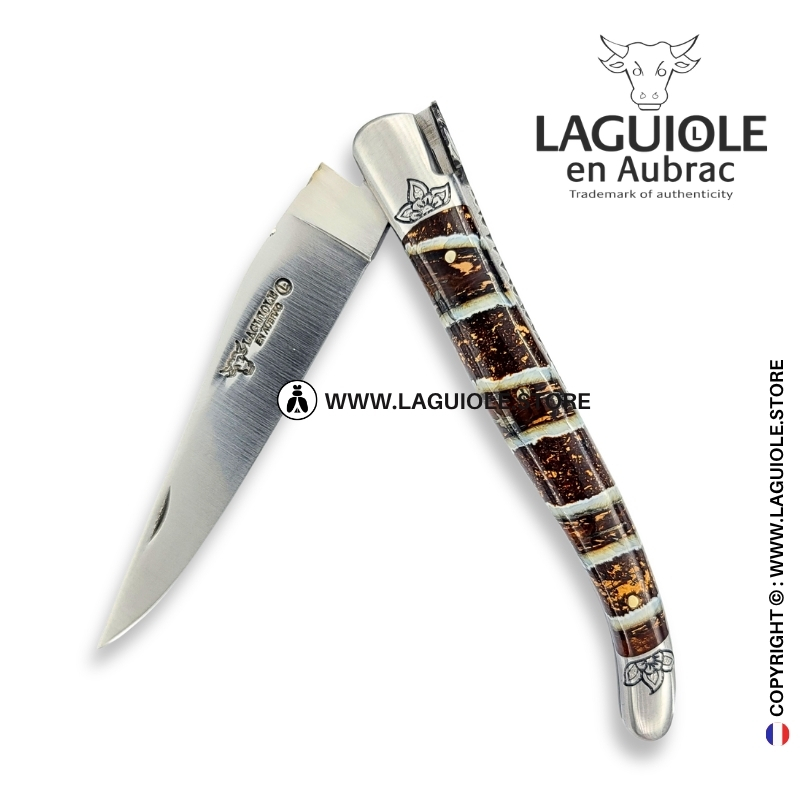
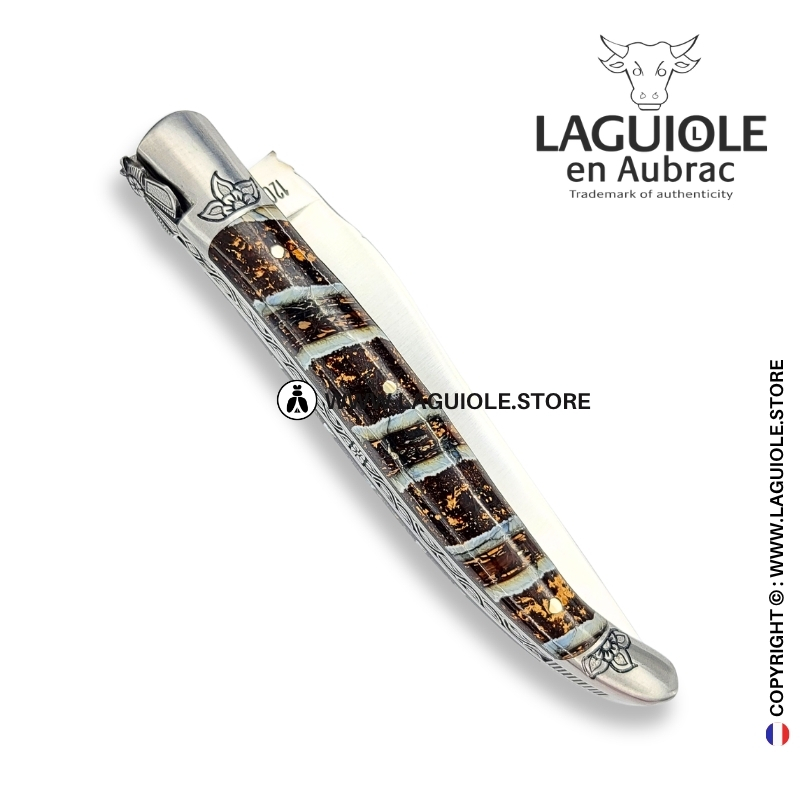
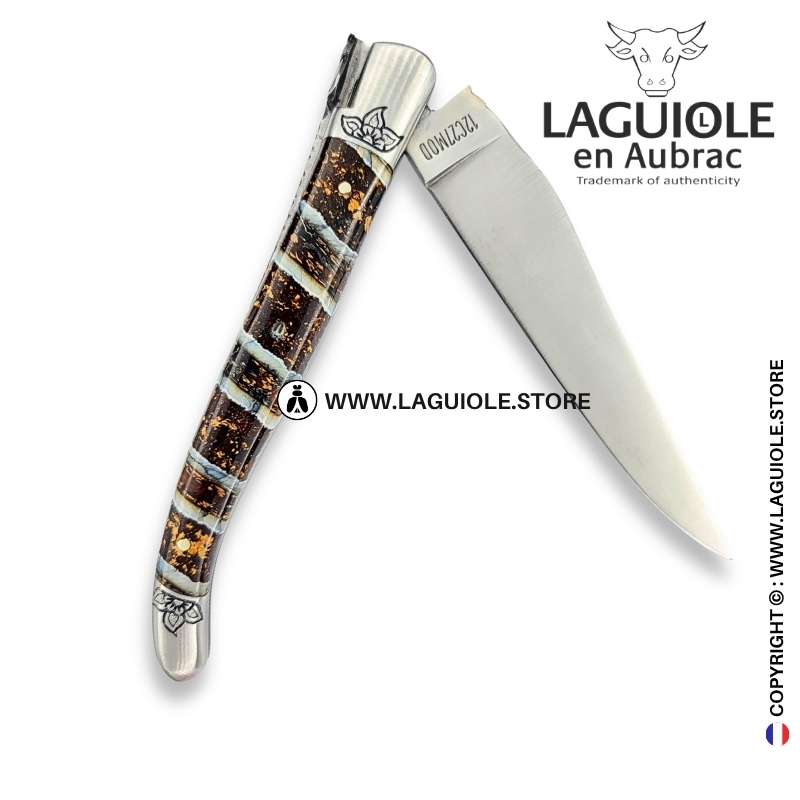
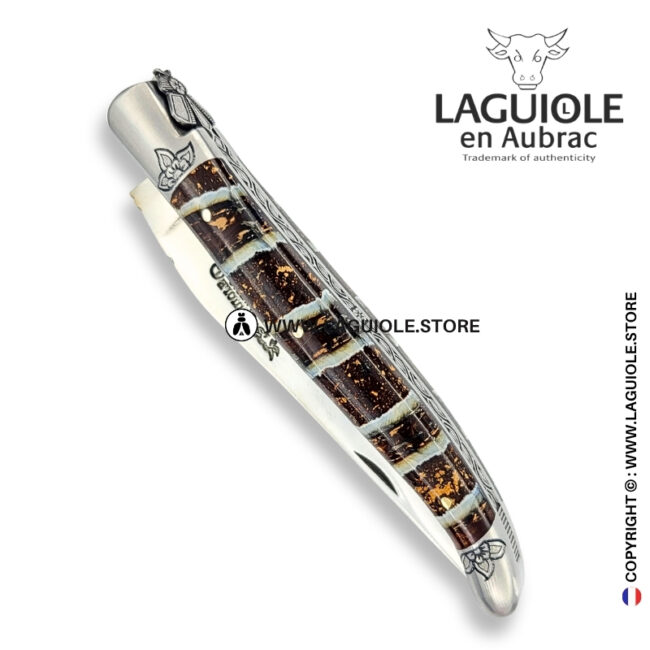
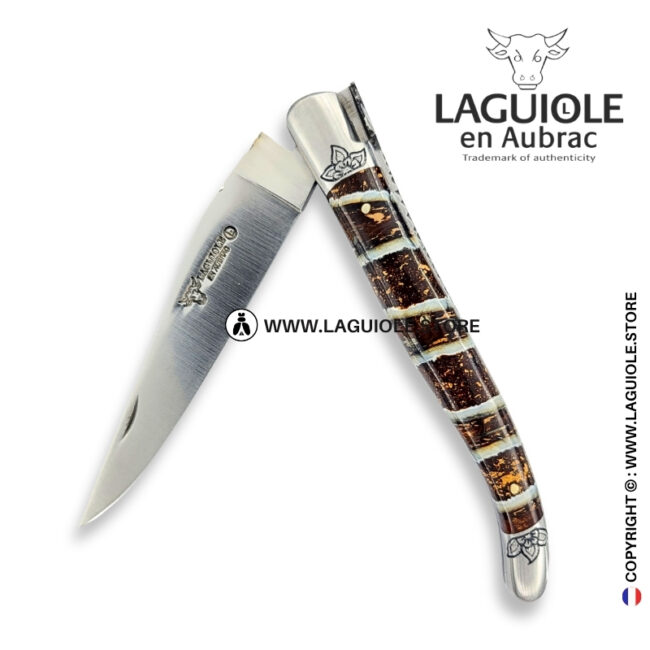
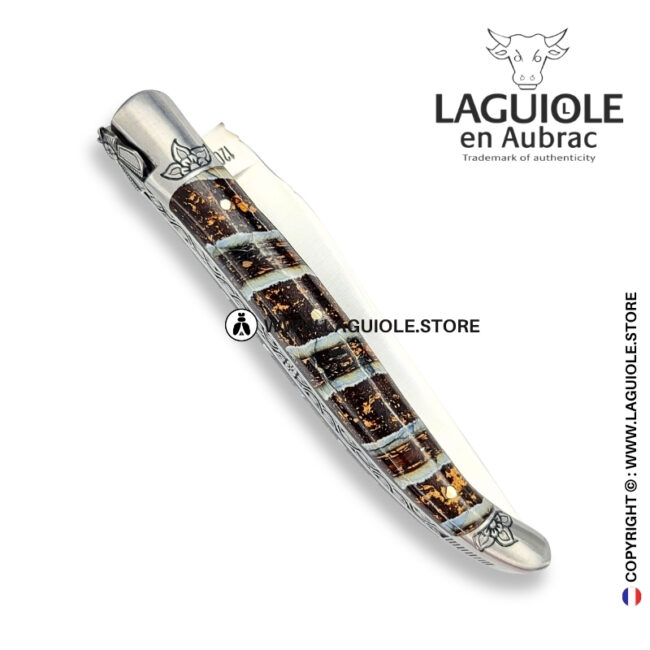
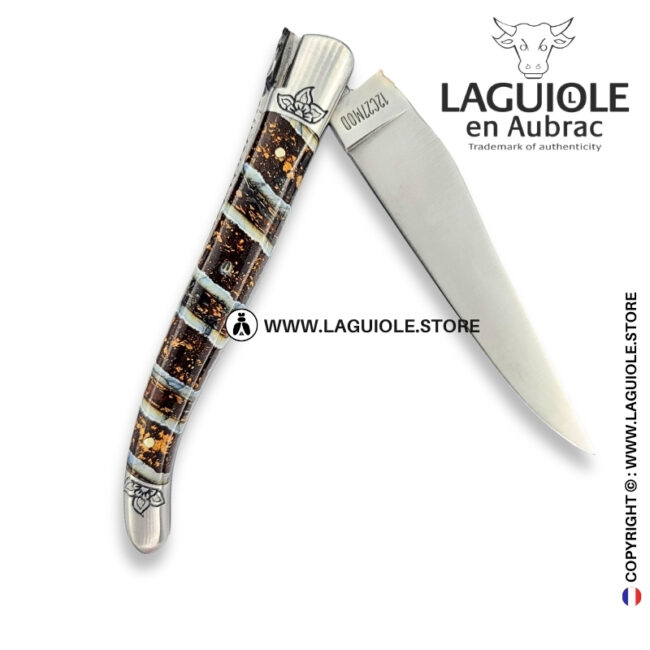
Hold “Fossil Bloom” and you hold a contradiction, which is where the name comes from: open flowers set on a material that reaches back into deep time. It is a unique piece, and the cutler who made it by hand at the Laguiole en Aubrac manufacture handled every stage of the work alone. Sawing the mammoth molar has revealed chocolate-brown plates, almost black and peppered with copper glints, divided by milky white bands with a near-opal glow. Dark and light trade places in clean stripes across the whole handle, between a black spacer and stainless liners.
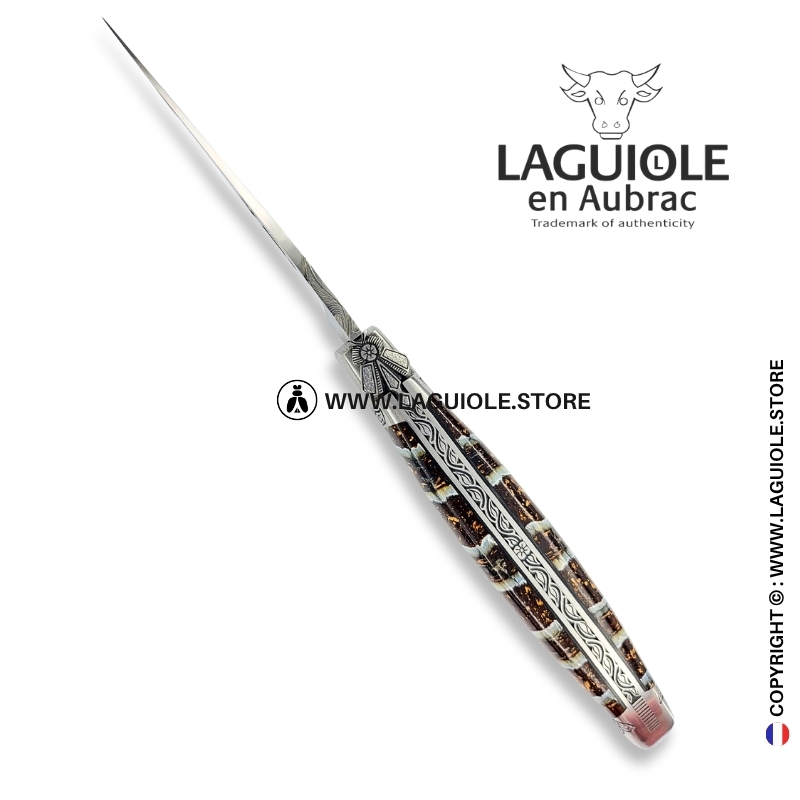
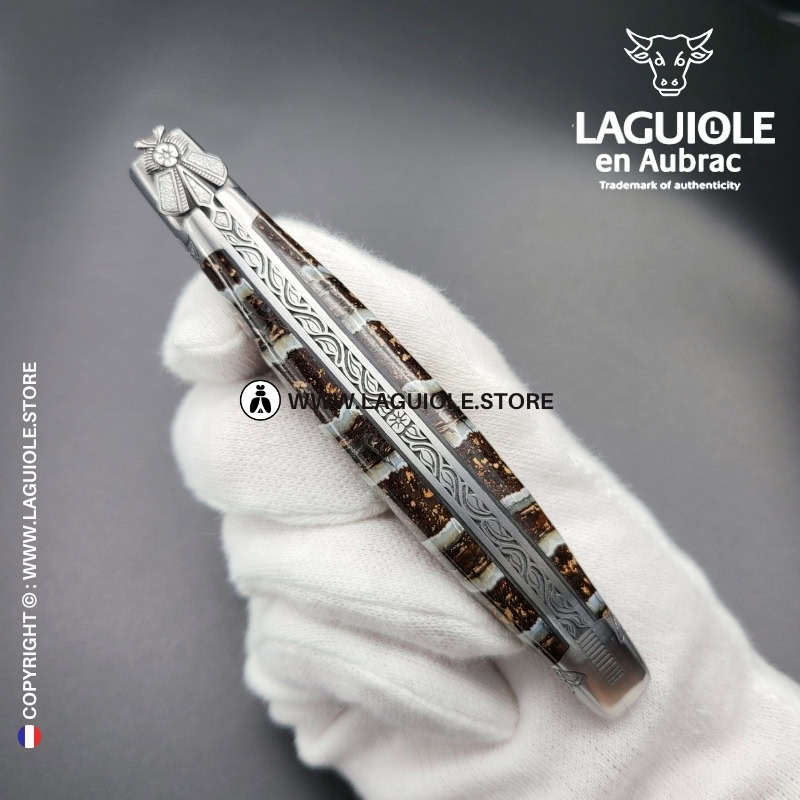
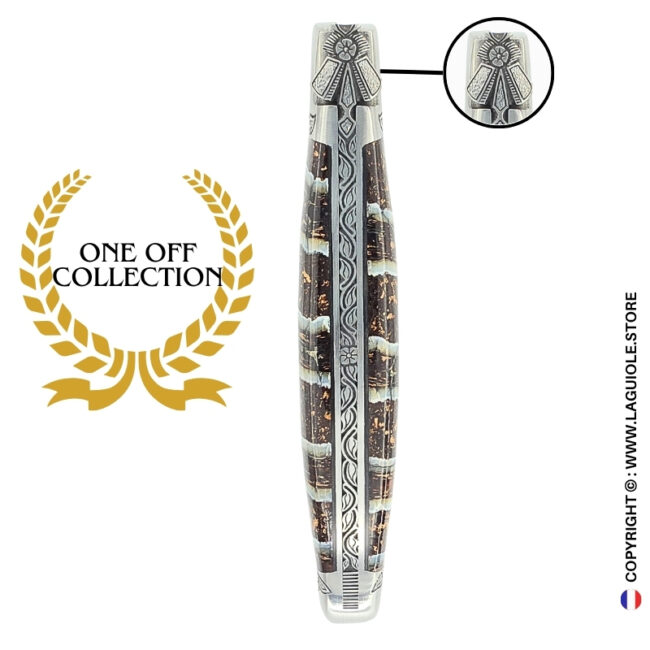
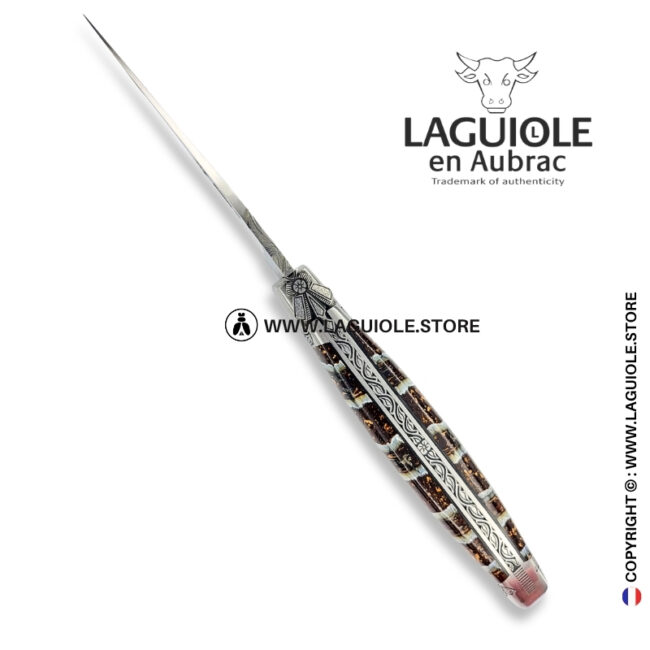
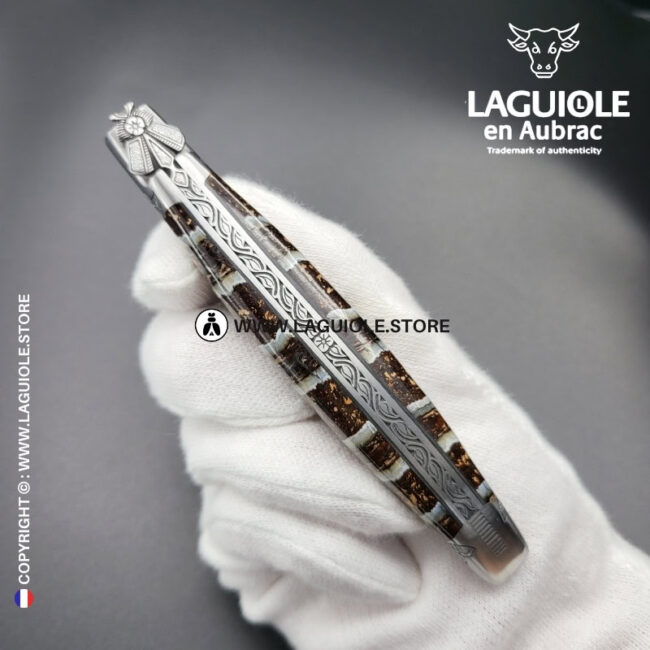
A garland made entirely of plant forms unrolls along the spring. Long almond petals, ribbed inside with fine veins, curl and turn over as they slot into each other, interrupted at intervals by a small round flower of four petals, a pause for breath in the pattern. Everything stands in polished relief on a recessed ground over the full length of the spring, a few millimeters wide, with no possibility of retouching.
Each bolster carries a single open flower, engraved in a fine line and placed dead center, its petals spread and small leaves on either side, so blossoms cover the knife from rear bolster to head and no bare patch remains. At the top, the bee is where the flowering peaks. Its wings fan out as two wide stippled petals, and on its head sits a large round flower of four petals, haloed by fine ribbed rays that make it glitter like a small star.
“Fossil Bloom” is for collectors who like pieces that hold two distant eras together. Banded dark-and-light molar, a black spacer, stainless liners, the plant garland on the spring, the engraved flowers of the bolsters, and the crowned bee form a deeply coherent piece, made to delight the eye and the hand alike.