Handcrafted in Aveyron, the historic home of the Laguiole knife
Arcades of Night: Laguiole Knife in Brown Mammoth Molar – Sculpted Bee – Chiseled Spring and Bolsters
1659€
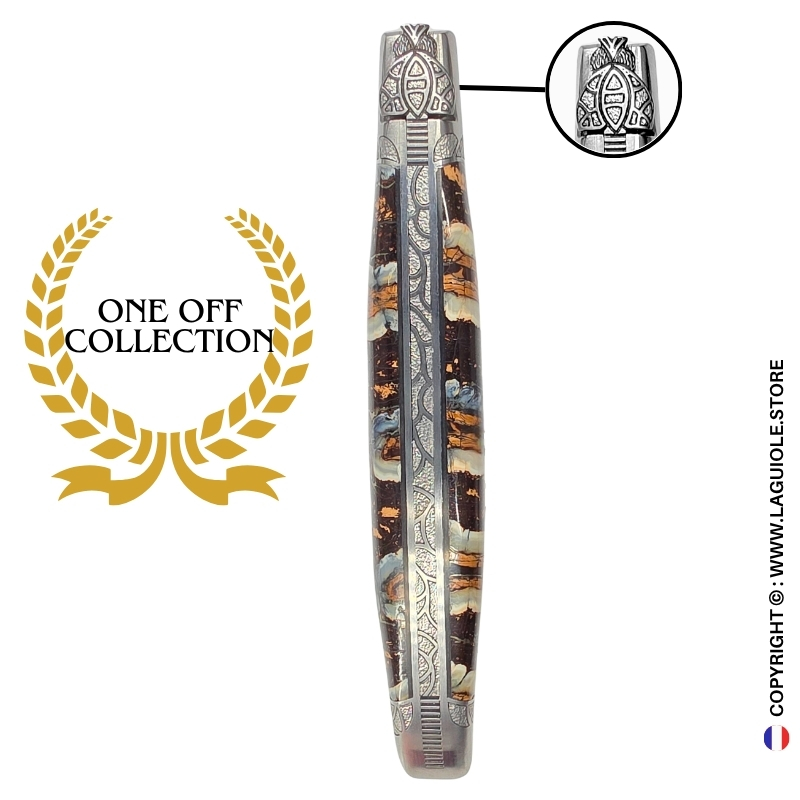
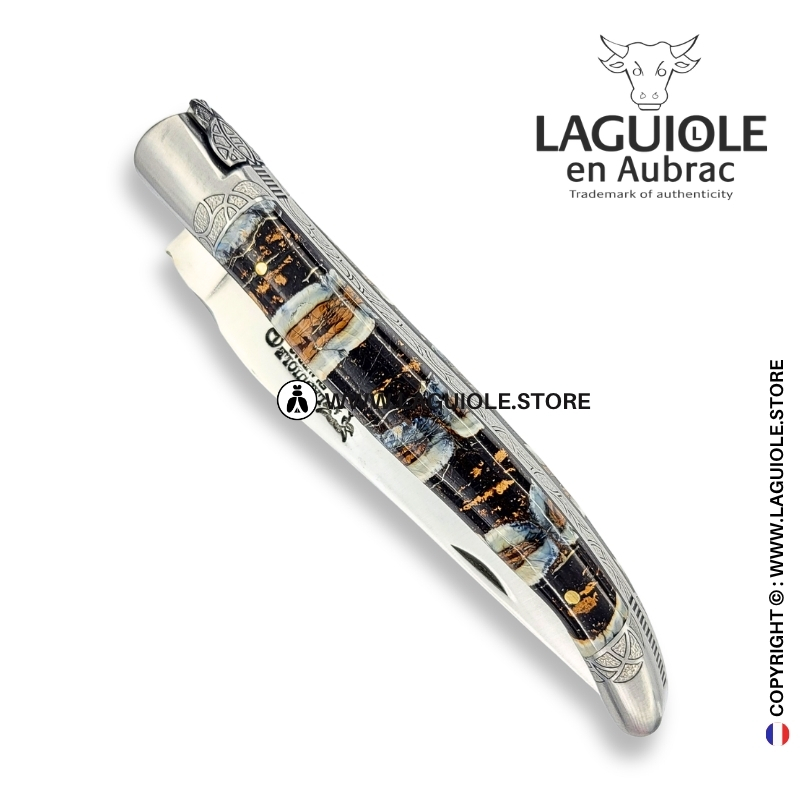
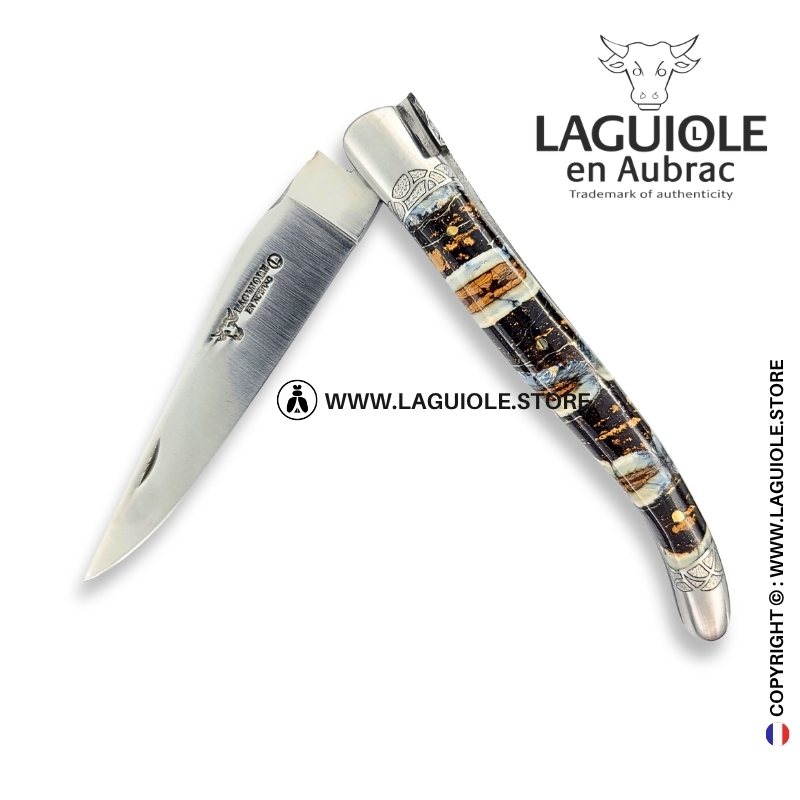
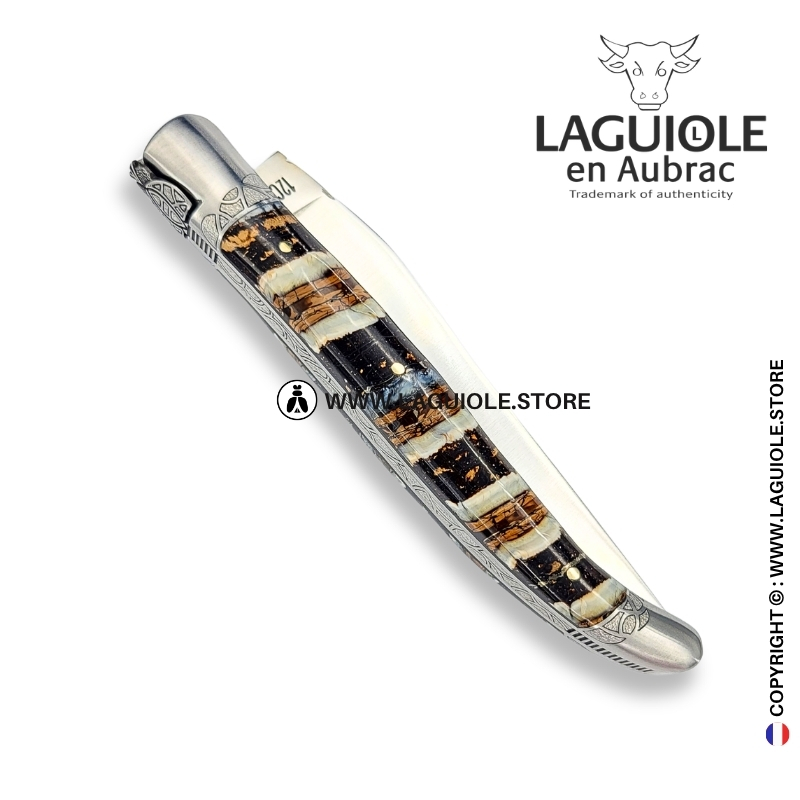
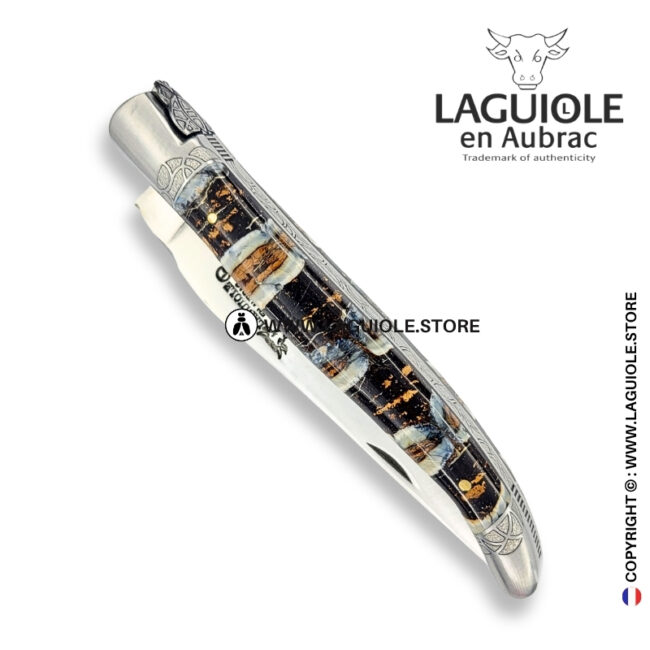
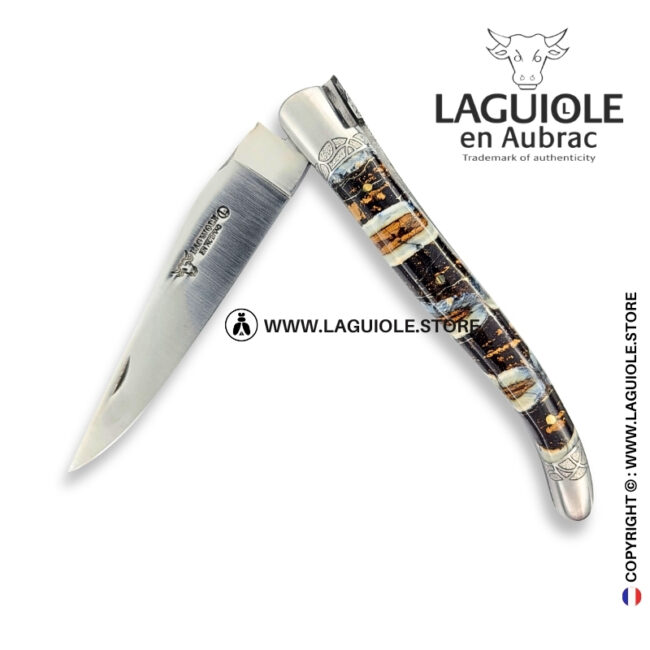
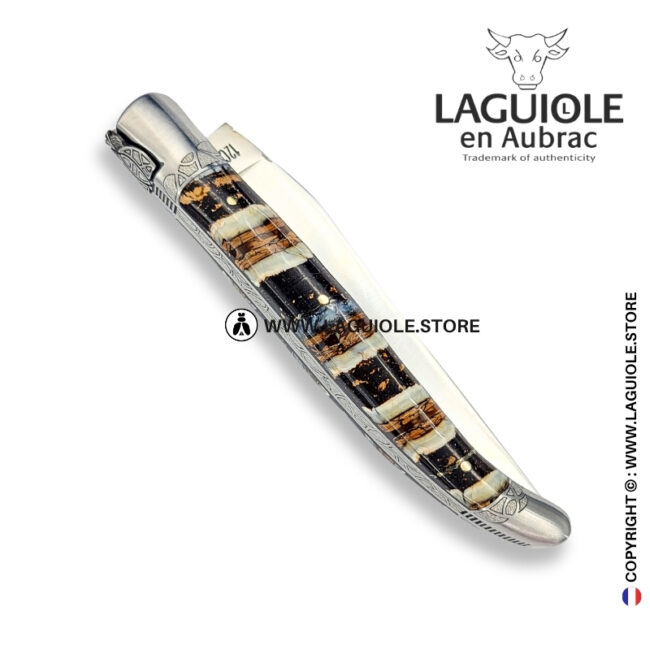
What catches the eye first gives “Arcades of Night” its name: a procession of pointed arches along the spring, and below it a handle dark as a moonless sky. This one-of-a-kind piece was made by hand by one cutler of the Laguiole en Aubrac manufacture, with no help at any stage. Its brown mammoth molar shows broad brown-black plates, glossy as lacquer and lit by copper- and gold-colored glints, separated by thick ivory-toned bands with a pearly sheen. A black spacer cuts cleanly between fossil and stainless liners, and three rivets punctuate the handle.
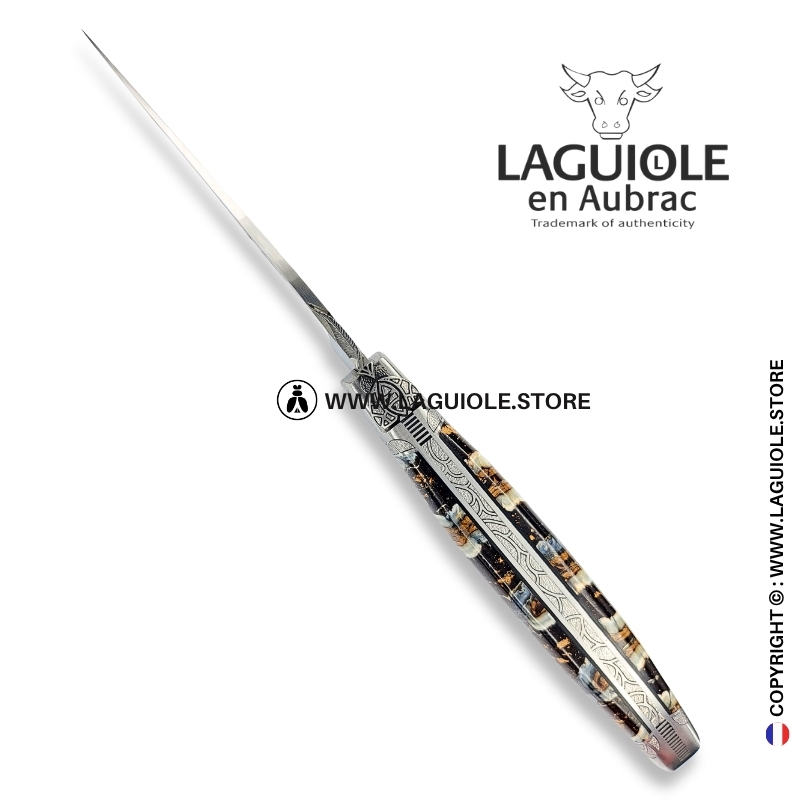
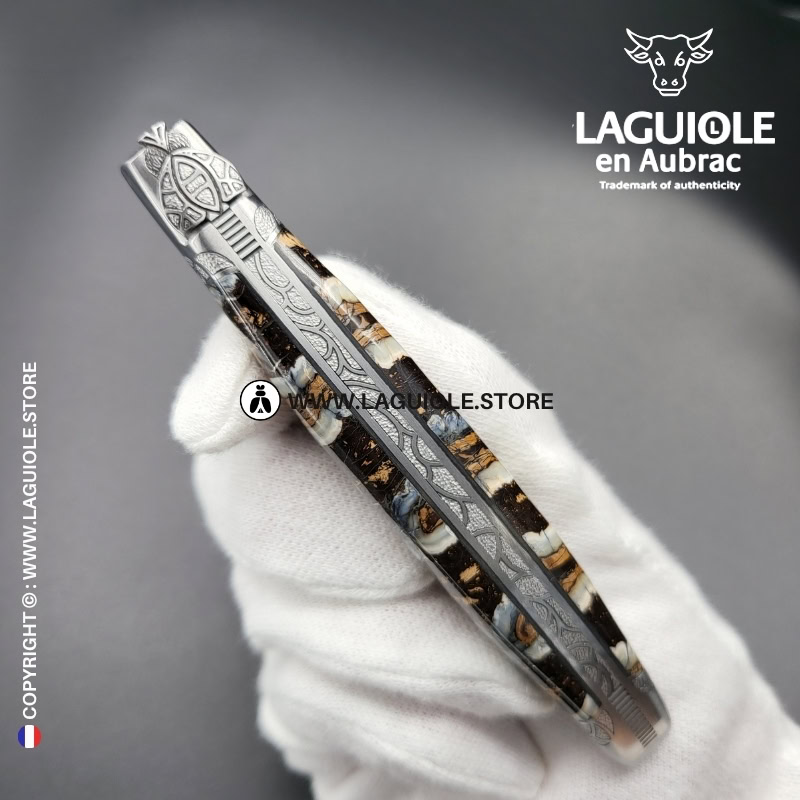
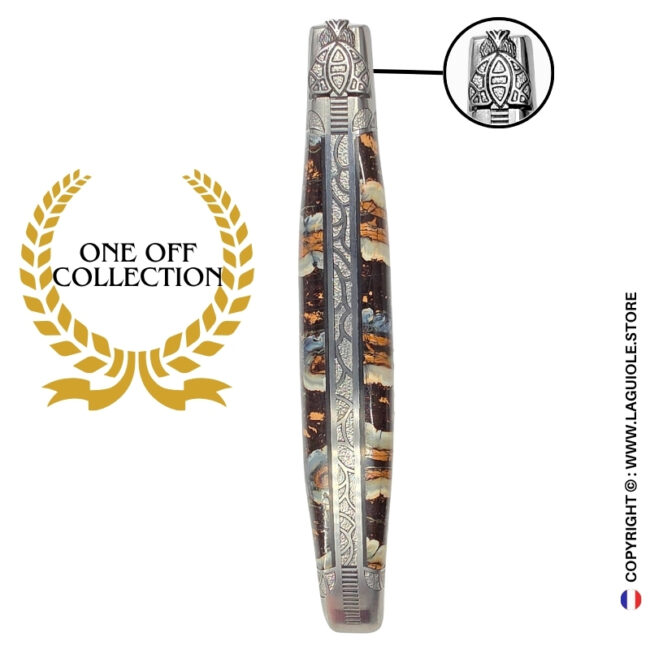
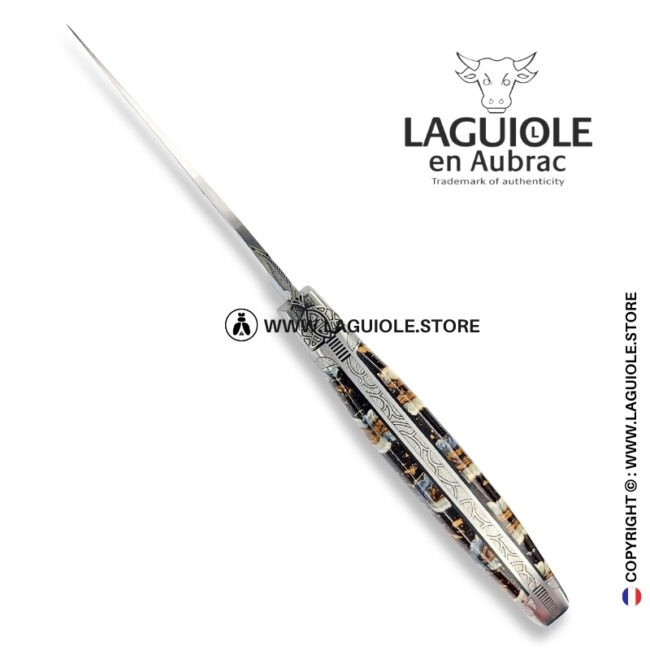
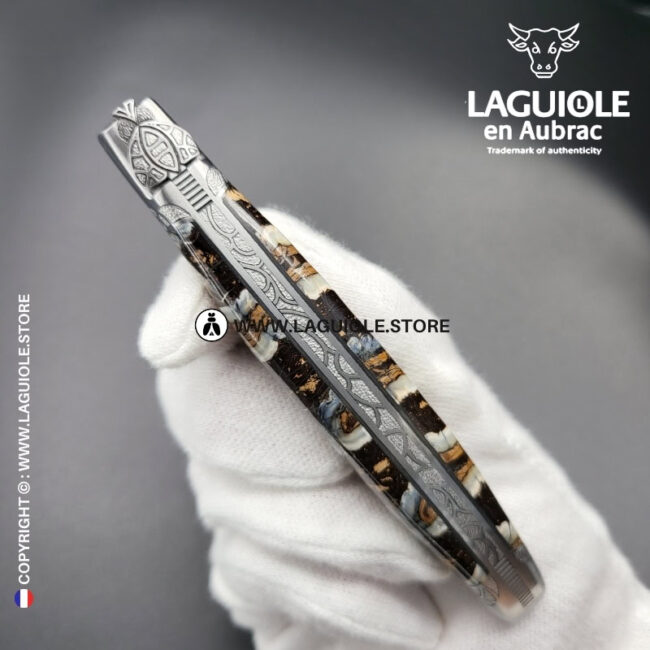
The spring is where the piece comes alive. An arcade has been chiseled along its full length, polished ogive arches following each other, every one landing on the next, raised from a ground stippled all over that makes them shine like columns of light. Nowhere does the motif break, and it calls for two separate surface treatments, bright polish on the arches against a grained ground, carried out with no chance to retouch either.
The bolsters extend the architecture. At both ends, stippled fans echo the arches’ curve, while the rear bolster adds a grille of tight bars, like a latticed screen shut across a void. The bee at the top borrows the same vocabulary. Its center is an almond shape, ringed by arches and stippled cells and capped with a small crown of three lobes, every part outlined with a clean stroke and then dressed with a file. The result looks less like an insect than like the rose window above a church portal.
“Arcades of Night” is for collectors who appreciate built pieces, where ornament follows a plan instead of a whim. Brown molar with wide ivory-toned bands, a black spacer, steel liners, the arcade on the spring, and a rose-window bee come together with real rigor, in a knife meant for the hand as much as for the eye.