Handcrafted in Aveyron, the historic home of the Laguiole knife
A Thousand Amber Springs: Laguiole Knife in Yellow Mammoth Molar – Chiseled Double Liners – Sculpted Bee
1759€
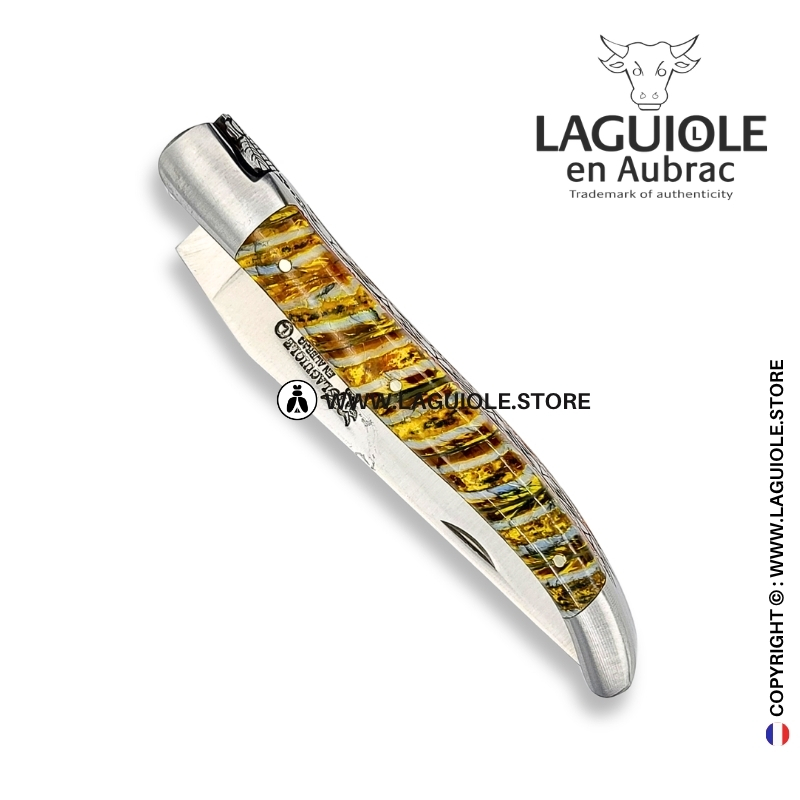
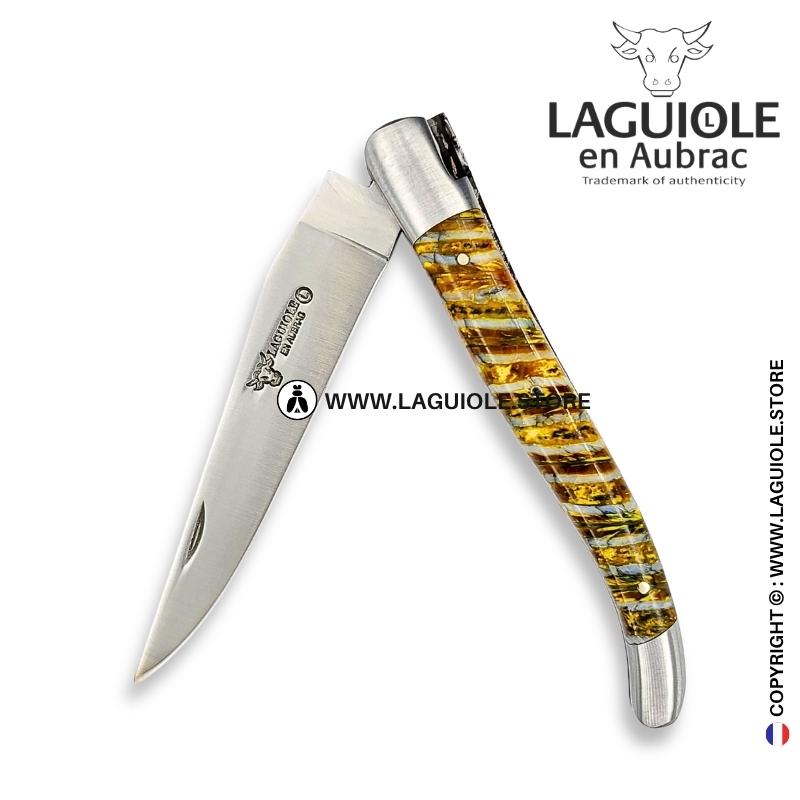
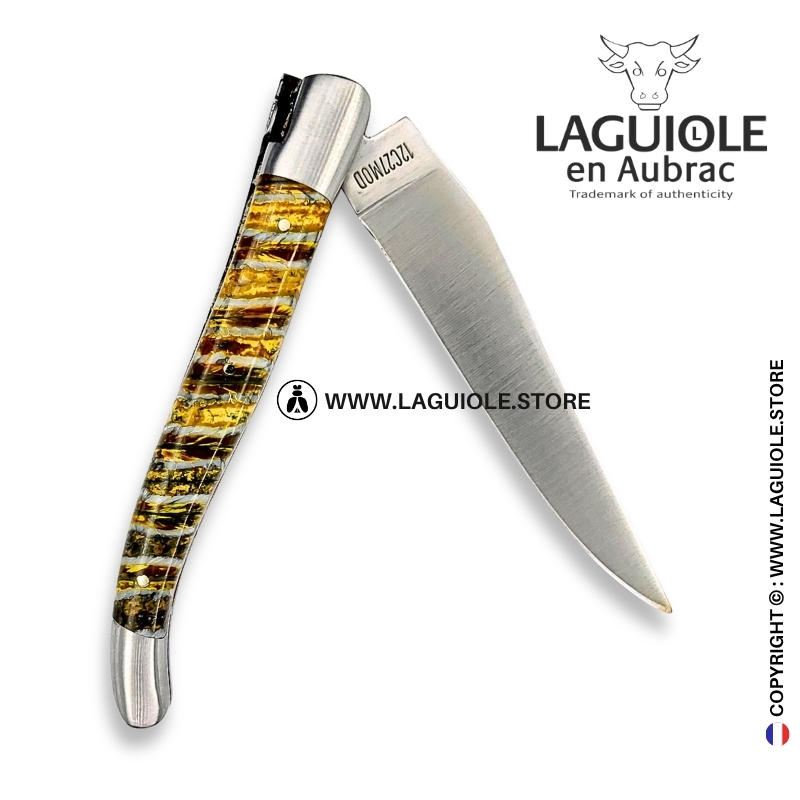
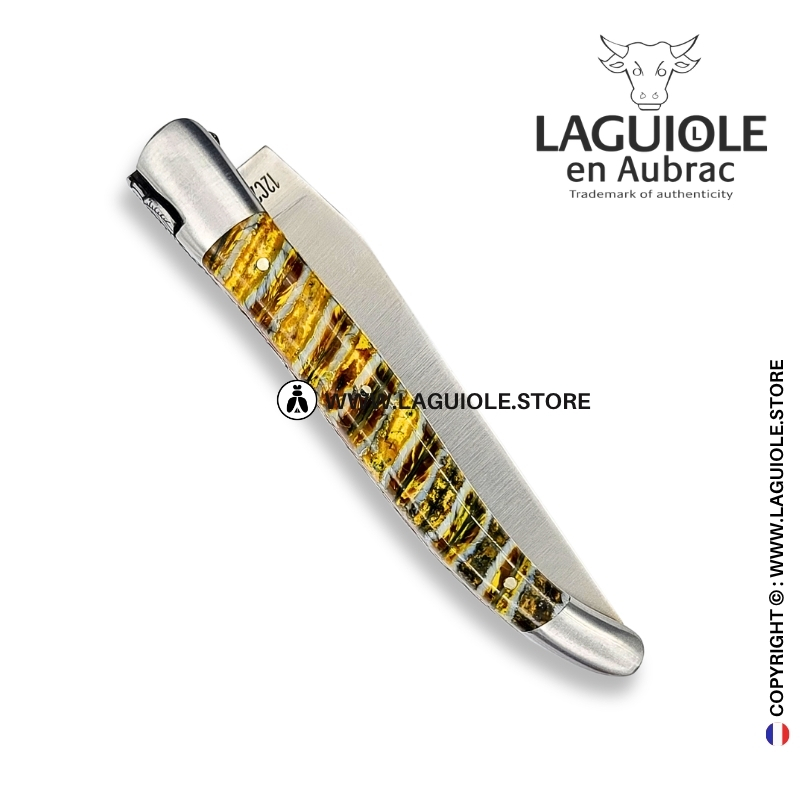
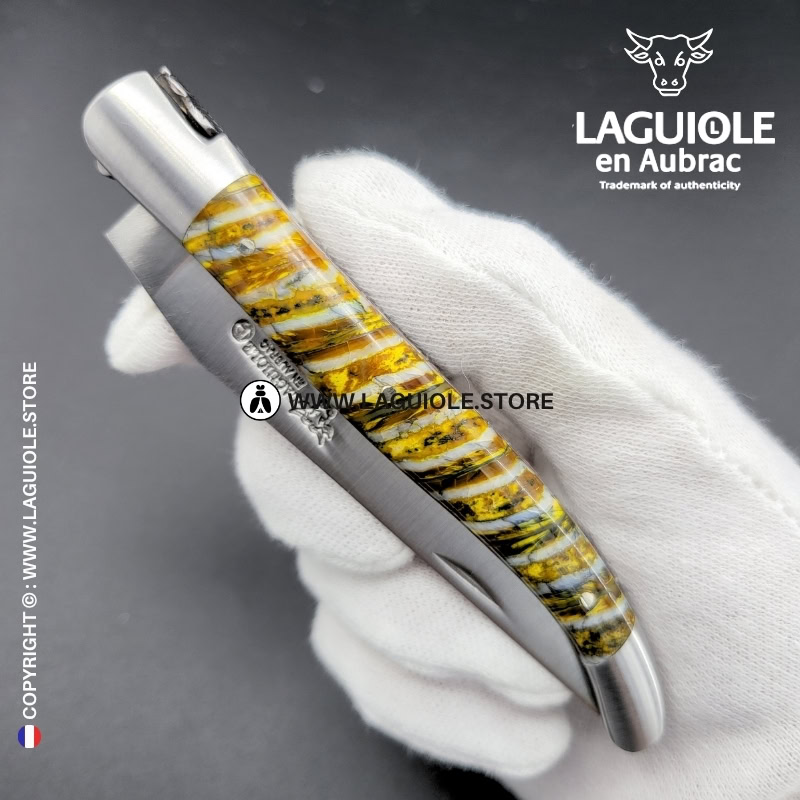
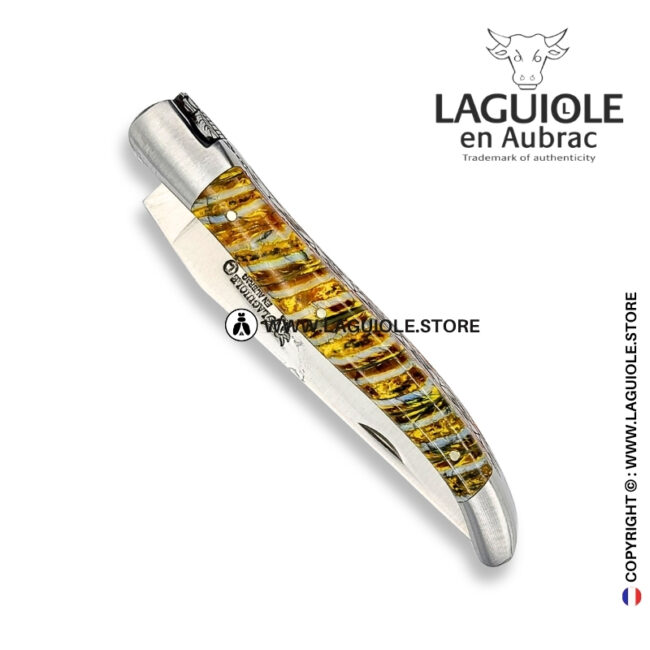
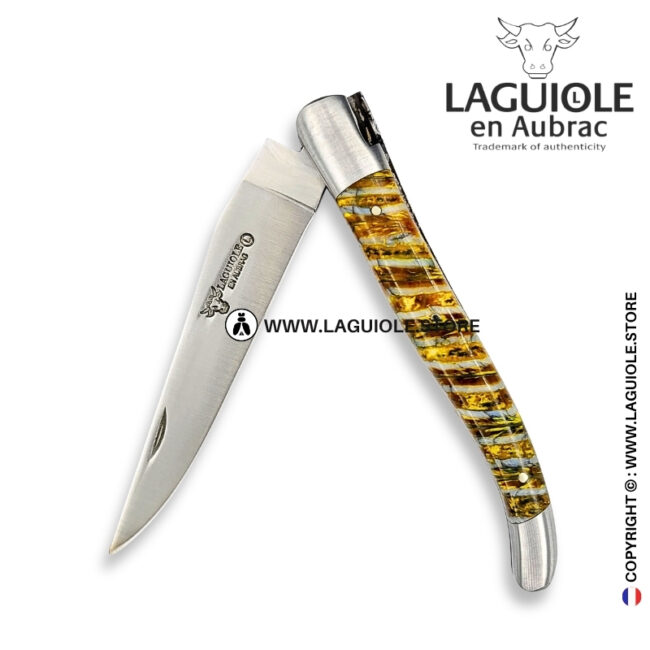
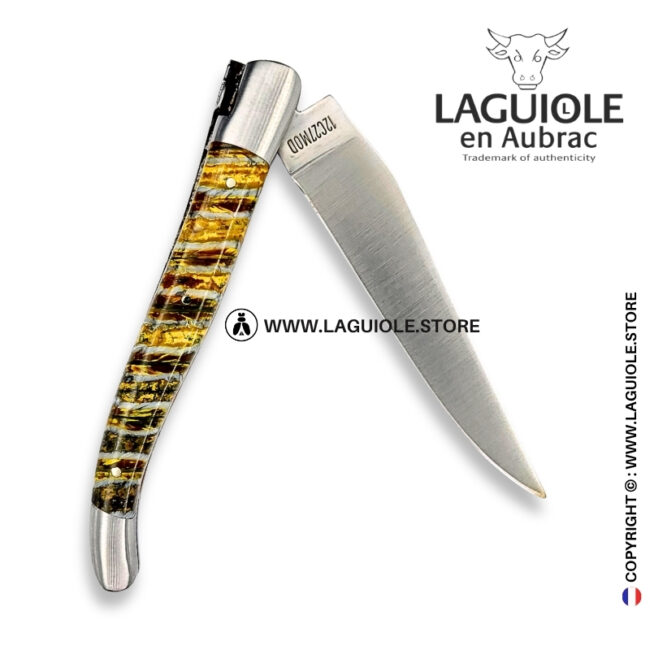
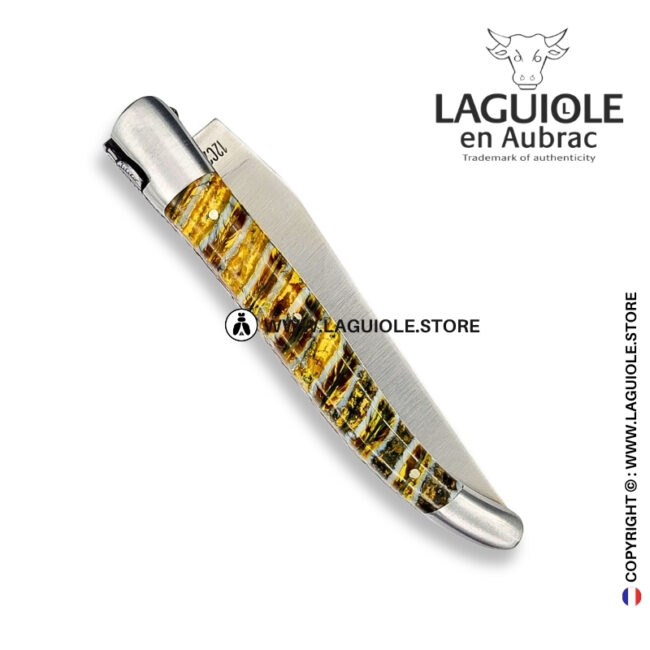
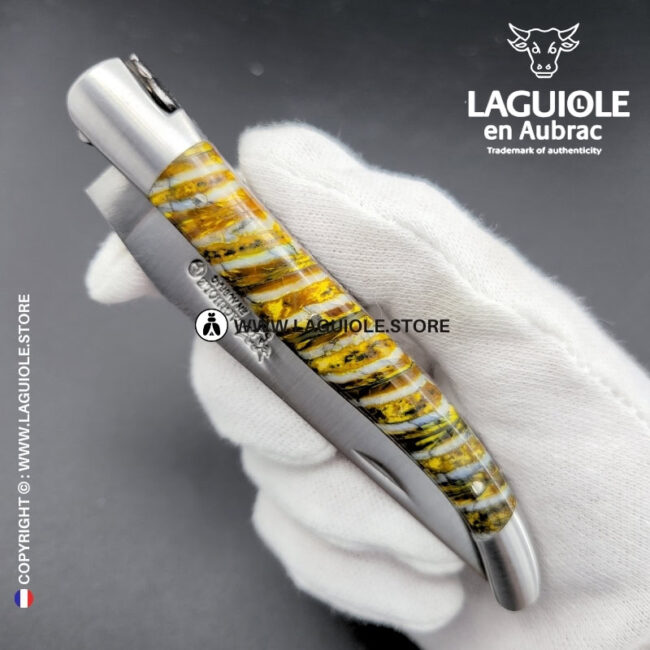
Only one “A Thousand Amber Springs” exists, and a senior Laguiole en Aubrac cutler made it by hand from start to finish. Its handle is cut from real mammoth molar. Look closely and you can read a long run of steppe seasons in it, layered in rippling bands of saffron, mustard, caramel, and a soft pearly white, every band edged by a hairline of black. These are the plates of the fossil tooth itself, brought up by polishing to the glow of amber sliced thin. No dye touched it. The golds were left by minerals in the ground, slowly, across thousands of years.
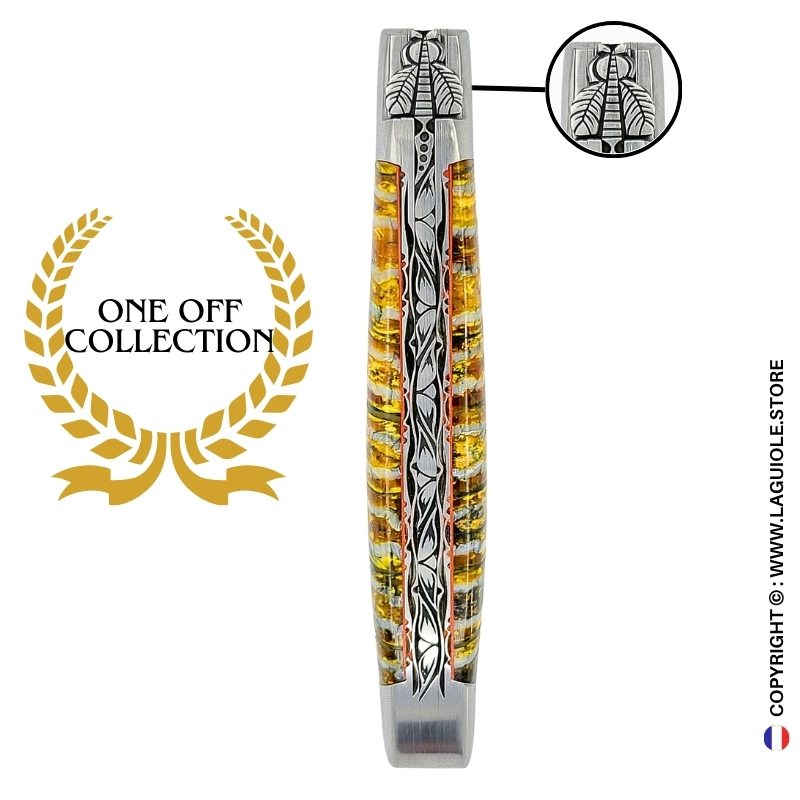
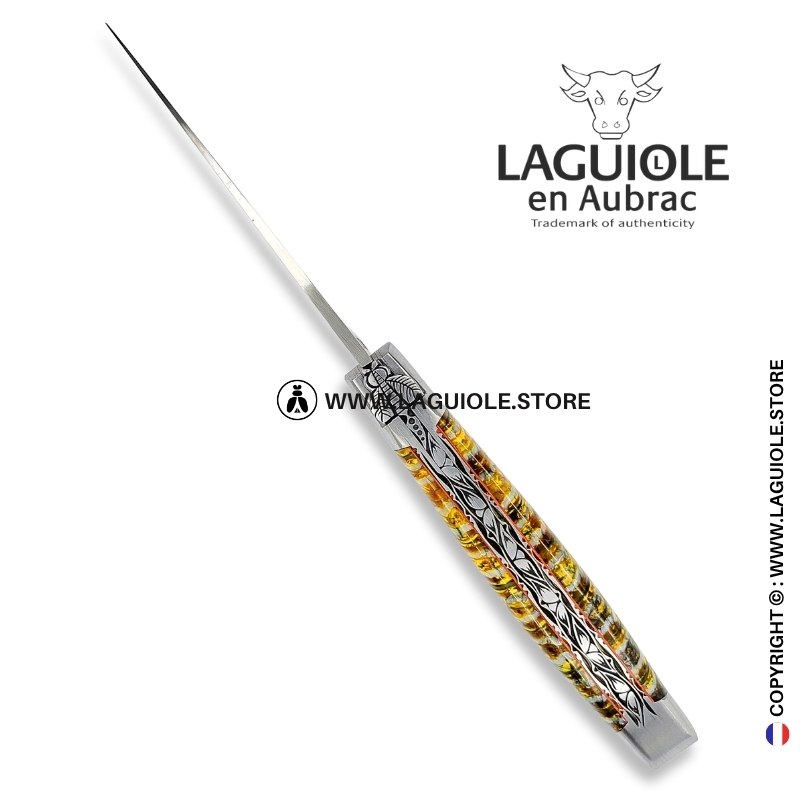
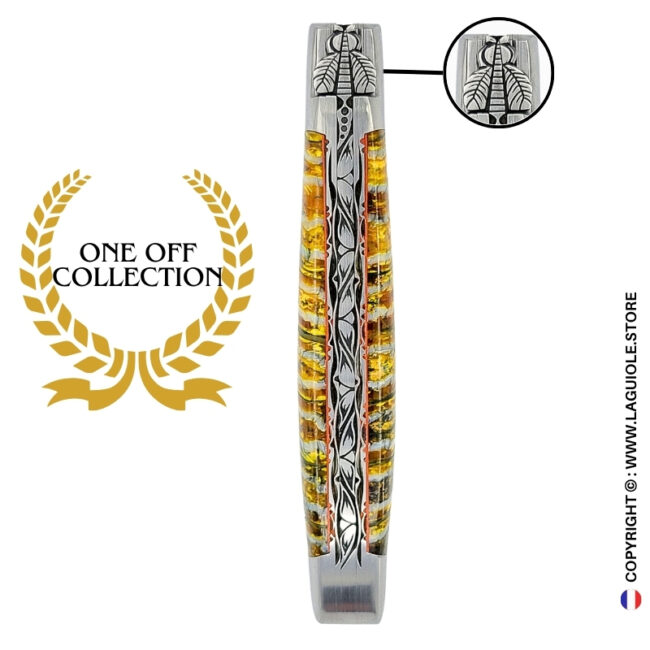
Keeping watch over this relic is a bee whose wings look like palm fronds. Two wide, ribbed leaves, chiseled one stroke at a time, flank a body that narrows in tidy rings and then spills onto the spring as a line of engraved dots. Delicately worked and set at the very top, she adds the only living, leaf-winged presence to an object of fossil and steel: a forager bending low over a springtime from the Ice Age, visiting a thousand seasons of petrified grass.
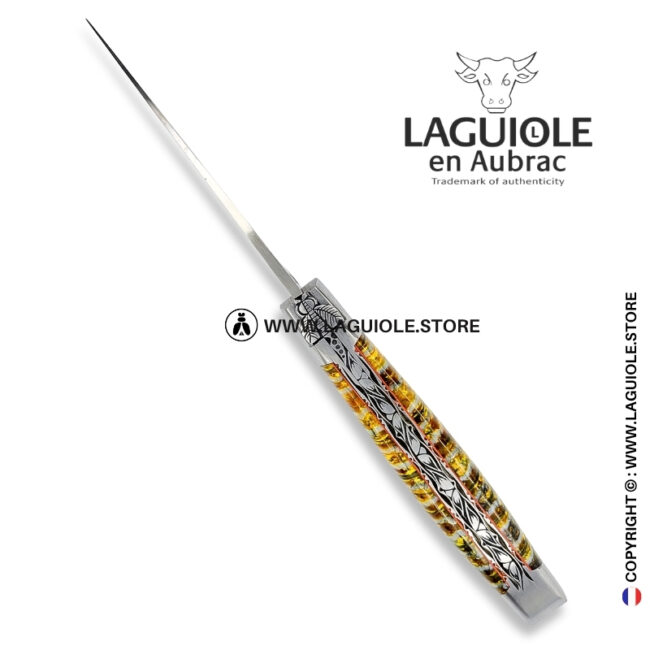
The double liners on both sides of the tooth are chiseled too, with a chain of narrow, pointed leaves that alternate along their whole length. Picture steel grass springing up around the fossil, just as the steppe used to hem the animal in, stalk by stalk. Bright red spacers lay a line of sap under each liner, running bolster to bolster, the one bold and lively color among so many golden tones. Two satin stainless steel bolsters finish the knife with the restraint of a jewelry box that understands its contents.
“A Thousand Amber Springs” is for collectors who want a material with real history behind it: a mammoth molar packed with stacked seasons, steel grasses chiseled all around it, a red line of sap linking it to today, and a palm-winged bee standing guard. It is unique, older than any written record, and the work of one pair of hands.
One thing to know before you choose it: a small chip sits at the edge of the central rivet, caused when the handle was riveted. Thousands of years of mineralization make mammoth molar extremely hard, and that hardness gives the metal pressed into it no room at all. Nothing was done to hide the chip. It confirms the material is genuine more convincingly than paperwork ever could, and it belongs to this knife, which is sold as is: the only one of its kind, never to be remade.