1. The history of the Laguiole knife
Cutlery tradition in Espalion
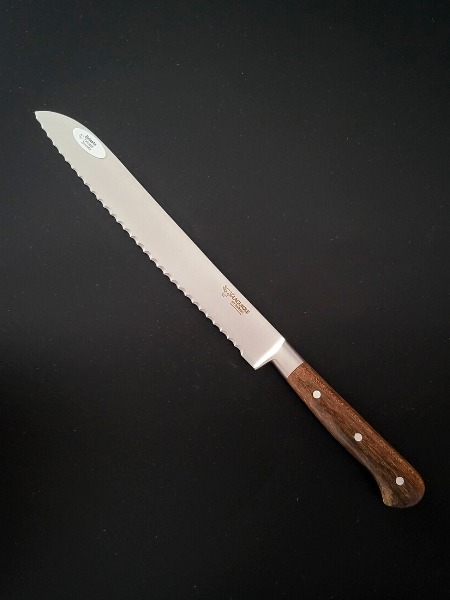
The cutlery activity in Espalion dates back far, as there were already two cutlers in the 17th century. The production responded to the specific needs of the local population: straight knives called capujadou, scissors for marking livestock, bread-cutters, pruning knives, and vineyard tools, as well as hatchets for forestry. By the end of the 17th century, Espalion had become one of the five clandestine centers for assembling inexpensive folding knives with a Saint-Etienne nail, called “jambettes stéphanoises”.
The assembly of these knives was orchestrated by a family of master cutlers, the Canel, originally from Chambon, a cutlery commune near Saint-Etienne. The knives were sold in the region by peddlers and at fairs. Canel’s son, also a cutler, would become the Bayle of the Confrérie Saint-Eloi d’Espalion. This very ancient and still active brotherhood brought together the trades related to forging and metalwork.
Important information:
It is important to emphasize that the history of the Laguiole knife, as well as the associated dates and events, are subject to historical interpretations and debates. The text presented here is based on research and information available to date, and it attempts to trace the journey of the Laguiole knife through the centuries. However, it is entirely possible that some parts of this history may be questioned or deepened as new discoveries and historical advances emerge.
Furthermore, the text does not claim to provide an exhaustive and definitive view of the history of the Laguiole knife, but rather to offer a general overview of the main stages and developments of this iconic French craftsmanship object. We strive to present accurate and verified information, but we cannot be held responsible for any inaccuracies, omissions, or divergent interpretations.
Finally, it is essential to keep in mind that history is a constantly evolving discipline, and our understanding of the past is always subject to refinement, enrichment, and revision. Thus, the text presented here may evolve and adapt according to historical advances and new research on the subject of the Laguiole knife and its cultural heritage.