

All Laguiole folding knives
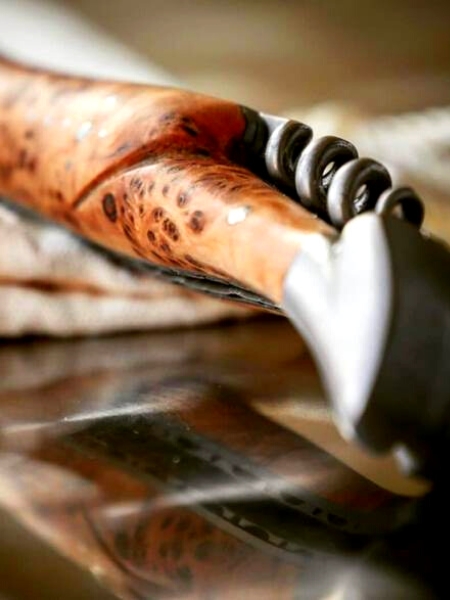
Laguiole knives with corkscrew

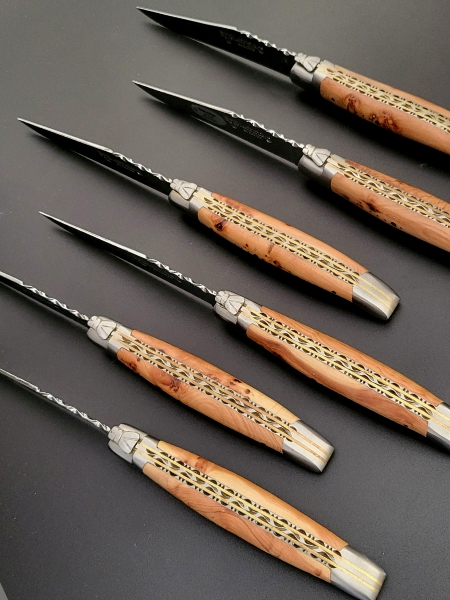
Marquetry in knife-making is a traditional craft technique that involves assembling different materials, such as wood, ivory, or bone, to create a decorative pattern on the handle of a knife or sommelier. The materials are cut into thin sheets or small pieces and assembled following a predetermined design.
Marquetry can be done in several ways. The most common technique involves cutting the materials and then gluing them onto a supporting plate. Once the plate is assembled, the pattern is cut according to the shape of the knife handle and then glued onto it.
Marquetry is a meticulous process that requires a great deal of patience and precision. It is often used to enhance high-end or collectible knives, adding a touch of elegance and refinement.
The exact origin of marquetry is difficult to determine, as this artisanal technique dates back several centuries. However, it is known that the Ancient Egyptians already practiced marquetry to decorate wooden and ivory objects.
Over the following centuries, marquetry spread throughout Europe and Asia and was used to decorate a wide variety of objects, including furniture, musical instruments, and decorative items.
During the Middle Ages, Italian craftsmen became famous for their mastery of marquetry, and the city of Florence became a significant center for the production of marquetry furniture.
Thus, there is no specific person or inventor who invented marquetry work, as it is a technique that has evolved over time and has been perfected by numerous talented artisans throughout history.
On the other hand, André-Charles Boulle was a 17th-century French cabinetmaker, famous for his marquetry work. He is considered one of the greatest masters of marquetry of all time.
Boulle is known for inventing a marquetry technique called “Boulle marquetry” or “marquetry à la Boulle,” which involves using sheets of brass and tin to create decorative patterns on wooden furniture and decorative items. He also combined inlays of precious woods and mother-of-pearl to create even more elaborate designs.
Boulle’s furniture and decorative items were highly prized by the French nobility of the time, and his marquetry work became synonymous with luxury and sophistication.
Today, Boulle’s furniture and decorative items are highly sought-after museum pieces, and his marquetry technique is studied and admired by artisans worldwide.
–**–
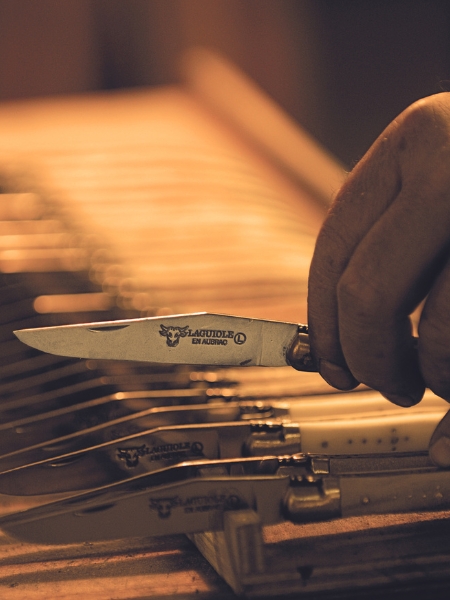
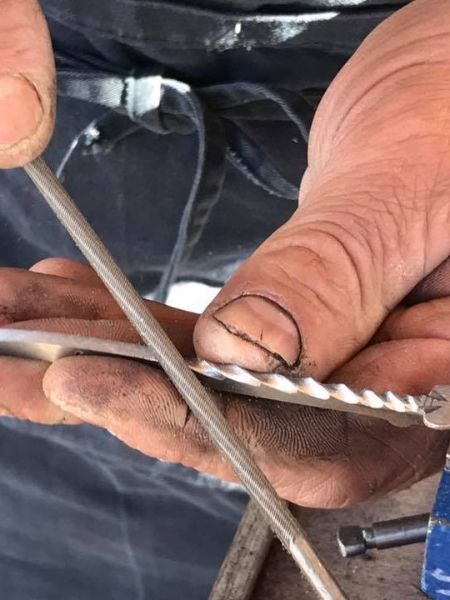
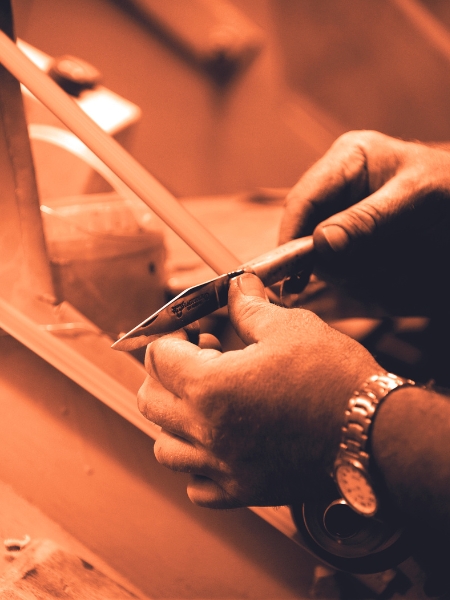
The excellence of artisanal knife-making!
There are several marquetry techniques, including:
Veneer marquetry: This technique involves cutting patterns from sheets of wood or other materials and then gluing them onto a surface to create a decorative pattern.
Hardstone marquetry: This technique uses precious stones, such as agate, malachite, or lapis lazuli, to create patterns on decorative objects.
Straw marquetry: This technique uses thin, colored strips of straw to create patterns on flat surfaces.
Leather marquetry: This technique uses colored pieces of leather to create decorative patterns on flat or curved surfaces.
Ivory marquetry: This technique uses thin sheets of ivory to create patterns on decorative objects.
Mother-of-pearl marquetry: This technique uses pieces of mother-of-pearl to create decorative patterns on flat or curved surfaces.
These different techniques can be combined to create even more complex and impressive designs.
Laguiole en Aubrac in Video
Marquetry is a decoration made with veneers that are cut or inlaid according to a design, then amalgamated onto a support. The results obtained can be geometric, figurative, or abstract.

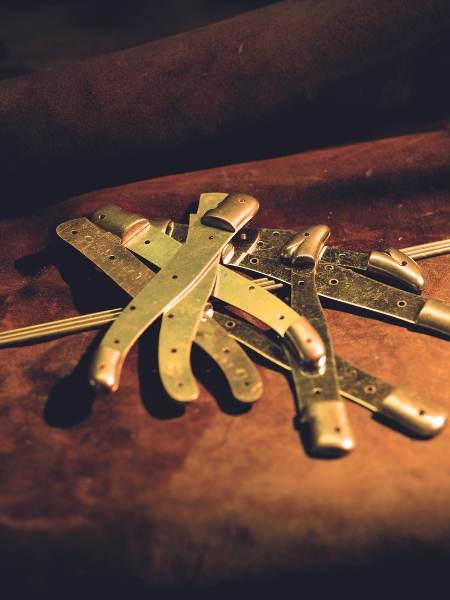
Marquetry is a meticulous artisan technique, often performed by experienced cutlers who have received specific training. Workshop leaders are usually the ones in charge of creating marquetry, and they must follow a step-by-step process to achieve the desired result.
Intarsia is considered the ancestor of marquetry. This technique emerged during antiquity and involved inlaying materials such as mother-of-pearl, stone, or mammoth ivory into wooden structures, primarily buildings.
It was in Italy, in the 14th century, that marquetry began to be applied to furniture. The Italians developed a marquetry technique called “wood painting,” which revolutionized the way furniture was decorated.
In France, it was André-Charles Boulle, a master cabinetmaker, who developed an existing technique called Tarsia a incastro and revolutionized the practice of marquetry. In this method, veneers are stacked in a bundle, then cut into shapes using a fretsaw or a “marquetry horse” with a very thin blade. The cut pieces are then assembled to create a clear pattern that inlays into the dark wood and vice versa.
In summary, marquetry is a complex and refined technique that has evolved over the centuries to become an art form in its own right, appreciated for its beauty and complexity.

This series is undoubtedly the most famous: available in shiny or satin stainless steel, as well as brass. Options include a single blade or one accompanied by a corkscrew. This variety caters to different preferences and needs of Laguiole knife enthusiasts.

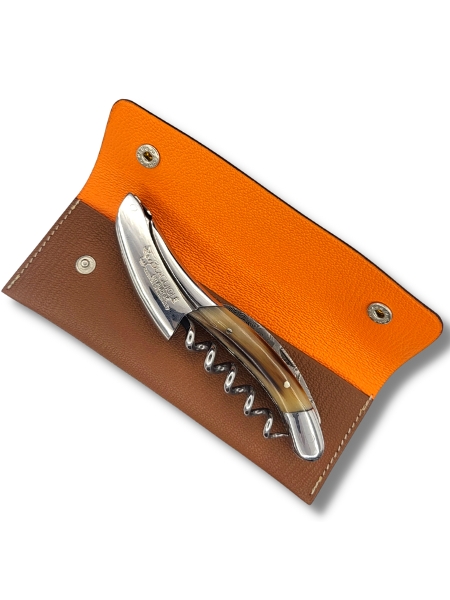
Laguiole en Aubrac corkscrews are the perfect tool for opening and tasting wines and great vintages. Their elegant design and ease of use make them an ideal choice for wine enthusiasts, offering a pleasant and refined experience during tasting.

Due to their elaborate ornamentation, these knives are often perceived as unique and valuable pieces, appreciated for their comfortable grip. The handles are slightly wider than those of traditional models.

Choosing the right Laguiole en Aubrac knife may seem difficult, but by following these practical suggestions, you will be able to find the most suitable option for yourself or as a gift. Laser engraving customization is offered!

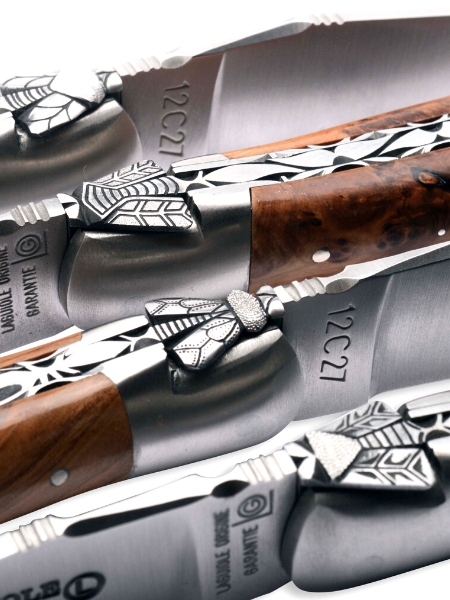
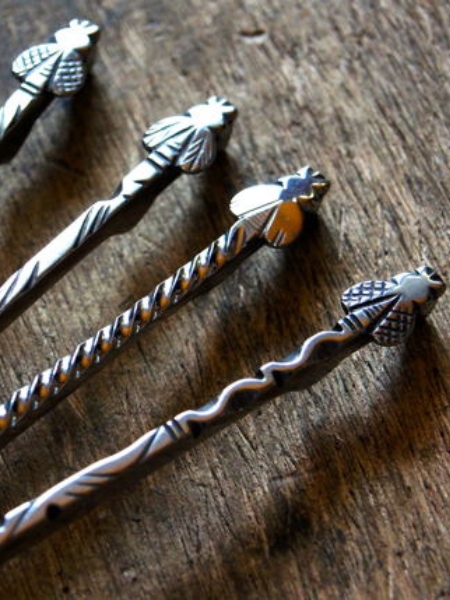
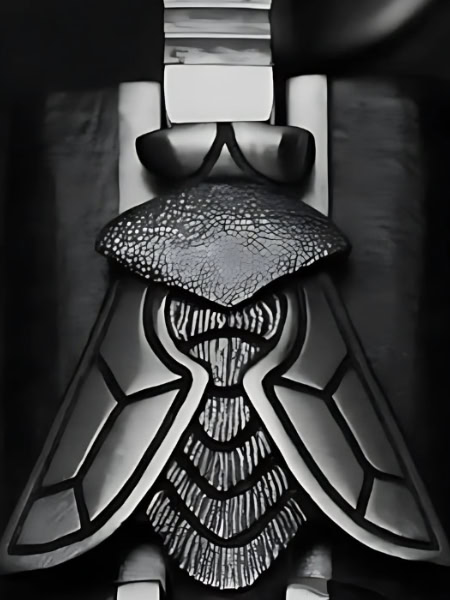
The artisanal work on the bee reflects the creativity and expertise of knifemakers. The more elaborate the model, the higher the range it belongs to. This does not necessarily mean better quality but rather the uniqueness of each Laguiole knife.

Leather cases and sheaths for Laguiole en Aubrac knives and sommeliers wonderfully combine protection, style, and practicality. They are an essential accessory for lovers of beautiful objects and demanding professionals.


• Made in France, in the historic area of origin.
• Engraving and shipping carried out on the day of the order.
• Deliveries to France, European Union, and internationally.
• Delivery within 48h in EU. 4 days to USA with DHL Express.
• Provided with: certificate of authenticity, 14 page manual of genuine Laguiole knives, protective case.
FREE LASER ENGRAVING
Laser engraving on the blade is an innovative technique that combines art and technology to enhance and personalize a knife. Choose from 6 fonts and 12 symbols.
Laguiole FOLDING KNIVES
Discover our selection of Laguiole en Aubrac folding knives, a staple of French artisanal cutlery. These high-quality pocket knives, combining elegance and practicality, are the result of traditional craftsmanship and unique expertise in knife making.
All Laguiole Folding Knives
Our models without corkscrew
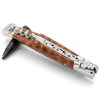
Stainless Steel or Brass Bolsters
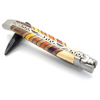
Shiny or Mat finish
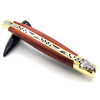
With or Without Corkscrew
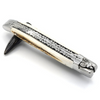
With or Without Corkscrew
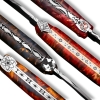
This exclusive collection from Laguiole en Aubrac showcases exquisite pocket knives that epitomize the art of fine cutlery.
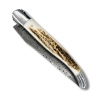
French cutlery tradition elevated by Damascus steel and masterful craftsmanship
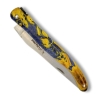
Exclusive Laguiole Knives: One-of-a-Kind Masterpieces
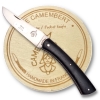
Where French Heritage Meets Everyday Utility
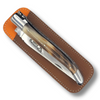
Sheaths, Box & Belt Pouches
LAGUIOLE CORKSCREWS
Discover our range of Laguiole en Aubrac sommelier corkscrews, essential accessories for wine lovers and oenology professionals. Each corkscrew is crafted with the same care and quality standards as the famous Laguiole en Aubrac knives.
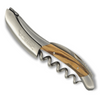
Marquetry - Wood - Horn or Bone
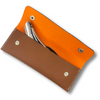
Leather Sheaths
FREE LASER ENGRAVING
Choosing a personalized Laguiole en Aubrac sommelier corkscrew means adding a touch of originality to an object already known for its quality and aesthetics!

LAGUIOLE CUTLERY SETS
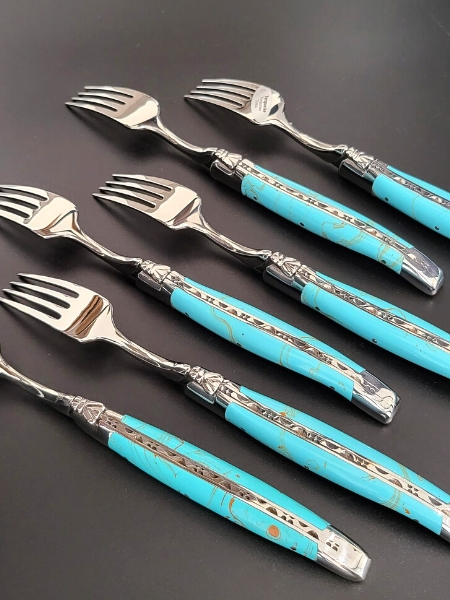
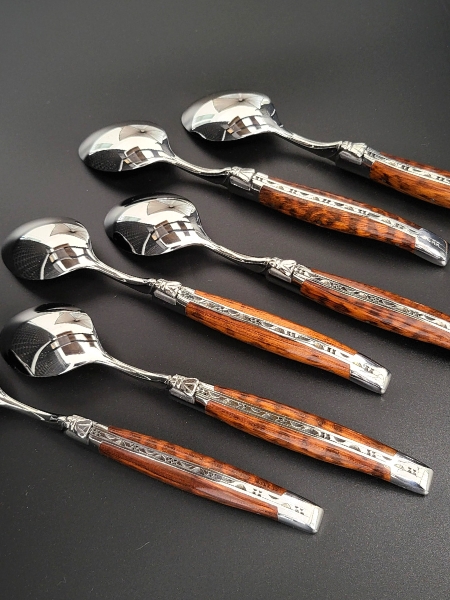
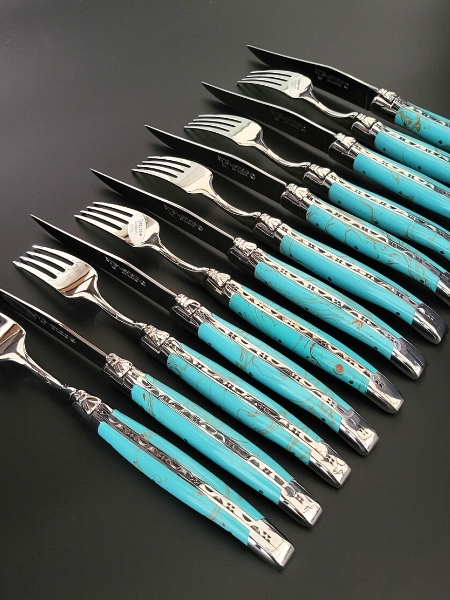
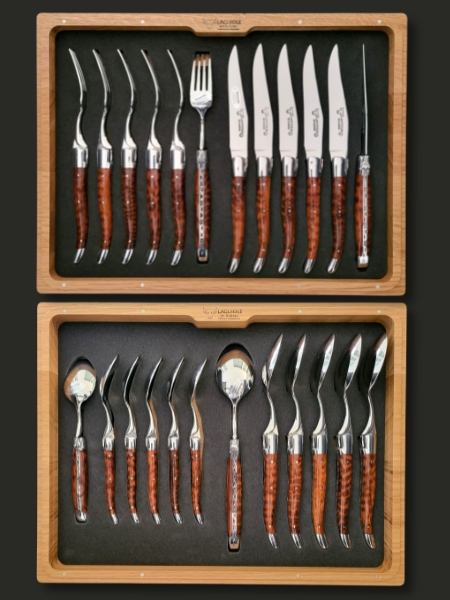
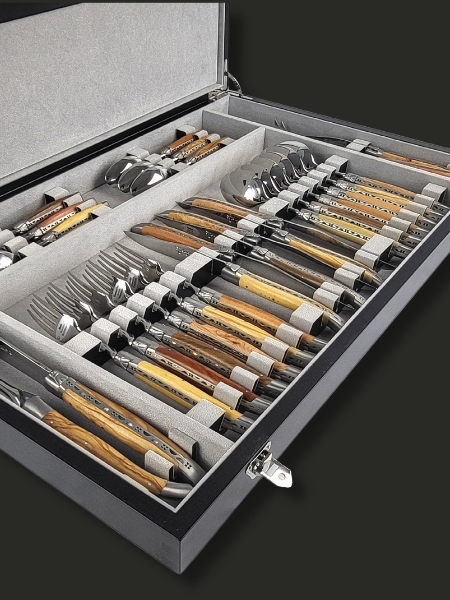
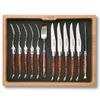
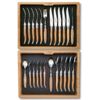
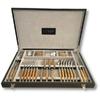
Our selection of Laguiole en Aubrac cutlery offers a range of choices from classic to modern models, featuring various colors and original handle materials. Available in sets of 2, 4, or 6, with or without forks, as well as soup and dessert spoons. Not to mention the famous table sets.
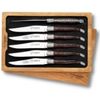
Various handle materials
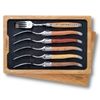
Various handle materials
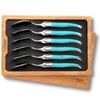
Various handle materials
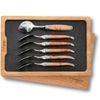
Various handle materials
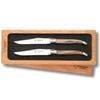
Various handle materials
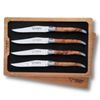
Various handle materials
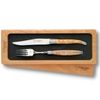
Various handle materials
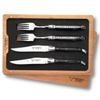
Various handle materials
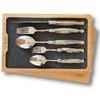
Various handle materials
Various handle materials
Various handle materials
Various handle materials
Additional Knives and Sets
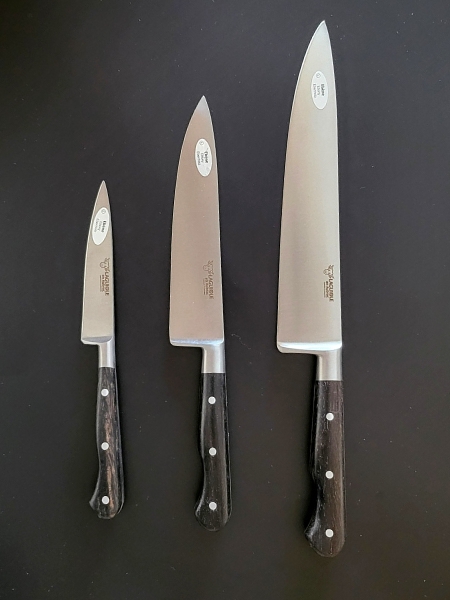
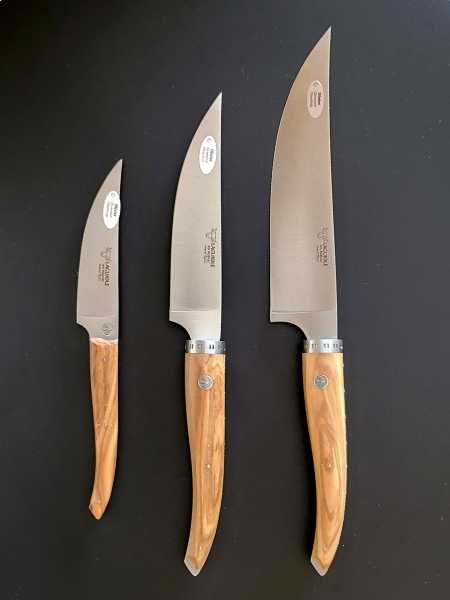
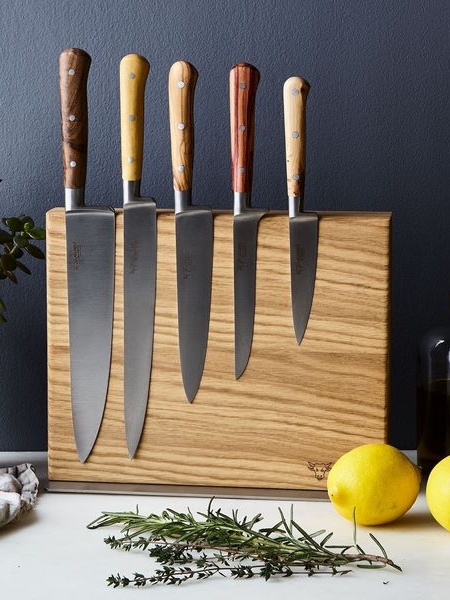
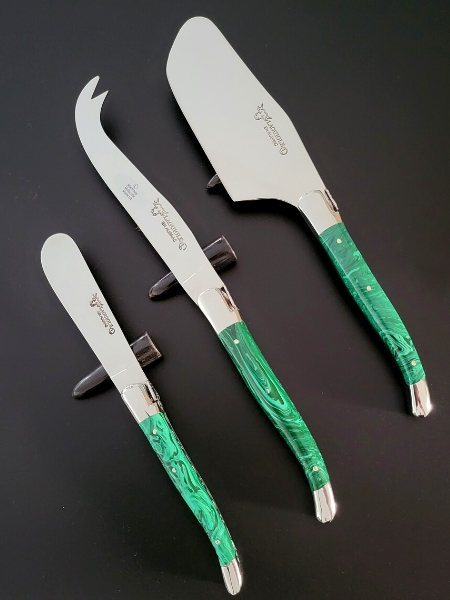
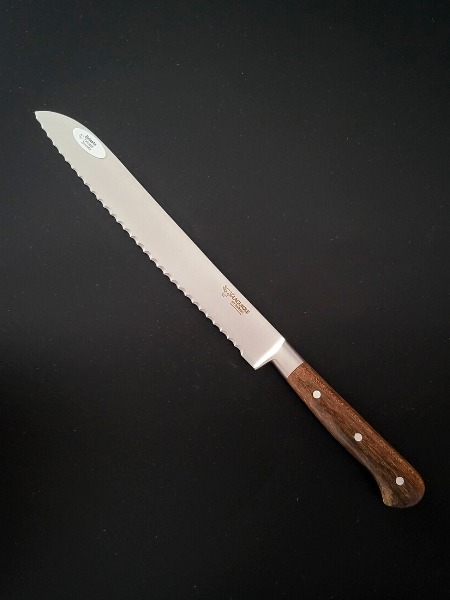
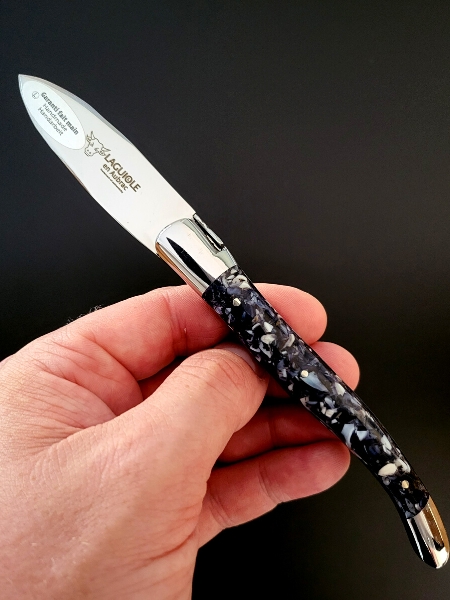
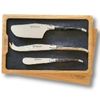
Discover the complementary cutlery range, designed to enhance your meals and offer you an unparalleled culinary experience. This refined and elegant collection includes cheese knives, oyster knives, carving sets, and many other essential accessories for a carefully set table.
Individuals or in sets x3
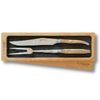
Various handle materials
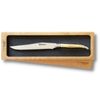
Various handle materials

Various handle materials
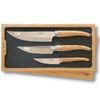
Individuals or in sets x3
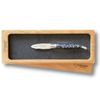
Recycled seashell handles
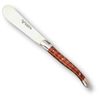
Various handle materials
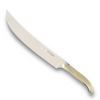
Various handle materials